
AMD Stock Joins the $1 Trillion Club: What's Actually Driving the 5 Day Surge

 Prefer us on Google
AMD stock briefly crossed a $1 trillion market capitalization on September 21, the first time in the company's history, capping a five session winning streak that pushed shares up roughly 24% over that stretch and to a fresh all time high above $613.
AMD stock's move wasn't the result of a single headline. It reflects several distinct catalysts landing in close succession over the same week, each one reinforcing the others rather than any single event explaining the entire run. AMD stock closed at $615.52 on September 21, up 9.95% that day alone, before extending gains further into September 22.
Tracing The Five Days That Actually Built This Rally
The rally's shape matters as much as its size. AMD's own 52 week low sits at $154.78, set on September 25, 2025, meaning this run has unfolded against a backdrop of a stock already up more than 180% for the year before this specific five day stretch even began. CNBC's own tracking shows AMD's prior close heading into the surge sat at $559.82, with the stock's day range on September 21 running from $582.27 up to $616.69, a single session swing of more than $34 that alone illustrates how sharply sentiment shifted within the trading day itself.
The week leading into the surge wasn't uniformly positive. CNBC's own headline archive shows stocks posting back to back losses on September 14, with oil surging and the 10 year Treasury yield hitting a 19 year high, a genuinely difficult macro backdrop for rate sensitive technology names like AMD. That the rally built momentum despite that starting point, rather than because of favorable conditions from the outset, is worth noting: AMD's climb overcame a headwind rather than simply riding a tailwind the whole way.

Why Monday's Single Session Did So Much Of The Work
September 21 specifically stands out as the day AMD actually crossed the $1 trillion threshold, and the catalysts behind that particular session are worth separating from the broader week. A state dinner between President Trump and Chinese leader Xi Jinping, with numerous AI industry figures reportedly expected to attend, fueled broader optimism around the AI trade that day, according to Yahoo Finance's coverage. Separately, Meta's new AI agent, Muse, sparked what Yahoo Finance described as a "broader rally among server CPU suppliers," connecting Monday's chip sector strength directly to the same Muse momentum that drove Meta's own 11% plus stock surge the same day.
The sector-wide nature of Monday's move is worth stating precisely rather than treating AMD's gain as isolated. The Philadelphia Semiconductor Index surged more than 3% that session, with Arm Holdings and Intel both climbing more than 10% alongside AMD's own 9.95% jump, and Nvidia adding a more modest 2.3%. A separate report on the same session flagged renewed optimism specifically tied to a Reuters story from the prior week about SK Hynix exploring a manufacturing deal with Intel, suggesting the broader memory and chip supply chain narrative was feeding into sentiment well beyond any single company's own news.
Why The Fundamentals Underneath This Rally Aren't Purely Speculative
A rally this sharp invites the question of whether it's being driven by genuine business performance or pure momentum, and AMD's own reported numbers give the move real substance to point to. Second-quarter revenue reached $11.54 billion, up 50% year over year, with data center revenue more than doubling to $6.7 billion. GAAP gross margin recovered by 14 percentage points over the same period, according to TS2.tech's analysis of the underlying results, a specific operational improvement rather than just a top-line growth number.
That data-center growth is closing a gap that's mattered for how AMD gets compared to its largest competitor. AMD's climb toward $1 trillion moves it into rarer company, joining semiconductor names including Broadcom and Micron that have already crossed the same threshold, though it remains well below Nvidia's roughly $5.4 trillion valuation, according to Yahoo Finance's reporting. AMD forecasts 50% annual growth specifically in its server CPU business going forward, a target directly tied to sustaining the data-center momentum currently underwriting the stock's valuation.
-- Price
Why Retail Sentiment And Trading Volume Support The Move Being Genuine
Beyond the headline catalysts, the mechanics underneath this rally suggest broad participation rather than a thin, easily reversible spike. Retail sentiment around AMD remained in "bullish" territory throughout the surge, accompanied by "high" trading interest, according to Yahoo Finance's tracking of the September 21 session specifically. Separate technical analysis from the same period found trading volume running roughly 1.7 times the recent average, with on balance volume, a measure of whether volume is flowing into or out of a stock, rising alongside the price advance, a pattern generally read as a stronger bullish signal than a price move happening on comparatively thin turnover.
That combination, elevated volume paired with rising retail conviction, distinguishes this run from the kind of low-conviction spike that tends to fade quickly once the initial catalyst passes. It doesn't guarantee the rally continues, but it does suggest genuine participation across a broad base of buyers rather than a narrow, easily reversed move driven by a small number of large trades.
What Would Actually Need To Happen For This To Continue
None of this settles whether AMD holds above the $1 trillion threshold or extends further from here. AMD's stock had already been pressing against resistance near its own prior highs before this latest leg, and the specific $2 trillion long-term opportunity estimate cited by firms including Piper Sandler and Stifel, tied to AMD's positioning through 2030, requires sustained execution over years rather than a single strong quarter. AMD's next earnings report, scheduled for November 3, will be the next concrete test of whether the 50% plus data center growth rate underwriting this rally actually continues at a similar pace, or whether the company's enormous growth expectations, as FX Leaders specifically flagged, leave little room for disappointment given how much optimism is already reflected in the current price.
Whether Monday's Muse driven semiconductor sentiment and the broader AI trade optimism tied to the Trump-Xi dinner prove durable catalysts, or whether they fade the way single event driven rallies sometimes do once the specific news cycle passes, is also worth watching over the coming sessions, separate from AMD's own underlying business performance.
Trading AMD Directly Through This Milestone
For traders looking to act on how this $1 trillion milestone and the broader semiconductor rally continue to develop, AMD trades on WEEX Spot, letting you hold a direct position with USDT funded from the same account used for crypto trading, without needing a separate brokerage relationship to react as new sessions unfold. Given how sharply AMD has moved within single trading days recently, a $34 plus intraday swing on September 21 alone, having a low-friction way to adjust a position as momentum builds or fades is a more practical starting point than committing to a single view before the next earnings report actually lands.
Trading on WEEX is backed by a publicly disclosed 1,000 BTC protection fund, worth knowing for anyone holding a position in a stock that's gained roughly 24% in just five sessions and crossed a symbolic $1 trillion threshold for the first time, a milestone that tends to draw increased scrutiny over whether the rally that produced it can actually sustain itself.
Conclusion
AMD's climb to a $1 trillion market cap traces back to a convergence of catalysts: Meta's Muse driven server CPU optimism, AI trade enthusiasm around a high profile diplomatic dinner, and sector wide semiconductor strength that lifted Arm, Intel, and AMD alike. Data center growth of more than 100% year over year and rising trading volume give the rally real fundamental support, rather than a thin, easily reversible spike. Whether this momentum holds is the test AMD's November 3 earnings report is already pricing in significant optimism ahead of.
FAQ
1. When did AMD first cross $1 trillion in market capitalization?
AMD briefly crossed the $1 trillion threshold on September 21, 2026, during a five session rally that pushed shares up roughly 24% and to a fresh all time high above $613.
2. What specifically drove AMD's biggest single day gain in this rally?
September 21's 9.95% jump was tied to Meta's Muse AI agent sparking broader optimism among server CPU suppliers, alongside AI trade enthusiasm ahead of a Trump-Xi state dinner and a sector-wide semiconductor rally.
3. Is AMD's rally supported by actual business performance?
Yes. Second quarter revenue rose 50% year over year to $11.54 billion, with data center revenue more than doubling to $6.7 billion and gross margin recovering 14 percentage points over the same period.
4. How does AMD's $1 trillion valuation compare to its largest competitor?
AMD's roughly $1 trillion valuation remains well below Nvidia's approximately $5.4 trillion market cap, though it now joins other chipmakers including Broadcom and Micron that have already crossed the same threshold.
5. When is AMD's next earnings report?
AMD is scheduled to report next on November 3, 2026, which will offer the next concrete test of whether the data-center growth rate underwriting this rally continues at a similar pace.
This content is provided for general informational purposes only and doesn't constitute financial, investment, legal, or tax advice. Any events, rewards, online promotions, or related information mentioned herein should not be considered a recommendation, solicitation, or invitation to purchase, sell, trade, or otherwise deal in any crypto assets. Crypto assets are highly volatile and may result in loss. The availability of WEEX services, products, and related events may vary by region. You are responsible for ensuring that your participation is in accordance with applicable local laws and regulations.
You may also like

NVDA Stock Sits Near Its High While Rivals Are Down 18-32%: What Explains the Gap

AMD Stock: Why Cathie Wood Keeps Selling While Analysts Stay Bullish

WEEX Stock Spot 2.0 Rewards Guide: Trade & Share $100K

AMD vs Nvidia After Q2 Earnings: Which Stock Is the Better Buy?

Who Can Operate in Russia's Crypto Market from 5 October 2026

Self-Custody Wallets: When a Crypto Transfer Must Be Reported to Brazil's Coaf
Binance UAH Deadline: Fiat Trade UAH and USDT/UAH Changes on 28 September

Italian Crypto Tax Return 2026: Filing Deadline, Forms and Gains Rate
FTXF: Hanoi Police Seeks Victims to Report by September 30, 2026
XOF, XAF and CDF Are Now Available on WEEX P2P: What Users Need to Know
WEEX Close Position Guide: Flash Close, Limit Close and TP/SL
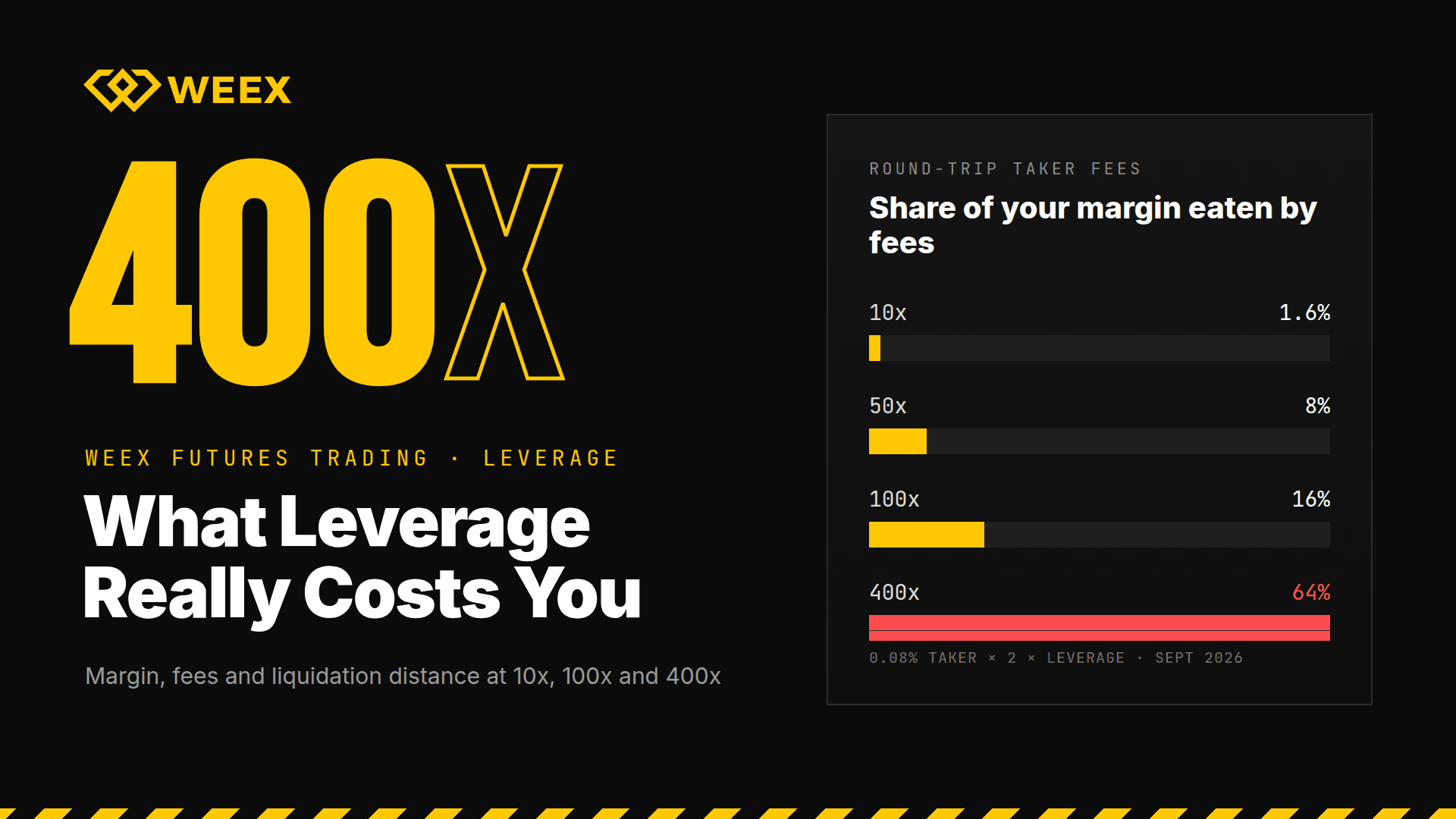
WEEX Futures Trading: What 400x Leverage Really Costs You
What Is Aleo (ALEO) Crypto, and Why Did Its Price Jump Up to 88%?
Best Crypto Exchange for Beginners 2026: What Actually Matters When Choosing One

Best Crypto Cold Wallet 2026: Top Picks Matched to How You Hold
Phantom Wallet vs MetaMask: What's the Difference

How to Connect Phantom Wallet to a Solana DApp
How to Install and Set Up Phantom Wallet
What Is Phantom Wallet? A Complete Guide to the Solana Wallet
What Is a White Label Crypto Exchange? A Complete Beginner's Guide
What Is Pons Crypto (PONS), and How to Trade PONS on WEEX?
Crypto Futures Trading Explained: One Real Trade, Start to Exit
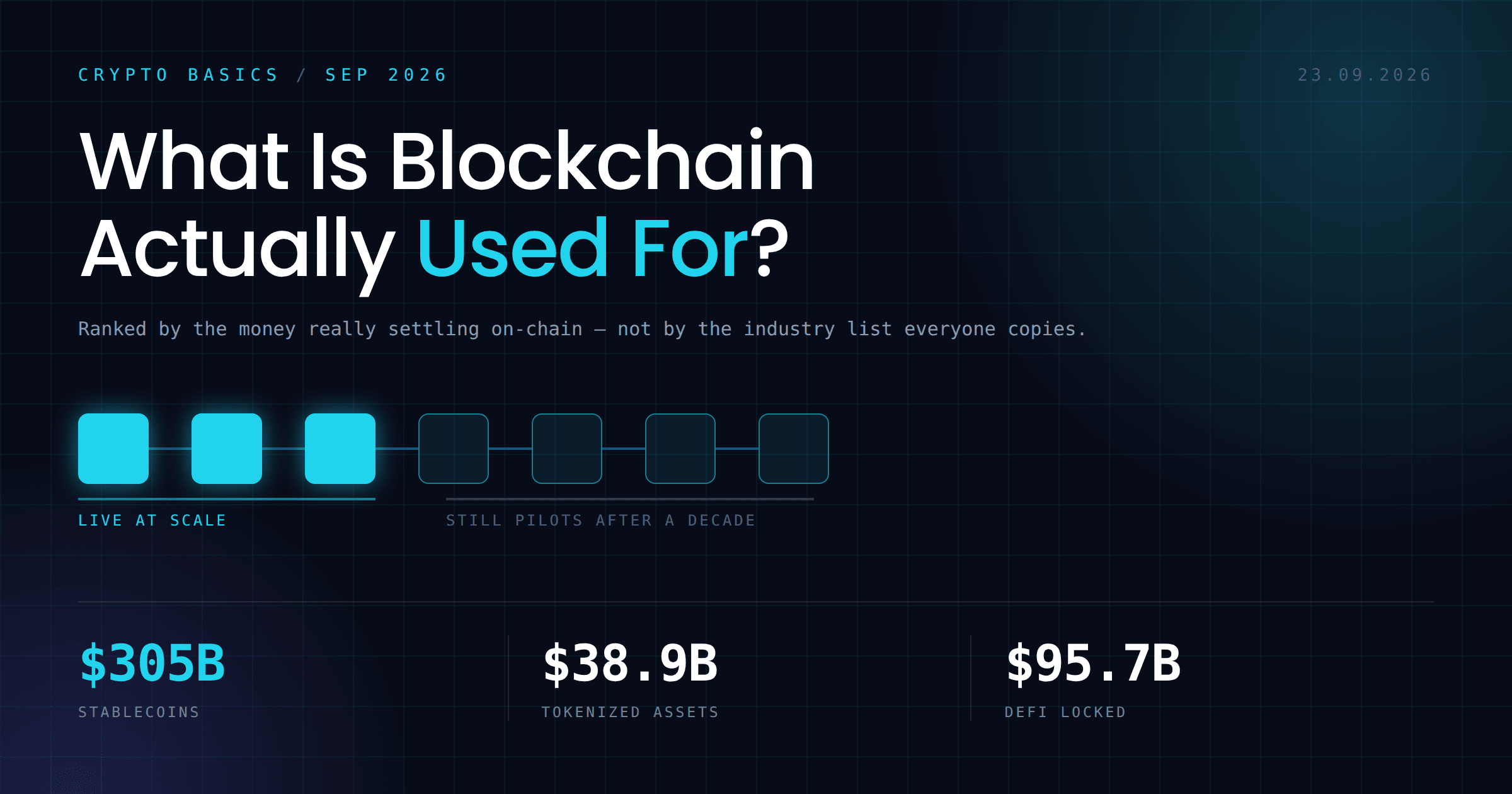
What Is Blockchain Used For? 2026 Uses, Ranked by Real Money

How to Buy USDT with EUR via SEPA Bank Transfer on WEEX
How to Buy Bitcoin with EUR in Europe on WEEX
How to Buy Crypto in Europe with EUR on WEEX OTC
How to Buy Crypto in Vietnam with VND on WEEX OTC
How to Buy USDT in Vietnam with VND via MoMo or Bank Account
INTC Stock Surged 14%: Intel Only Has Enough Chips for Half Its Clients
Is Hyperliquid Safe? Risks You Should Know Before You Trade
NVDA Stock Sits Near Its High While Rivals Are Down 18-32%: What Explains the Gap
AMD Stock: Why Cathie Wood Keeps Selling While Analysts Stay Bullish
WEEX Stock Spot 2.0 Rewards Guide: Trade & Share $100K
AMD vs Nvidia After Q2 Earnings: Which Stock Is the Better Buy?
Who Can Operate in Russia's Crypto Market from 5 October 2026
Self-Custody Wallets: When a Crypto Transfer Must Be Reported to Brazil's Coaf


