
Berkshire Without Buffett: How Abel Spends the $365 Billion Cash

 Prefer us on Google
Abel Begins to Use the Mountain of Cash Inherited from Buffett
Warren Buffett spent the last few years of his management accumulating cash. He complained about high prices, sold positions, and allowed Berkshire Hathaway's cash to reach $397 billion by the end of March. Greg Abel, his successor as CEO, apparently disagrees with this assessment. In his second full quarter in the role, he purchased nearly $20 billion net in stocks.
The regulatory document released this Friday shows two central bets. Abel acquired 17.5 million shares of Delta Air Lines, bringing the total position to $5.37 billion. He also bought an additional 48.1 million shares of Alphabet, the parent company of Google, which is now the third-largest position in the holding, valued at $37.8 billion at the end of June.
In addition to stock purchases, Berkshire repurchased $4.5 billion of its own shares during the period. Even with all this activity, the cash still totaled $365.5 billion in June. The cash generation machine of the conglomerate is so large that spending $20 billion barely scratches the reserve.
Two Billion-Dollar Acquisitions Reveal Abel's Thesis
More than the open market purchases, two transactions define Abel's style. The first was the acquisition of the construction company Taylor Morrison Home for $6.8 billion, completed last month. It is a classic operation from the Berkshire manual: a real estate company with predictable cash generation, bought at a reasonable multiple. Buffett would approve without hesitation.
The second is more revealing. Abel allocated $10 billion to Alphabet to support investments related to artificial intelligence. This is an area that Buffett, at 95 years old, admitted he did not understand well. The decision signals that Berkshire under new management does not intend to miss out on the biggest technological race of the decade.
This combination of Taylor Morrison and Alphabet summarizes the strategy: maintain the value investment discipline that built the conglomerate, but add exposure to cutting-edge technology. As we have seen in financial market coverage, this duality between value and growth is the central dilemma for large allocators today.
Why Alphabet Became the Third Largest Position
The choice of Alphabet is not random. The company trades at lower multiples than most big techs, has been distributing dividends since last year, and possesses the cloud and data infrastructure that supports its AI program. It is, in essence, a value stock disguised as a growth stock.
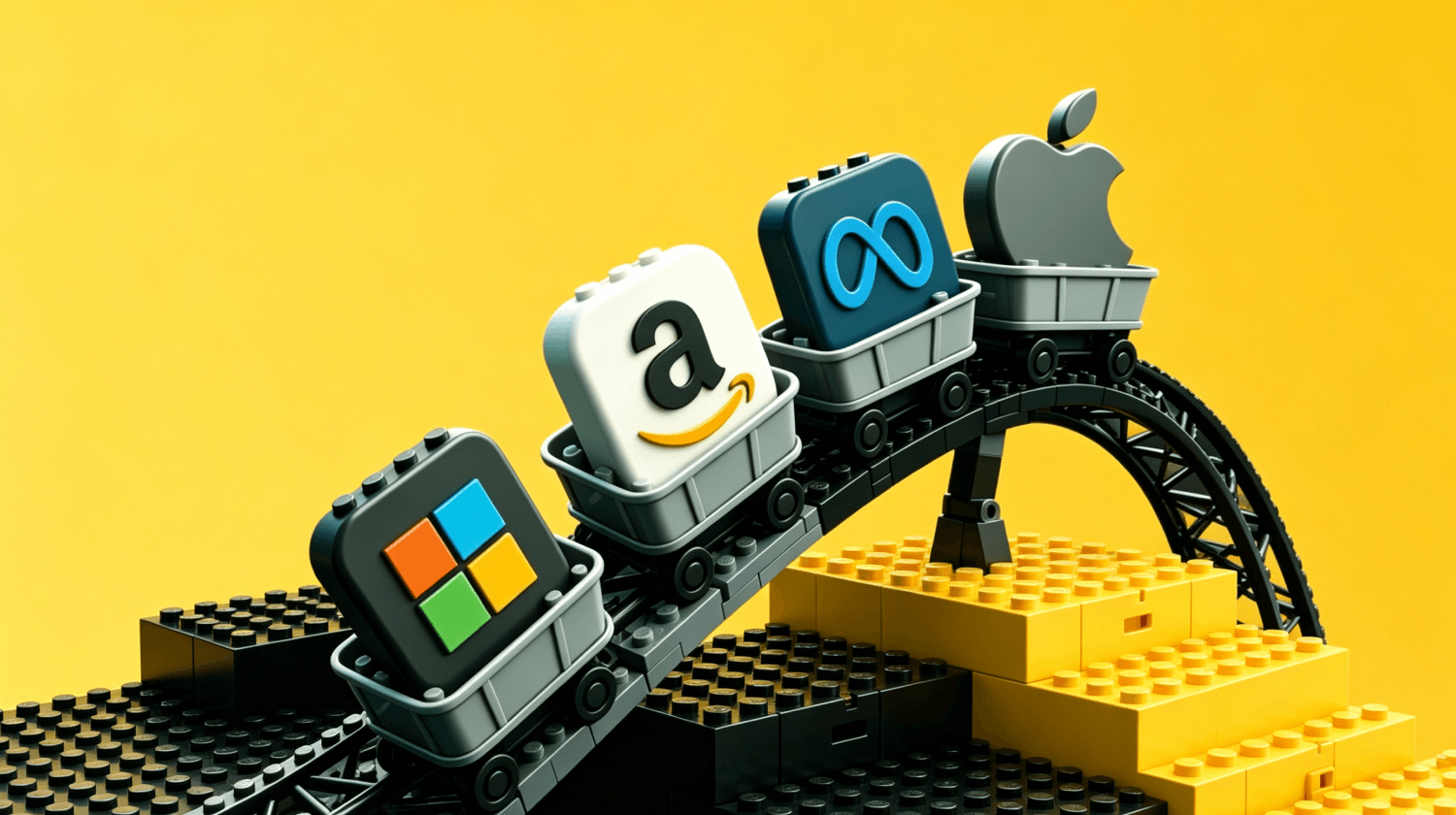
For Berkshire, which historically avoided technology until the famous position in Apple began in 2016, having Alphabet as the third-largest position is a structural change. The advancement of artificial intelligence in the markets has transformed companies like Google, Microsoft, and Meta into almost mandatory bets for those managing hundreds of billions.
Abel seems to understand that the profile of available assets has changed. Railroads, insurers, and utilities remain on the radar, but marginal value generation increasingly comes from companies with competitive advantages in AI, data, and cloud computing.
-- Price
Delta Air Lines and the Resilient Consumption Thesis
The expansion of the position in Delta is equally instructive. Buffett became famous for selling his entire airline portfolio during the pandemic, a decision he himself classified as a timing error. Abel, in rebuilding exposure to the sector, chose the company with the best operating margin among the major American airlines.
Delta has been differentiating itself with its premium strategy, focusing on corporate and high-income passengers. In a scenario of moderate economic slowdown, as projected by the latest data from the American economy, this positioning offers relative protection against demand decline.
With $5.37 billion in the position, Berkshire has become one of the largest shareholders of the airline. It is a conviction bet, not a diversification one. The move reinforces a trend we have been observing: large managers returning to look at cyclical sectors with solid fundamentals.
What Changes for Investors with Abel's Berkshire
For those following Berkshire as a market thermometer, the message is clear. The conglomerate has shifted from a cash accumulator to an active buyer. The reserve fell by $31.5 billion in one quarter, from $397 billion to $365.5 billion. If Abel maintains this pace, cash could shrink significantly in the coming quarters.
This matters because Berkshire acts as a signal for the market. When Buffett bought, retail and institutional investors paid attention. Abel inherits this influence, and his choices suggest he sees opportunities in two axes: undervalued traditional companies and big techs with exposure to AI at reasonable prices.
It remains to be seen whether Abel will have the same discipline to sell when prices become irrational. Buffett always said that the hardest part of investing is not buying. It’s knowing when to stop. With $365 billion still in the bank, Abel has plenty of ammunition to test his own version of this discipline.
This content is provided for general informational purposes only and doesn't constitute financial, investment, legal, or tax advice. Any events, rewards, online promotions, or related information mentioned herein should not be considered a recommendation, solicitation, or invitation to purchase, sell, trade, or otherwise deal in any crypto assets. Crypto assets are highly volatile and may result in loss. The availability of WEEX services, products, and related events may vary by region. You are responsible for ensuring that your participation is in accordance with applicable local laws and regulations.
You may also like
Zoth Launches Tokenization Service for U.S. Stocks via Zivolt

US AI Equipment Investment Reaches $725 Billion, Impacting GDP Growth
Crypto: The SEC Clarifies the Status of Tokens, Staking, and Buybacks
Bitget hacker routes 4 BTC through Wasabi CoinJoin
Tether: The United States Seizes $84 Million from a Banking Intermediary

Citi says 77% of institutions eye tokenized collateral

South Korea weighs liquidity rules for won stablecoins
Bitcoin: How Afghan Women Regained Control of Their Salaries
FTX and AI Apocalypse: The End of Calm Times for Anthropic
![[Digital Bill of Rights③] Money Written by AI, "Make it Usable in Real Life"](/public-static/052_26710392f0.png?format=avif)
[Digital Bill of Rights③] Money Written by AI, "Make it Usable in Real Life"
![[Digital Bill of Rights②] The Success of Digital Dollar Comes from Competition](/public-static/078_4d1ce66fab.png?format=avif)
[Digital Bill of Rights②] The Success of Digital Dollar Comes from Competition

The NFT party is over and everybody now owes storage rent

Costa Rica warns about crypto assets in political financing and strengthens its controls

Saylor: The era of intelligence and digital assets needs a bill of rights

Washington has $114 billion reasons to want Tether around
How Crypto Stopped Waiting for Congress and Learned to Love the Regulators

Balancer fork’s 6 million BAL ask could cut holders’ redemption value

FinCEN Expands AI Fraud Loophole in the USA by Eliminating Controls
Strategy Plans to Distribute Bitcoin Treasury Dividends Daily
Sharplink CEO: The Future of the Smart Economy

Fed stablecoin proposal would make circulation a capital cost for supervised issuers

Shielded Bitcoin: the proposal that aims to bring privacy without changing BTC's code
End of Bets in Brazil: What Changes and What Are the Next Steps
Galaxy Research: CFTC's 'Mention Markets' Guidance Highlights Structural Manipulation Risks in Individual Speech Predictions
What is CBDC? Governments Push for Development of Central Bank Digital Currencies
Why cash hoarding in the UK proves the world still craves permissionless money
OG.com Submits Application for US Stock Perpetual Contracts to CFTC Following Coinbase, Kalshi, and Kraken's Parent Company Payward

Crypto: $2.1 trillion evaporated, on-chain economy only loses 1.6%

Trump Rejects Iran Ceasefire, Expects Bombing After Midterms: Will Oil and Bitcoin Hold?

Solana’s Alpenglow upgrade reaches devnet with 150ms finality target
Zoth Launches Tokenization Service for U.S. Stocks via Zivolt
US AI Equipment Investment Reaches $725 Billion, Impacting GDP Growth
Crypto: The SEC Clarifies the Status of Tokens, Staking, and Buybacks
Bitget hacker routes 4 BTC through Wasabi CoinJoin
Tether: The United States Seizes $84 Million from a Banking Intermediary
Citi says 77% of institutions eye tokenized collateral





