
Germany's Crypto Tax Draft 2027: What the 50 Percent Substitute Assessment Means

 Prefer us on Google


Germany's Federal Ministry of Finance draft on crypto taxation would have a domestic platform withhold tax on 50 percent of the sale proceeds when it cannot verify the acquisition date and the costs. It is not law: the draft has been in inter-ministerial consultation since mid-September 2026, and neither the cabinet, the Bundestag nor the Bundesrat has decided. Until then the current rules stand: coins bought by 31 December 2026 keep the one-year holding period.
Where it stands: the first concrete text, but not law yet
The Federal Ministry of Finance has sent a draft bill on “crypto assets held privately” into inter-ministerial consultation. The tax firm GTK Steuerberater, in its reading of the draft dated 15 September 2026 (gtkp.de), spells out what that status means: no cabinet decision, no Bundestag, no Bundesrat — but the first concrete legislative text. A full text published on bundesfinanzministerium.de is not available so far; the provisions reproduced here come from law-firm memos and reports that quote the draft.
Until something else is enacted, § 23 EStG applies: crypto assets held privately are “other assets”, a gain is taxable only if no more than one year passed between acquisition and sale, and tax-free afterwards; within that window the exemption threshold of 1,000 euros per calendar year applies. The Federal Finance Court confirmed this classification in its judgment of 14 February 2023 (IX R 3/22) — as the law firm ECOVIS KSO summarised on 11 September 2026 (ecovis-kso.com).
What the draft would change
The draft creates the category “exchange crypto asset” (Tauschkryptowert): a crypto asset under MiCAR, the EU regulation on markets in crypto-assets, that is accepted as a means of exchange and is not issued by a central bank or a public body — in practice mainly Bitcoin and Ether (GTK Steuerberater, 15 September 2026, gtkp.de). Gains from selling exchange crypto assets would become income from capital assets (§ 20 EStG) and would carry 25 percent withholding tax plus the solidarity surcharge, regardless of how long the coins were held; the one-year holding period would no longer apply to them (POELLATH, Dr. David Hötzel, “Planned Tax Reform for Crypto Assets”, PE-Magazin, 15 September 2026, pe-magazin.com).
Protection applies only to existing holdings. The new regime covers exchange crypto assets acquired or received after 31 December 2026. For earlier purchases the one-year holding period stays in place, holdings already realised tax-free stay tax-free, and a holding whose one-year period is still running on 1 January 2027 can still become exempt. There is no step-up at the turn of the year: the historical acquisition date and the historical acquisition costs remain decisive (POELLATH, PE-Magazin, 15 September 2026, pe-magazin.com; GTK Steuerberater, 15 September 2026, gtkp.de).
The material rules are meant to apply from 1 January 2027, but automatic withholding of capital gains tax by domestic crypto service providers only from 1 January 2028. For 2027 that means self-declaration: the withholding duty covers domestic providers only, while self-custody — wallets whose private keys you hold yourself —, decentralised finance without an intermediary platform, and foreign providers leave the reporting duty with the holder (POELLATH, PE-Magazin, 15 September 2026, pe-magazin.com; GTK Steuerberater, 15 September 2026, gtkp.de).
The substitute tax base: withholding on half of the sale proceeds
The substitute tax base — often called the 50 percent substitute base — needs two pieces of information: the acquisition date and the acquisition costs. If the platform cannot establish them, it may initially rely on the taxpayer's own information, as long as no contradictory data exists. If that information cannot be used, the withholding assumes an acquisition after 31 December 2026 and bases the tax on half of the sale proceeds; the provision is referred to as § 43a (2) of the draft (POELLATH, PE-Magazin, 15 September 2026, pe-magazin.com; Patrick Hansen, X post of 25 September 2026, x.com/paddi_hansen).
The comparison with securities is remarkable: under current § 43a (2) EStG the substitute base for securities is 30 percent of the proceeds when the acquisition data cannot be proven. The 50 percent rate for crypto would therefore be stricter than the comparable rule for securities (ECOVIS KSO, 11 September 2026, ecovis-kso.com). GTK Steuerberater expects exactly this point to attract criticism in the legislative process (15 September 2026, gtkp.de).
The withheld amount is not a final tax assessment: an excessive deduction can generally be corrected in the assessment procedure. The liquidity risk sits with the holder in the meantime, because the money is withheld first (POELLATH, PE-Magazin, 15 September 2026, pe-magazin.com). Transfers out of self-custody or from a foreign platform to a domestic one are particularly affected: there, the withholding meets holdings whose history the receiving platform does not know.
-- Price
Worked example: coins bought in 2024 in self-custody, moved to a German platform in 2028
On 20 November 2024 you buy 1 bitcoin for 30,000 euros and hold it yourself. In 2028 you move it to a German platform and sell it there for 33,000 euros. The example assumes that a transfer between your own wallets is not a taxable sale; only the sale on the platform is taxed (POELLATH, PE-Magazin, 15 September 2026, pe-magazin.com). The actual gain is 3,000 euros.
| Step | Without proof (substitute base) | With proof |
|---|---|---|
| Acquisition the platform assumes | assumed: after 31 December 2026 | documented: 20 November 2024, 30,000 euros |
| Basis for the withholding | 16,500 euros — half of the 33,000-euro sale proceeds | existing holding: the one-year holding period expired long ago |
| Withholding at the sale | about 4,352 euros (25 percent plus solidarity surcharge, 26.375 percent in total) | no withholding; the sale remains tax-free under the current rules |
The arithmetic is an illustration of the draft mechanism. It shows where the criticism comes from: whether the sale of a bitcoin bought in 2024 leads to a deduction of roughly 4,300 euros depends on the documentation, not on the gain.
The revenue the draft assumes
The draft expects additional tax revenue that only becomes visible with the withholding from 2028. The figures come from the draft bill as reproduced by Blocktrainer.de on 9 September 2026 (blocktrainer.de) and picked up by extraETF (Thomas Brummer) on 10 September 2026 (extraetf.com).
| Year | Additional revenue in the draft |
|---|---|
| 2027 | 0 euros |
| 2028 | 160 million euros, of which 75 million for the federal government |
| 2029 | 305 million euros |
| 2030 | 325 million euros |
| 2031 | 350 million euros, of which 160 million for the federal government by 2031 |
These are estimates from the draft, not rates in force. The zero for 2027 fits the mechanics: in that year holders declare their income themselves.
Reactions from the industry
Patrick Hansen, Senior Director EU Strategy & Policy at Circle, argues in an X post of 25 September 2026 (x.com/paddi_hansen) that a base of half the sale proceeds implicitly assumes prices doubled between purchase and sale: bitcoin traded lower than a year earlier, and most crypto assets did worse over that period. Ordinary consumers who cannot cleanly document their acquisition costs would therefore pay too much tax — possibly even on sales at a loss. That is his view; the substitute base itself is in the draft, as Bitcoin.com News (Sergio Goschenko) reported on 25 September 2026 (news.bitcoin.com).
Dr. David Hötzel (POELLATH) treats the wording as not final: it may still change in the legislative process, the provisional deduction can be high even in cases of genuinely small gains, and protection of existing holdings effectively depends on reliable documentation (PE-Magazin, 15 September 2026, pe-magazin.com).
What holders can gather now
Whether you hold or trade crypto assets on WEEX or on another platform, you can go through your records now and check whether the acquisition date and the costs can be evidenced for every position. The protection of existing holdings hangs on the acquisition date: if it falls before 1 January 2027, the old rules remain available — but only if the date can be proven. Assembling the paperwork only when coins are moved onto a German platform comes too late, because without verifiable data the substitute base applies from 2028 (POELLATH, PE-Magazin, 15 September 2026, pe-magazin.com).
On top of that come inflows the draft explicitly assigns to newly acquired holdings: income from lending — lending coins out against interest — and from passive staking — rewards for making coins available to the network — received after 31 December 2026 counts as newly acquired, even if the underlying coins are an existing holding (§ 20 (1) no. 12 EStG-E; POELLATH, 15 September 2026, pe-magazin.com; GTK Steuerberater, 15 September 2026, gtkp.de). Every swap is a taxable disposal, including crypto against crypto; such events can only be reconstructed later from the trading history (POELLATH, PE-Magazin, 15 September 2026, pe-magazin.com).
| Record | Why it matters | Where to find it |
|---|---|---|
| Acquisition date per unit | Before 1 January 2027 an existing holding begins, after it a new one | Purchase confirmations, account statements, order history |
| Acquisition costs including fees | Without a cost basis the substitute base becomes relevant | Trade confirmations and transaction lists from the exchange |
| Exports and annual reports | Platforms close accounts and change formats | CSV or PDF exports per year, archived outside the platform |
| Swaps | Every swap is a realisation for tax purposes, including crypto-to-crypto | Trading history with timestamps and counter-values |
| Staking and lending income | Inflows after 31 December 2026 count as newly acquired | Income statements from the provider or the platform |
| Transfers between wallets and platforms | The route from the old wallet to today's platform evidences the history | Transaction IDs, wallet addresses, transfer confirmations |
These points bring together the documentation guidance of POELLATH (“Secure Tax History and Data Now”, 15 September 2026, pe-magazin.com), GTK Steuerberater (“Was jetzt sinnvoll ist”, 15 September 2026, gtkp.de) and ECOVIS KSO (“Was sollten Krypto-Anleger:innen jetzt prüfen?”, 11 September 2026, ecovis-kso.com).
What the draft leaves open
Losses: losses on existing holdings stay inside the § 23 EStG offsetting circle, losses on newly acquired holdings move into the capital-income circle, and no bridging rule exists. ECOVIS KSO and POELLATH therefore describe two separate offsetting circles (ECOVIS KSO, 11 September 2026, ecovis-kso.com; POELLATH, 15 September 2026, pe-magazin.com).
Gifts and inheritance: the draft records gratuitously acquired exchange crypto assets with acquisition costs of 0 euros. Whether a gift or an inheritance after 31 December 2026 ends the protection attached to the predecessor's holding is not settled by the text; POELLATH names this among the most important open questions for estate planning (PE-Magazin, 15 September 2026, pe-magazin.com).
E-money tokens issued under Title IV MiCAR are to be exempt — not every stablecoin therefore falls outside the scope automatically (GTK Steuerberater, 15 September 2026, gtkp.de).
Frequently asked questions
Does the substitute base apply today?
No. It sits in the draft bill, which is in inter-ministerial consultation; the cabinet decision, the Bundestag and the Bundesrat are still pending. Until an act passes, § 23 EStG with the one-year holding period applies (GTK Steuerberater, 15 September 2026, gtkp.de).
What applies to purchases up to 31 December 2026?
They remain an existing holding. The one-year holding period continues to apply, holdings already realised tax-free stay tax-free, and a one-year period still running on 1 January 2027 can still expire. No step-up at the turn of the year is planned (POELLATH, PE-Magazin, 15 September 2026, pe-magazin.com).
How high would the burden be for newly acquired holdings?
The plan is 25 percent withholding tax plus the solidarity surcharge, roughly 26.375 percent without church tax, regardless of the holding period (ECOVIS KSO, 11 September 2026, ecovis-kso.com; POELLATH, PE-Magazin, 15 September 2026, pe-magazin.com). For 2027 this runs through the tax return; automatic withholding by domestic providers starts in 2028 (POELLATH, PE-Magazin, 15 September 2026, pe-magazin.com).
What happens if the proof is missing?
Then the platform bases the withholding on half of the sale proceeds. An excessive deduction can be corrected in the assessment procedure; until then the money is withheld (POELLATH, PE-Magazin, 15 September 2026, pe-magazin.com; ECOVIS KSO, 11 September 2026, ecovis-kso.com).
This is not tax advice.
Published 26 September 2026 · Published by WEEX · WEEX editorial standards
This content is provided for general informational purposes only and doesn't constitute financial, investment, legal, or tax advice. Any events, rewards, online promotions, or related information mentioned herein should not be considered a recommendation, solicitation, or invitation to purchase, sell, trade, or otherwise deal in any crypto assets. Crypto assets are highly volatile and may result in loss. The availability of WEEX services, products, and related events may vary by region. You are responsible for ensuring that your participation is in accordance with applicable local laws and regulations.
You may also like
Taiwan's Travel Rule Starts in October: What Domestic Crypto Transfers Will Require

Self-Custody Wallets: When a Crypto Transfer Must Be Reported to Brazil's Coaf
Italian Crypto Tax Return 2026: Filing Deadline, Forms and Gains Rate
What Is Aleo (ALEO) Crypto, and Why Did Its Price Jump Up to 88%?

What Is Blockchain Technology? Follow One Transaction to See
What Is Pi Network? A Complete Beginner's Guide
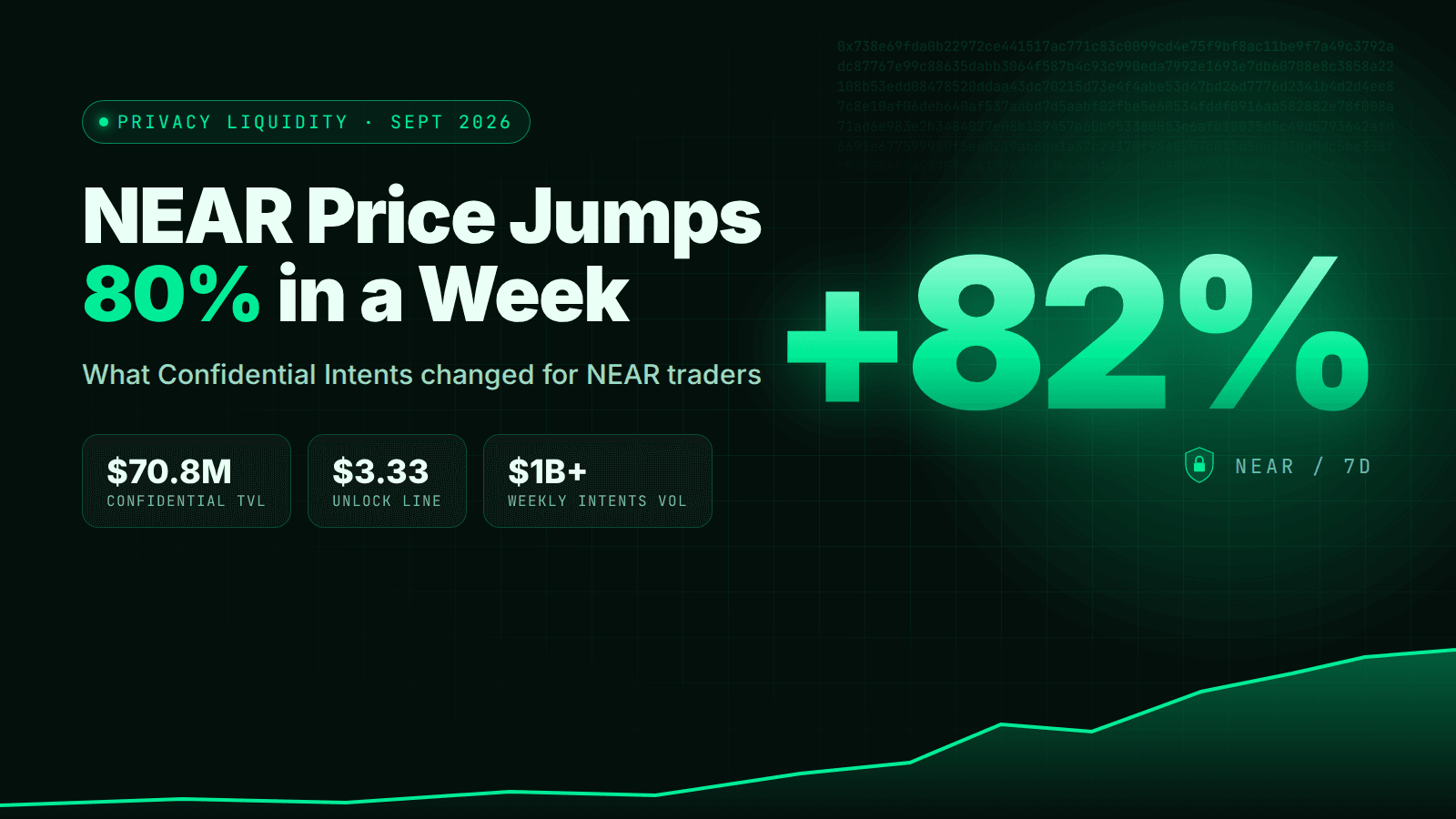
NEAR Price Jumps 80% in a Week: What Confidential Intents Changed

PENGU Airdrop on WEEX: Get 10 USDT in PENGU Before October 6

Why Did the CLARITY Act Fail in the Senate, and What Happens Next for Crypto Regulation?
Airdrops This Week (September 17-23, 2026): Official Conditions and Safety Checks
Senate CLARITY Act Cloture Vote Today: Can Trump's Ethics Compromise Get 60 Votes?
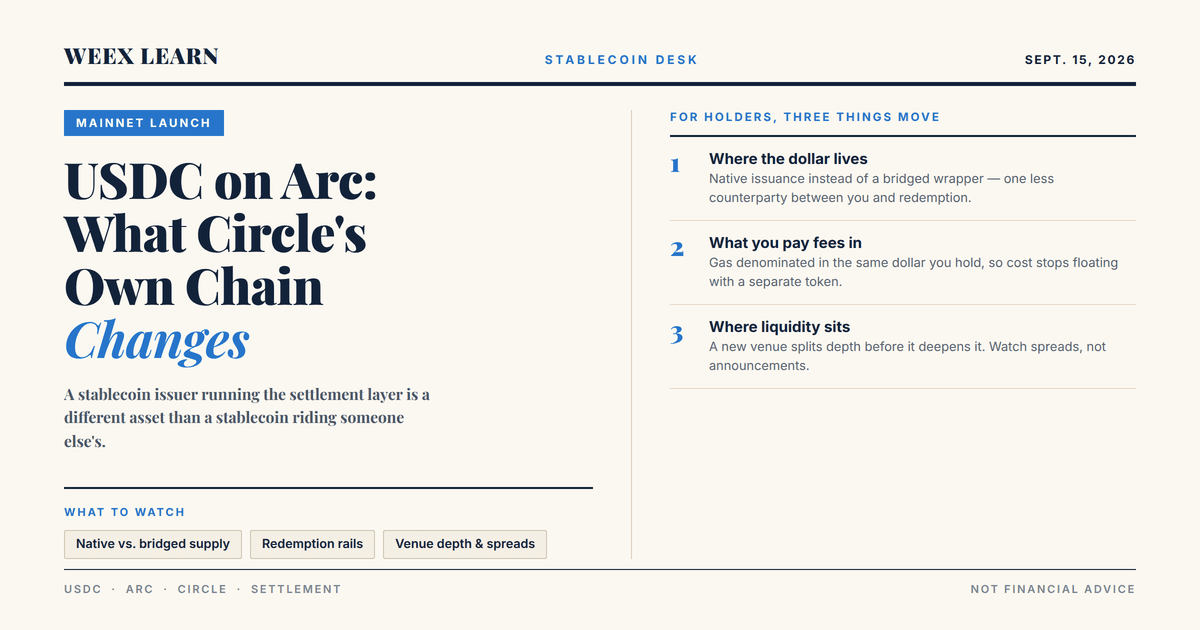
USDC on Arc: What Circle's Mainnet Launch Changes for Holders
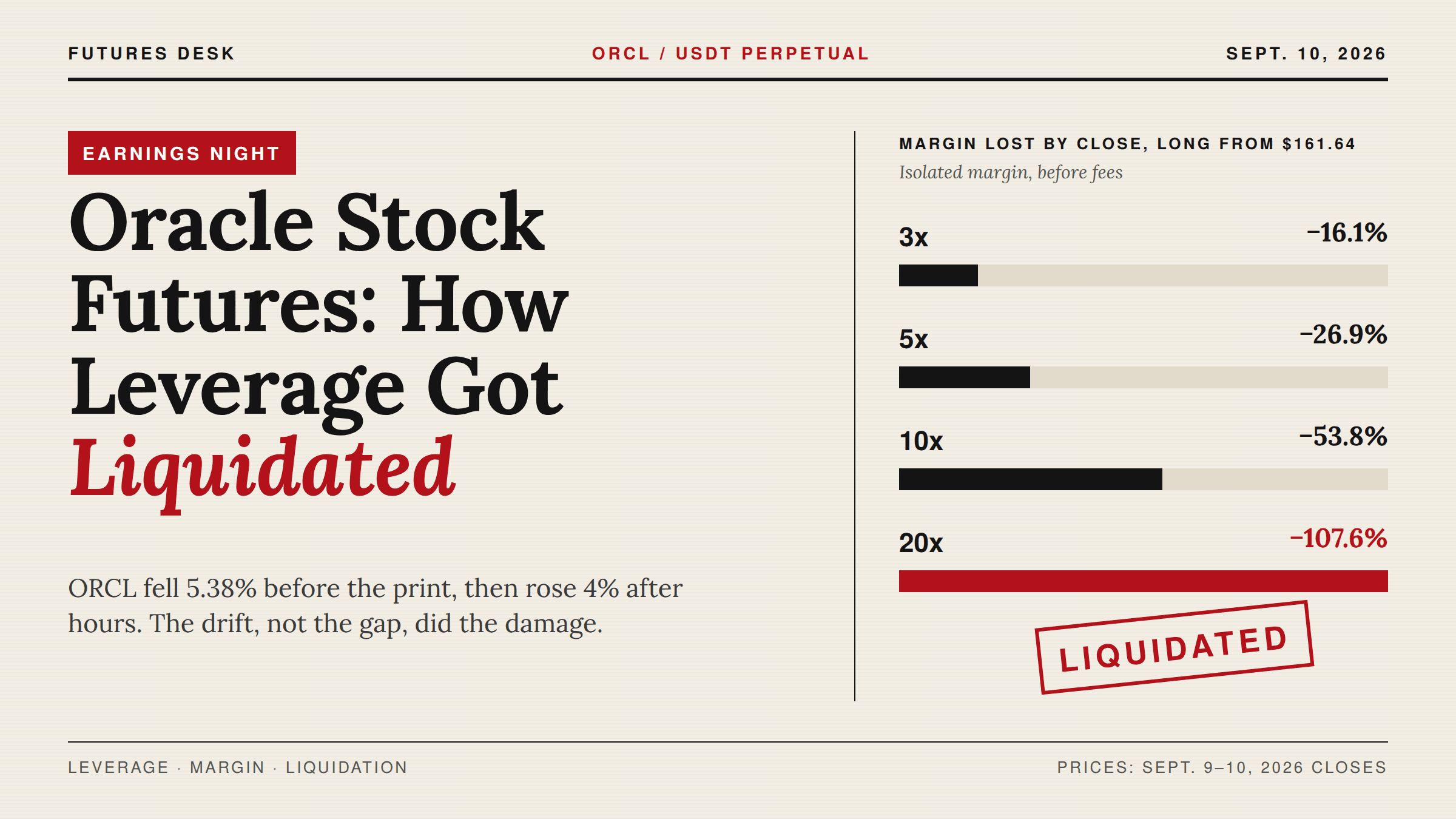
Oracle Stock Futures After Earnings: How Leverage Got Liquidated

MU Stock Reclaims $1,000 Again: What's Actually Different This Time

XST Coin Price Fell Over 40% for Two Straight Days: What That Pattern Actually Means
Is The US Becoming The Crypto Capital? Brad Garlinghouse's Bold Predictions Explained
GPT-6 Astra and Crypto: The AI Token Bid and the Cyber Risk
Nike Is Being Removed From the S&P 100: What a 12 Year Low Actually Means for the Stock
Lululemon Stock Crashes to an 8 Year Low Right Before Its New CEO Even Starts
PONS Robinhood Chain Token: What the Buyback Rally Rests On

Dell Stock Surges 9.4% After Smashing Earnings Estimates: What Drove the AI Server Beat

SQQQ Explained: Why the 3x Inverse Nasdaq ETF Bleeds Value
How Safe Are the Crypto Exchanges Pakistani Traders Actually Use? A Security Comparison
XST Coin Price Crosses Into Deep Capitulation Territory: What a 90%+ Decline Actually Signals
Crypto Futures Liquidation in Pakistan: How It Works and How to Manage Risk
XPL/USDT After the August 25 Unlock: Will Ecosystem Incentives Create Demand or Selling Pressure?
SPCX Stock Keeps Swinging Around Its $135 IPO Price : What the Lockup Schedule Still Ahead Actually Means
Best Futures Exchange in Pakistan for 2026? What Leverage, Liquidity, and Liquidation Risk Actually Require
Crypto P2P Trading in Pakistan: Which Exchange Has the Best PKR Marketplace in 2026
Best Crypto Exchange in Pakistan for 2026: What You Need to Know Before Choosing
Taiwan's Travel Rule Starts in October: What Domestic Crypto Transfers Will Require
Self-Custody Wallets: When a Crypto Transfer Must Be Reported to Brazil's Coaf
Italian Crypto Tax Return 2026: Filing Deadline, Forms and Gains Rate
What Is Aleo (ALEO) Crypto, and Why Did Its Price Jump Up to 88%?
What Is Blockchain Technology? Follow One Transaction to See
What Is Pi Network? A Complete Beginner's Guide


