
Taiwan's Travel Rule Starts in October: What Domestic Crypto Transfers Will Require

 Prefer us on Google
Taiwan's Travel Rule starts in its first phase in October 2026 (Republic of China year 115), applying first to transfers between virtual asset service providers (VASPs) established in Taiwan. Every transfer is covered, whatever its size; when a single transfer is worth more than NT$30,000, a natural person must also supply their date of birth and residential address and a legal person its official identification number and registered address, and the receiving platform has to check that data against its own customer records.
Why the FSC is moving on transfer data now
The Financial Supervisory Commission (FSC) said in its 4 August 2026 press release that it is amending the Regulations Governing Anti-Money Laundering and Countering the Financing of Terrorism for Enterprises or Persons Providing Virtual Asset Services, following the Financial Action Task Force's (FATF) revised Recommendation 16, and has opened the draft for public comment (FSC press release, 4 August 2026). The same release notes that the current rule was issued on 30 June 2021 and that Article 7 already introduced Travel Rule provisions, but the mechanism has never taken effect because national requirements differ, message formats are not standardised, and cross-border system connections are hard to build.
Commerce Times reported on 26 September 2026, quoting industry operator KryptoGO, on why the data moves off-chain (Commerce Times, 26 September 2026): a blockchain publicly records transfers between wallet addresses but not who holds those wallets, so the two platforms involved must exchange the payer and payee details off-chain and send identity data alongside the assets, which raises transparency and cuts money-laundering and fraud risk.
Two phases: domestic first, cross-border by the end of 2027
Phase one covers transfers between domestic VASPs and is expected to take effect in October 2026; phase two extends to transfers between domestic and overseas VASPs and is expected to take effect by the end of 2027, staged by consensus reached between the FSC and the Taiwan Virtual Asset Service Provider Association (FSC press release, 4 August 2026). In its statement of 4 August 2026 the association says it has helped members begin the first-phase technical connection and notes that Singapore, Japan and the European Union have already implemented Travel Rule rules (Taiwan VASP Association statement, 4 August 2026).
Cross-border links wait because they involve different national rules, data fields, messaging protocols and personal-data requirements, which take longer to integrate in practice, Commerce Times reported the same day (Commerce Times, 26 September 2026). United Daily News reported on 25 August 2026 that phase one was expected to go live as early as October this year and phase two by the end of 2027, with operators already preparing (United Daily News, 25 August 2026).
What the NT$30,000 line adds: upper-limit enhanced collection
The draft's mechanism is what the FSC calls upper-limit enhanced: VASPs must apply the Travel Rule regardless of value, and above NT$30,000 they collect extra data according to the payer's and payee's type — date of birth and address for a natural person, official identification number and registered address for a legal person (FSC press release, 4 August 2026).
The draft also adds a receiving-side duty: above NT$30,000 the receiving VASP must check the payee information supplied by the sending side against the customer information it holds (same press release). Blockcast's report of 4 August 2026 also set out the NT$30,000 threshold, the birthday and address requirements, the phased timetable and the 30-day comment window (Blockcast, 4 August 2026).
The four steps a transfer walks through
Commerce Times reported on 26 September 2026 that users meet four steps: provide or confirm the identity and transaction details required for the transfer; confirm the receiving party's information; confirm the receiving VASP and wallet address details; and allow extra time for data checks and processing. If required information is missing, wrong, or inconsistent with what the receiving side holds, the transfer itself can be affected (Commerce Times, 26 September 2026).
The same report describes how XREX Group handles it: after a user submits a request, the exchange first checks whether the payee name and wallet address trigger risk controls or a listed name, then sends the Travel Rule data through the connection between Taiwanese VASPs, and only then broadcasts the assets on-chain. The moment of transfer no longer depends on on-chain confirmation alone; a platform-to-platform data check sits in between.
A worked case: moving more than NT$30,000 to another Taiwan platform
Say you hold the equivalent of NT$80,000 in USDT on one Taiwan platform and want to move the whole amount to another platform in the country. Above NT$30,000, this is a phase-one domestic transfer and both sides must apply the Travel Rule. For you the difference is this: besides the usual withdrawal details, the sending platform must obtain and transmit your date of birth and address (natural person), the payee's name and the wallet address, while the receiving platform matches that data against your customer records there. If a single item does not line up — a differently spelled name, for instance — the transfer can be affected (Commerce Times, 26 September 2026).
Three practical habits follow: make sure the account name, identity document details and wallet address on the receiving platform agree; when the amount approaches or exceeds NT$30,000, allow more time than usual; and do not resubmit the same request while a check is running. These are consequences of data collection and matching, not new limits on the assets themselves.
What has not been published yet
The FSC release and current coverage describe only an October 2026 start; they do not give the final article numbers of the amended rule, the Administrative Yuan Gazette issue carrying the draft, or the exact fields the receiving side must match, and public material says nothing about whether transfers to a self-custody wallet are covered in phase one. The release says the draft will be published in the Administrative Yuan Gazette and on the FSC website with an explanatory note and comparison table, and that comments can be filed within 30 days of the gazette publication through the draft-notice section of the FSC's regulatory inquiry system.
What it means for WEEX users
Phase one governs transfers between domestic platforms. Move assets between Taiwan platforms and both ends apply the same data requirements; transfers between an overseas platform and a Taiwan platform fall into phase two, expected by the end of 2027, under the scope set out in the FSC press release (FSC press release, 4 August 2026).
Three operational changes are worth planning for: have your identity details ready before you send, especially above NT$30,000; keep the customer details on the receiving platform consistent with the sending platform instead of filling different name or document formats; and schedule withdrawals away from moments when the funds must arrive instantly. What the FSC has published is still the comment-stage draft, so final wording, the start date and each platform's collection screens follow the regulator's and the platforms' own announcements.
Frequently asked questions
If I move assets from WEEX into a Taiwan platform, do I need to give a birthday and address now?
Domestic platform-to-platform transfers are phase one and are planned from October 2026, while transfers involving an overseas platform and a Taiwan platform are phase two, expected by the end of 2027. The fields you actually fill, and when, follow the sending platform's own notice and screen.
Does a transfer under NT$30,000 escape the rule?
No. VASPs apply the Travel Rule regardless of value; NT$30,000 is the line for the extra identity data and the receiving side's matching duty, while smaller transfers still go through the basic data flow.
Can the checks slow a transfer down?
Yes. Missing or wrong information, or data that disagrees with the receiving side, can affect how the transfer is processed, which is why allowing more time makes sense (Commerce Times, 26 September 2026).
Published: 26 September 2026 · Published by WEEX · WEEX editorial standards
This article is general information only and is not investment, financial, legal or tax advice.
This content is provided for general informational purposes only and doesn't constitute financial, investment, legal, or tax advice. Any events, rewards, online promotions, or related information mentioned herein should not be considered a recommendation, solicitation, or invitation to purchase, sell, trade, or otherwise deal in any crypto assets. Crypto assets are highly volatile and may result in loss. The availability of WEEX services, products, and related events may vary by region. You are responsible for ensuring that your participation is in accordance with applicable local laws and regulations.
You may also like
Bitget Resumes Withdrawals in Phases: Schedule in Vietnam Time and What to Check

Bitget Phased Withdrawal Restart: Schedule (UTC+8) and Checks for Taiwan Users
Germany's Crypto Tax Draft 2027: What the 50 Percent Substitute Assessment Means

Who Can Operate in Russia's Crypto Market from 5 October 2026
Self-Custody Wallets: When a Crypto Transfer Must Be Reported to Brazil's Coaf
Binance UAH Deadline: Fiat Trade UAH and USDT/UAH Changes on 28 September
Italian Crypto Tax Return 2026: Filing Deadline, Forms and Gains Rate
FTXF: Hanoi Police Seeks Victims to Report by September 30, 2026
XOF, XAF and CDF Are Now Available on WEEX P2P: What Users Need to Know
WEEX Close Position Guide: Flash Close, Limit Close and TP/SL
WEEX Futures Trading: What 400x Leverage Really Costs You
What Is Aleo (ALEO) Crypto, and Why Did Its Price Jump Up to 88%?
Best Crypto Exchange for Beginners 2026: What Actually Matters When Choosing One
Best Crypto Cold Wallet 2026: Top Picks Matched to How You Hold
Phantom Wallet vs MetaMask: What's the Difference
How to Connect Phantom Wallet to a Solana DApp
How to Install and Set Up Phantom Wallet
What Is Phantom Wallet? A Complete Guide to the Solana Wallet

What Is a White Label Crypto Exchange? A Complete Beginner's Guide
What Is Pons Crypto (PONS), and How to Trade PONS on WEEX?
Crypto Futures Trading Explained: One Real Trade, Start to Exit
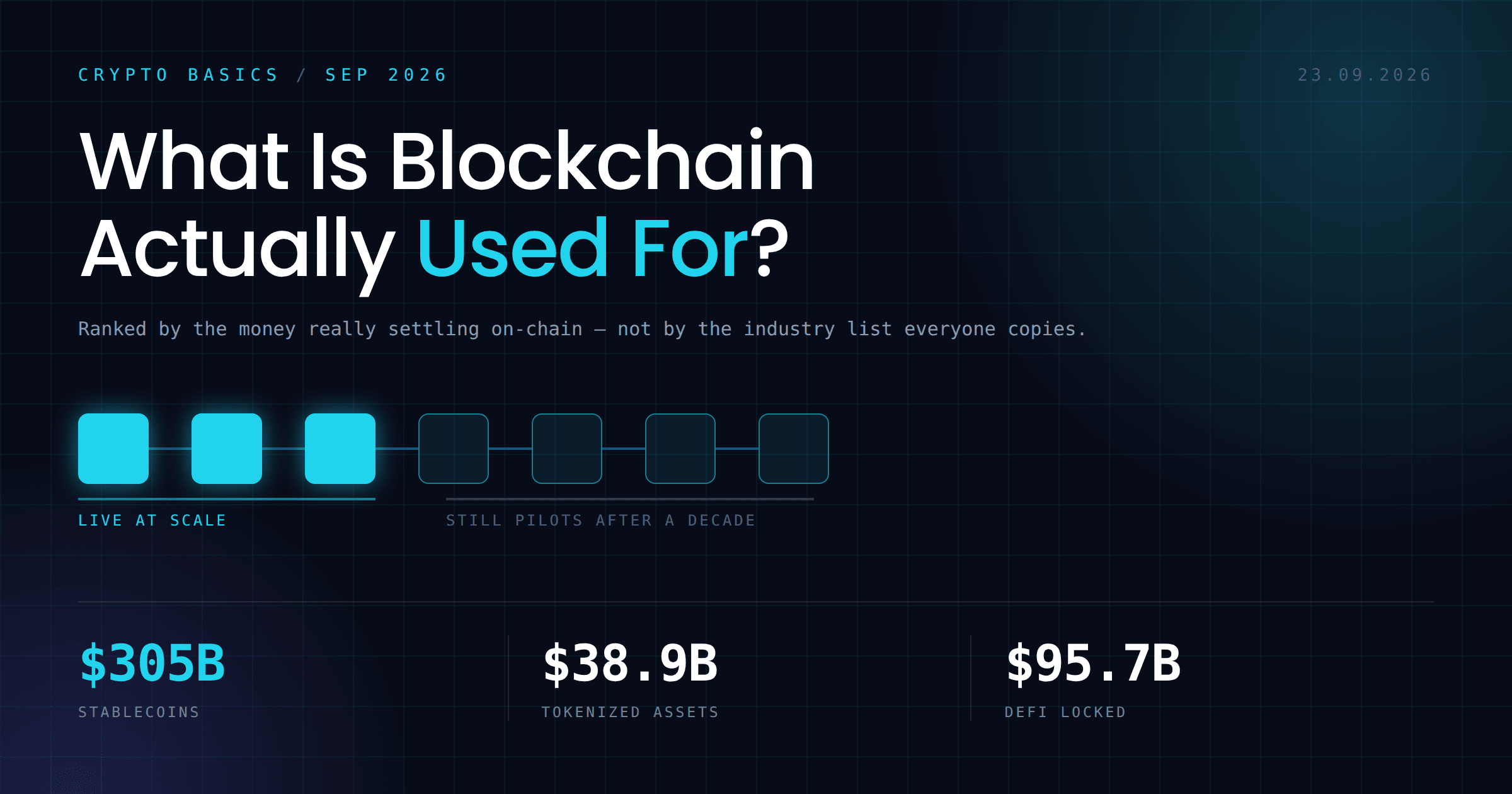
What Is Blockchain Used For? 2026 Uses, Ranked by Real Money
How to Buy USDT with EUR via SEPA Bank Transfer on WEEX
How to Buy Bitcoin with EUR in Europe on WEEX
How to Buy Crypto in Europe with EUR on WEEX OTC
How to Buy Crypto in Vietnam with VND on WEEX OTC
How to Buy USDT in Vietnam with VND via MoMo or Bank Account
INTC Stock Surged 14%: Intel Only Has Enough Chips for Half Its Clients
Is Hyperliquid Safe? Risks You Should Know Before You Trade
Hyperliquid vs Centralized Exchanges: What's the Difference?
Bitget Resumes Withdrawals in Phases: Schedule in Vietnam Time and What to Check
Bitget Phased Withdrawal Restart: Schedule (UTC+8) and Checks for Taiwan Users
Germany's Crypto Tax Draft 2027: What the 50 Percent Substitute Assessment Means
Who Can Operate in Russia's Crypto Market from 5 October 2026
Self-Custody Wallets: When a Crypto Transfer Must Be Reported to Brazil's Coaf
Binance UAH Deadline: Fiat Trade UAH and USDT/UAH Changes on 28 September


