
Zhejiang Cyber Police in China reported a fraud case disguised as "virtual currency."

 Prefer us on Google

Recently, the internet police in Taizhou, Zhejiang, China reported a fraud case disguised as "metaverse" and "virtual currency."
The criminal gang promoted facial recognition payment devices, initially attracting users through a points system, then luring investors to purchase their self-issued "air coins." They continuously siphoned off funds through methods such as locking assets, manipulating prices, and "currency swapping," ultimately defrauding over 130 investors of approximately 35 million yuan. The court determined that the defendants committed fraud with the intent of illegal possession, with the amount being particularly large, sentencing them to 10 years in prison and a fine of 200,000 yuan.
-- Price
This content is provided for general informational purposes only and doesn't constitute financial, investment, legal, or tax advice. Any events, rewards, online promotions, or related information mentioned herein should not be considered a recommendation, solicitation, or invitation to purchase, sell, trade, or otherwise deal in any crypto assets. Crypto assets are highly volatile and may result in loss. The availability of WEEX services, products, and related events may vary by region. You are responsible for ensuring that your participation is in accordance with applicable local laws and regulations.
You may also like

Sam Price Predicts Gold Prices Will Rise, Focuses on Cryptocurrency Market Trends

Shanghai Releases Digital Economy Development Plan, Initiates Research on Web 3.0 Innovation Testing Grounds

Yuga Labs management adjustment: Greg Solano appointed as chairman of the board, Michael Figge appointed as CEO

Meta reduces investment in the metaverse, terminates the Quest platform's Horizon Worlds project

Hedera Council adds Apex Group, servicer of $3.5T in assets

Kaspa developer targets ownerless prediction market by end-2026

Are GOPAX Withdrawals Still Paused? What Users Can Request and What Remains Unconfirmed
Check the latest GOPAX withdrawal status, which wallets qualify for manual requests, and how to tell whether your crypto withdrawal has been sent.
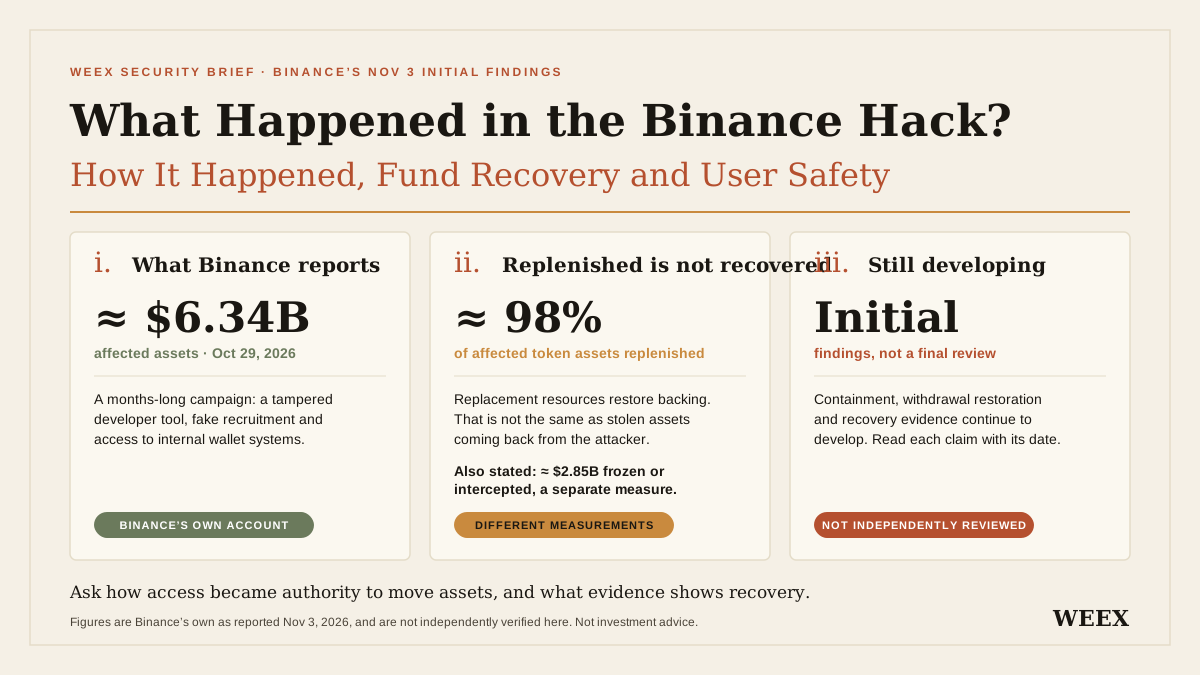
What Happened in the Binance Hack? How It Happened, Fund Recovery and User Safety
What happened in the Binance hack? Review the attack timeline, latest fund replenishment, recovery limits and practical steps to protect your account.

Hoskinson says he cannot run Cardano like a CEO. Who is accountable for its growth?

Why Pronostyx Is Building Prediction Markets for Questions the Big Platforms Ignore

Former Cointelegraph CEO Joins Phase as Co-Founder and CEO

Alta raises $47.5M for blockchain backed by crypto skeptic Jack Zhang

U.S. Mortgage Rates Surge After Four Weeks of Decline

Decrypt Becomes First News Publisher to Offer Perps Trading, Powered by Solana's Phoenix

How Far Can AI Trading Go Amid the Anti-Data Center Wave? It Depends on GPU Leasing Prices
XRPL lending protocol gains validator support as vault vote advances

Tech Veteran: Anthropic IPO Will Be the Peak of AI Market in US Stocks, Will 'Aggressively Buy Chinese AI' If Conditions Allow

Moody's Projects Global Credit Deterioration by 2027 and Warns of the Impact of Rates and AI

CPI Higher Than Expected in the U.S.: What It Means for Investors

EWY ETF Volatility: Semiconductor Concentration, Rebound, and Fund-Flow Risks
AI Agents Do More Than Just Place Orders: The Next Entrepreneurial Opportunity Lies in Matching and Trust
Exodus Reports $8.3M Quarterly Loss as Wallet Platform Expands Payments Business

USAR Stock: Rare-Earth Commercialization, Quarterly Losses, and Funding Risks

Hims & Hers (HIMS) Falls After Earnings: Margins, Subscribers, and Guidance

IWM ETF Outlook: Small-Cap Rebound, Fund Positioning, and Credit Risk

SOXL Sell-Off and Rebound: 3x Leverage, Fund Flows, and Semiconductor Risk

Something strange is happening with Bitcoin. It is neither digital gold nor a tech company for Wall Street

TQQQ Outlook: Triple-Leverage Swings, Rebound Potential, and Decay Risk

US card debt hits $1.29 trillion as Bitcoin loans expose a collateral divide
QQQ Outlook: Tech Sell-Off, Rebound, and Nvidia Earnings
Sam Price Predicts Gold Prices Will Rise, Focuses on Cryptocurrency Market Trends
Shanghai Releases Digital Economy Development Plan, Initiates Research on Web 3.0 Innovation Testing Grounds
Yuga Labs management adjustment: Greg Solano appointed as chairman of the board, Michael Figge appointed as CEO
Meta reduces investment in the metaverse, terminates the Quest platform's Horizon Worlds project
Hedera Council adds Apex Group, servicer of $3.5T in assets
Kaspa developer targets ownerless prediction market by end-2026
Latest articles





Latest coin listings on WEEX


