
From Bitcoin Cold Wallets to Cryptocurrency Farms: How the Digital Asset Network Challenges the Financial System

 Prefer us on Google


The world of digital assets, known as cryptocurrencies, is an alternative to the traditional financial system that allows for payments and transfers, and has also emerged as a method for future investment. The cases of the murder of Camilo Séptimo's keyboardist, Jonathan Meléndez, and his family, allegedly due to the theft of a cold wallet of bitcoins, as well as the recent seizure of a cryptocurrency farm in the municipality of Tlaola, Puebla, highlight the use of these digital assets, which are also used by drug trafficking for money laundering. These digital currencies challenge the financial system because they are not regulated by banks as they do not belong to any institution. Their issuance and management are controlled by a network of computers distributed around the world, facilitating their use by criminal groups.
How do cryptocurrencies work?
Cryptocurrencies are digital assets whose transactions depend on a database called blockchain, a digital ledger where transactions made with the currencies, which can be bitcoin, ethereum, among others, are recorded. Currently, a bitcoin is priced at around 23 thousand dollars on exchange platforms, according to data from national banks. Cryptocurrency farms play an important role in the world of digital assets, as they mine coins to create additional units of a cryptocurrency. This process involves solving a mathematical problem posed by a network of miners, using computer equipment: the one who solves the problem first receives new units of the cryptocurrency. The use of these digital currencies facilitates the commission of money laundering activities because their transactions are not easily detectable by authorities. Mike Vigil, former Chief of International Operations of the Drug Enforcement Administration (DEA), explained in an interview with Infobae Mexico that this occurs through three steps. According to Vigil, the process begins with the use of cash to acquire cryptocurrencies, which is done by recruiting intermediaries who convert it into currency through bitcoin ATMs. Subsequently, the funds are moved between different blockchains to break the public audit trail through low-value transactions that do not attract attention, and finally, the money returns to the conventional economy simulating a legitimate origin. The former DEA official explained that this is complemented by over-the-counter brokers and peer-to-peer exchanges, where "rogue or unregulated traders exchange large volumes of cash for cryptocurrencies, avoiding any standard customer identification verification**.
Cold wallets and virtual wallets for cryptocurrency use
The case of Jonathan Meléndez has brought digital assets into focus, after authorities revealed that the alleged murderer of the keyboardist and co-founder of Camilo Séptimo, identified as Diego Sebastián "N", intended to steal cryptocurrencies that belonged to the musician. Various reports indicated that it involved a cold wallet in which he had at least 3 million dollars in bitcoins. This system is a wallet that keeps transactions in an isolated environment, where the operation is completed offline and only the signature (not the key) travels back to the connected device to be transmitted to the blockchain. Additionally, there are virtual wallets that serve to store, send, and receive cryptocurrencies, which would be equivalent to a traditional bank account. These are protected by an encrypted system so that only the owner can access it using a password or security pin.
Obstacles to Tracking Digital Operations in Money Laundering
Mike Vigil indicated that agencies would need to develop networks of informants and intelligence, in addition to resorting to phone interceptions to detect the money laundering operations committed through cryptocurrencies. Even so, he emphasized that very specific information is needed to identify buyers and sellers. Furthermore, he detailed how criminals break the public audit trail of the blockchain once the money is already within the digital ecosystem. According to him, they move the funds "quickly through completely different blockchains", for example, by exchanging bitcoin for Ethereum and then for Monero. Vigil described those movements between different chains as "a technical smoke screen that is notoriously difficult for automated compliance tracking systems to follow seamlessly".
-- Price
Traditional Money Laundering Methods Persist Alongside Cryptocurrencies
Vigil specified that, in addition to using digital currencies, cartels continue to resort to conventional mechanisms to launder profits derived from drug sales in the United States. As he explained, a large part of the money is physically transported in vehicles to Mexico. He also described the purchase of commercial goods as a parallel laundering avenue. "Here they buy electronics, they buy textiles, they buy diamonds, gold (...) they transport it to Mexico and sell it there as if it were clean things, something commercial," he recounted. This circuit also includes the acquisition of real estate and businesses. Vigil mentioned the purchase of "land", "shopping centers", restaurants, and livestock as common destinations for illicit money, in operations that, he claimed, are easy to execute for criminal organizations.
This content is provided for general informational purposes only and doesn't constitute financial, investment, legal, or tax advice. Any events, rewards, online promotions, or related information mentioned herein should not be considered a recommendation, solicitation, or invitation to purchase, sell, trade, or otherwise deal in any crypto assets. Crypto assets are highly volatile and may result in loss. The availability of WEEX services, products, and related events may vary by region. You are responsible for ensuring that your participation is in accordance with applicable local laws and regulations.
You may also like

Pro investors increase exposure to HYPE, SUI, UNI as first-generation altcoin allocations decline

Israel Discount Bank to Open Bitcoin and Ethereum Trading in App Starting November 26

Israel Discount Bank to Open Bitcoin and Ethereum Trading in App from November 26

Thousands of Bitcoin nodes gave anonymous strangers a pass around security limits

Bitcoin Core Addresses Three Security Vulnerabilities in October

Peter Brent: The Yield on 30-Year U.S. Bonds May Reach 7%

Glassnode reports stablecoin supply fell by 14.2 billion

10x Research: Bitcoin's One-Year Return After Midterm Elections is 53.9%

Decrypt Becomes First News Publisher to Offer Perps Trading, Powered by Solana's Phoenix
Bitcoin Scam on Shaadi.com, User Solicited for a $500 Deposit

Ignas: HYPE and AVAX Face Value Capture Challenges

CPI Higher Than Expected in the U.S.: What It Means for Investors

Bloomberg analyst warns BTC, Nasdaq, commodities may face year-end declines

Barclays Increases Stake in BlackRock Bitcoin ETF by 48% in Q3, Citigroup Establishes $119 Million FBTC Position

Something strange is happening with Bitcoin. It is neither digital gold nor a tech company for Wall Street

US card debt hits $1.29 trillion as Bitcoin loans expose a collateral divide

CryptoQuant: Bitcoin Analyst Sentiment Significantly Bearish, Index Drops to -1.8σ

CoinShares Survey Shows Fund Managers' Digital Asset Allocation Rises to 1.3%

From Sidechains to zk-Rollups: Tacit Chain Aims to Redefine Payments with Default Privacy

Treasury Discusses Bitcoin Acquisition Pathways, Government Holdings Undergo Second Round of Review

Trump Still Interested in Increasing Bitcoin Holdings Amid Legal Hurdles

LNbits Security Patch Released After Bitcoin Wallet Theft

Deutsche Bank launches crypto custody for Bitcoin, Ethereum, stablecoins
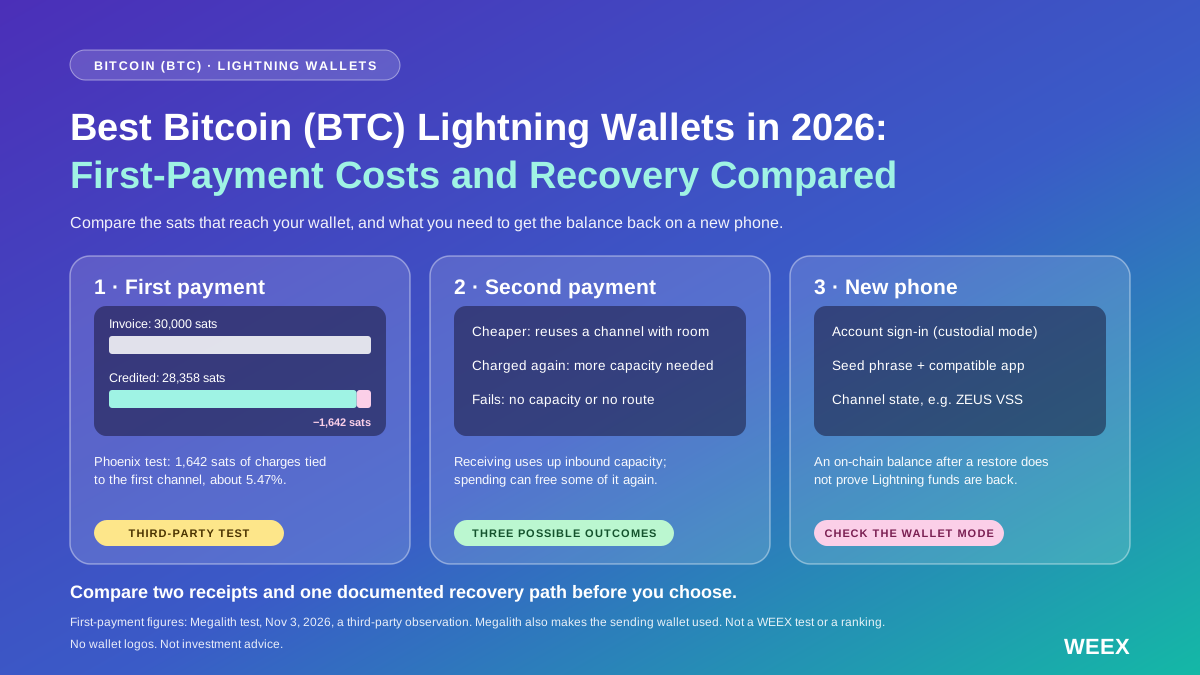
Best Bitcoin (BTC) Lightning Wallets in 2026: First-Payment Costs and Recovery Compared
Key Takeaways Lightning Network wallets enable fast and cost-effective Bitcoin transactions by using off-chain channels. A variety of…

SEC Enforcement Actions Decrease by 23.7% to 348 in Fiscal Year 2026
BlackRock Loses $1.735 Billion in Cryptocurrency Funds

Ethereum’s Joseph Lubin explains why ETH could rival Bitcoin and gold

BitGo Posts $44M Quarterly Profit as Platform Assets Grow, But Adjusted EBITDA Stays Negative
Bitcoin: A Thief Sentenced in China for Memorizing a Seed Phrase

Bitcoin loses status as main risk asset amid stock market lag
Pro investors increase exposure to HYPE, SUI, UNI as first-generation altcoin allocations decline
Israel Discount Bank to Open Bitcoin and Ethereum Trading in App Starting November 26
Israel Discount Bank to Open Bitcoin and Ethereum Trading in App from November 26
Thousands of Bitcoin nodes gave anonymous strangers a pass around security limits
Bitcoin Core Addresses Three Security Vulnerabilities in October
Peter Brent: The Yield on 30-Year U.S. Bonds May Reach 7%
Latest articles





Latest coin listings on WEEX


