
CFTC Says US-Regulated Exchanges Can Begin Trading Individual-Stock Perpetual Futures

 Prefer us on Google


TL;DR: CFTC chairman Michael Selig said on November 3 that individual-equity perpetual futures can begin trading on appropriately registered US exchanges. The contracts fall within a joint CFTC-SEC regulatory framework, highlighting the effort to bring perpetual-style trading into supervised domestic markets.
Perpetual futures have long been central to crypto derivatives trading, particularly on venues outside the United States. US regulators are now extending the structure into individual equities through a tightly defined securities-futures framework.
In a November 3 statement, Commodity Futures Trading Commission chairman Michael Selig said individual-equity perpetual futures can begin trading on CFTC-registered exchanges that also meet the relevant SEC registration requirements. The announcement follows earlier approval of a Bitcoin perpetual futures product on a regulated US venue.
What makes an equity perpetual different
A traditional futures contract expires or settles on a specified date. A perpetual contract is designed to maintain exposure without a conventional expiration, using contract-specific mechanisms to keep its price related to the underlying asset. That feature has made perpetual products popular in crypto, where traders often want continuous leveraged exposure.
Moving the structure to individual shares introduces other questions. Stocks have corporate actions, shareholder rights, trading halts and different market hours. The product traded is a derivative, not the underlying share itself, so customers need to understand what they own and how price adjustments are handled.
The CFTC says the products have been deemed approved under an existing Commission regulation as security-futures products and are subject to both commodities and federal securities-law requirements. That dual oversight is a material difference from the unregulated or lightly regulated offshore venues often associated with perpetual contracts.
Why the agencies are coordinating
US securities and derivatives regulators have historically had overlapping interests where instruments sit between their traditional categories. Selig framed the step as part of a coordinated approach with the SEC, pointing to an interagency memorandum of understanding signed earlier in 2026.
The policy argument is that traders may obtain a clearer set of safeguards when activity takes place on regulated domestic exchanges. That does not mean regulation makes leveraged positions safe. Margin calls, volatile prices, thin liquidity and market disruptions can still produce large losses, particularly when a derivative offers continuous exposure.
There is also a competition question. Crypto-native traders have become accustomed to perpetual markets with continuous access and different settlement mechanics. US venues will have to demonstrate that their products are useful without losing clarity on customer protections. This echoes the challenges discussed in NewsBTC's coverage of proposed tokenized securities infrastructure.
What traders need to inspect
The decisive details will be contract specifications, margin arrangements, eligible customers, clearing, reference prices and how corporate events affect payouts. The phrase 'can begin trading' establishes a regulatory opening; it should not be read as confirmation that every broker already offers every contemplated contract.
The development is significant for the convergence of crypto market structures and traditional finance. Rather than securities markets adopting blockchain itself, they are adopting a derivative format popularised by digital-asset trading. The test now is whether that format works responsibly under domestic exchange rules.
This article was written by the News Desk and edited by Samuel Rae.
-- Price
This content is provided for general informational purposes only and doesn't constitute financial, investment, legal, or tax advice. Any events, rewards, online promotions, or related information mentioned herein should not be considered a recommendation, solicitation, or invitation to purchase, sell, trade, or otherwise deal in any crypto assets. Crypto assets are highly volatile and may result in loss. The availability of WEEX services, products, and related events may vary by region. You are responsible for ensuring that your participation is in accordance with applicable local laws and regulations.
You may also like

Decrypt Becomes First News Publisher to Offer Perps Trading, Powered by Solana's Phoenix

Bitcoin Scam on Shaadi.com, User Solicited for a $500 Deposit

Ignas: HYPE and AVAX Face Value Capture Challenges

CPI Higher Than Expected in the U.S.: What It Means for Investors

Bloomberg analyst warns BTC, Nasdaq, commodities may face year-end declines

Barclays Increases Stake in BlackRock Bitcoin ETF by 48% in Q3, Citigroup Establishes $119 Million FBTC Position

Something strange is happening with Bitcoin. It is neither digital gold nor a tech company for Wall Street

US card debt hits $1.29 trillion as Bitcoin loans expose a collateral divide

CryptoQuant: Bitcoin Analyst Sentiment Significantly Bearish, Index Drops to -1.8σ

CoinShares Survey Shows Fund Managers' Digital Asset Allocation Rises to 1.3%

From Sidechains to zk-Rollups: Tacit Chain Aims to Redefine Payments with Default Privacy

Treasury Discusses Bitcoin Acquisition Pathways, Government Holdings Undergo Second Round of Review

Trump Still Interested in Increasing Bitcoin Holdings Amid Legal Hurdles

LNbits Security Patch Released After Bitcoin Wallet Theft

Deutsche Bank launches crypto custody for Bitcoin, Ethereum, stablecoins
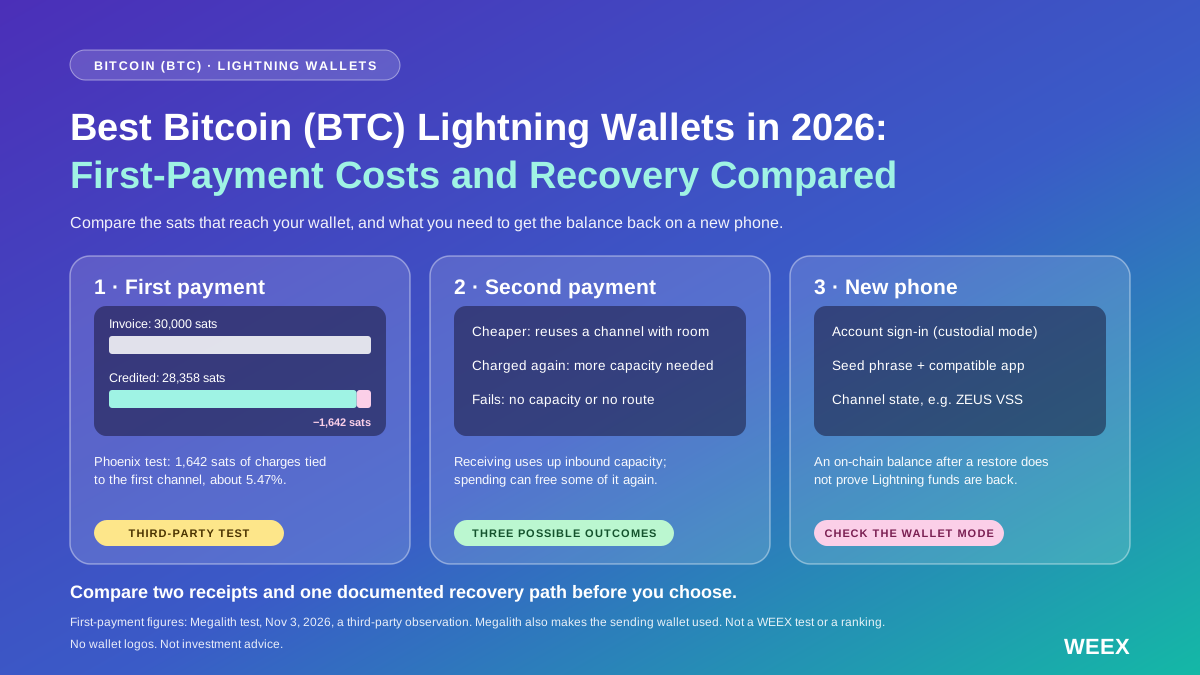
Best Bitcoin (BTC) Lightning Wallets in 2026: First-Payment Costs and Recovery Compared
Key Takeaways Lightning Network wallets enable fast and cost-effective Bitcoin transactions by using off-chain channels. A variety of…

SEC Enforcement Actions Decrease by 23.7% to 348 in Fiscal Year 2026

BlackRock Loses $1.735 Billion in Cryptocurrency Funds

Ethereum’s Joseph Lubin explains why ETH could rival Bitcoin and gold

BitGo Posts $44M Quarterly Profit as Platform Assets Grow, But Adjusted EBITDA Stays Negative
Bitcoin: A Thief Sentenced in China for Memorizing a Seed Phrase

Bitcoin loses status as main risk asset amid stock market lag

Crypto ATM Fees: How Much Bitcoin (BTC) Do You Get for $100?
See how much Bitcoin $100 buys at a crypto ATM. Compare two sample quotes, calculate the all-in cost, and learn which fees not to count twice.

WEEX 11.11 Shopping Fest: Buy BTC and Unlock Up to 888 USDT in Rewards

WEEX Exclusive:CPI Exceeds Expectations, Three Major Indexes and Bitcoin Lower | WEEX Daily Market Brief (November 11, 2026)
October CPI rose 0.4% month over month, above expectations. Bond yields climbed, and the three major indexes all closed lower. Bitcoin briefly fell below $73,000. CoreWeave’s third-quarter revenue beat expectations. TSMC’s October revenue was strong. The bond market is closed on November 11; watch for Rumble’s earnings report.

CPI Exceeds Expectations, Three Major Indexes and Bitcoin Lower | WEEX Daily Market Brief (November 11, 2026)
October CPI rose 0.4% month over month, above expectations. Bond yields climbed, and the three major indexes all closed lower. Bitcoin briefly fell below $73,000. CoreWeave’s third-quarter revenue beat expectations. TSMC’s October revenue was strong. The bond market is closed on November 11; watch for Rumble’s earnings report.

24X Expands Collaboration with Standard Chartered Bank to Support Bitcoin and Ethereum Trading
Robinhood's Latest Earnings Report Tells You All You Need to Know About the Future of Crypto. These 2 Numbers Really Stood Out.
Bitcoin Spot ETF Sees Net Outflow of $95.0012 Million Yesterday, Continuing for 4 Days

From Shorting Stablecoins to Building Chains: The Shift of Airwallex Founder Jack Zhang and the Battle for Payment Settlement Layers
Decrypt Becomes First News Publisher to Offer Perps Trading, Powered by Solana's Phoenix
Bitcoin Scam on Shaadi.com, User Solicited for a $500 Deposit
Ignas: HYPE and AVAX Face Value Capture Challenges
CPI Higher Than Expected in the U.S.: What It Means for Investors
Bloomberg analyst warns BTC, Nasdaq, commodities may face year-end declines
Barclays Increases Stake in BlackRock Bitcoin ETF by 48% in Q3, Citigroup Establishes $119 Million FBTC Position
Latest articles





Latest coin listings on WEEX


