
Bitcoin to hit new high in 2027 as four-year cycle ends, Flaum says

 Prefer us on Google


Log Scale Investments CEO Mike Flaum has predicted Bitcoin will reach a new all-time high in 2027, rejecting the idea that its price still follows a dependable four-year cycle.
Summary
- Flaum expects a Bitcoin record in 2027 and says the four-year cycle is over.
- Galaxy's latest research argues Bitcoin bottomed in June, revising its earlier downside assessment.
- Fidelity says improving market signals still leave questions about whether a sustained recovery has begun.
- Grayscale favors economic conditions and interest rates over the halving calendar when assessing Bitcoin.
Bitcoin Magazine shared Flaum's forecast following an Oct. 30 interview in which the investment executive discussed Bitcoin's cycle, corporate treasury companies and securities backed by their Bitcoin holdings.
His prediction puts a fresh record on the calendar for next year, even as investment firms remain divided over how to interpret the recovery from Bitcoin's 2026 lows.
Bitcoin's four-year cycle faces another challenge
During the interview, Flaum rejected the four-year cycle framework and expressed confidence that Bitcoin would set another record in 2027. The discussion moved from whether the cycle was dead to the prospect of a new high before the next halving.
Bitcoin Magazine's published chapter list places those sections at 18:48 and 20:31, respectively. The conversation formed part of a longer discussion about Strategy, Strive and the financing structures used by companies that hold Bitcoin.
Flaum's position challenges the view that Bitcoin's halvings provide a reliable timetable for market peaks and declines. Under that framework, investors compare the current market with earlier periods when a halving preceded a bull-market high and a subsequent bear market.
Other investment firms have questioned the same framework, although their explanations and forecasts differ.
Galaxy's latest Bitcoin view differs from its earlier warning
Galaxy Research's changing assessment shows how the evidence has developed during the year.
In a June 9 analysis, the firm argued that Bitcoin's four-year cycle remained visible in market and on-chain data, even as price swings became smaller. Historical comparisons produced an illustrative base-case bottom between $40,000 and $46,000.
As crypto.news previously reported, Galaxy's earlier cycle assessment found that only four of 13 historical bottom indicators had triggered.
By October, however, its head of firmwide research, Alex Thorn, had reached a more optimistic conclusion.
In research published Oct. 26 and originally circulated to clients on Oct. 22, Galaxy said it believed the bear market ended in June and Bitcoin had entered an accumulation phase.
Its supporting evidence included Bitcoin holding its 200-week moving average and recovering its 50-week moving average for five consecutive weeks.
The firm identified conditions that could undermine that view, including a weekly close below the then-current 50-week average of $76,540 that was not recovered within a month.
Fidelity sees recovery signals but leaves room for caution
Fidelity has taken a more cautious approach to declaring the downturn finished.
Its bear-market assessment said the recovery could represent either the start of a sustained advance or a temporary rally within a continuing bear market.
Some investors were watching November 2026 because Bitcoin's previous major bear-market bottom occurred in November 2022. Fidelity stressed that earlier cycles had never followed exact four-year schedules and could not reliably identify turning points.
Chris Kuiper, vice president of research at Fidelity Digital Assets, pointed to adoption occurring in waves and said longer holding periods had historically been more useful than trying to identify precise bottoms.
The firm's Oct. 28 signals report described improving momentum, recovering profitability and participation across digital assets at the start of the fourth quarter.
Profitability, sentiment and momentum indicators suggested conditions could be moving from recovery toward expansion. Mining economics, adoption, stablecoin activity and on-chain demand were still sending mixed signals, according to Fidelity.
-- Price
Grayscale puts economic conditions ahead of the halving calendar
Grayscale research head Zach Pandl has offered a different explanation for Bitcoin's price behavior.
In a July 22 analysis, Pandl contrasted the halving-led cycle theory with a framework centered on economic growth and inflation-adjusted interest rates.
He noted that past Bitcoin bear markets had coincided with weaker growth, rising real rates or both. Grayscale favored the view that Bitcoin was increasingly responding to the same economic forces that influence other major assets.
Pandl's assessment was conditional: if the Federal Reserve avoided further rate hikes and economic growth held up, Bitcoin's low might already have occurred.
This content is provided for general informational purposes only and doesn't constitute financial, investment, legal, or tax advice. Any events, rewards, online promotions, or related information mentioned herein should not be considered a recommendation, solicitation, or invitation to purchase, sell, trade, or otherwise deal in any crypto assets. Crypto assets are highly volatile and may result in loss. The availability of WEEX services, products, and related events may vary by region. You are responsible for ensuring that your participation is in accordance with applicable local laws and regulations.
You may also like

Pro investors increase exposure to HYPE, SUI, UNI as first-generation altcoin allocations decline

Israel Discount Bank to Open Bitcoin and Ethereum Trading in App Starting November 26

Israel Discount Bank to Open Bitcoin and Ethereum Trading in App from November 26

Thousands of Bitcoin nodes gave anonymous strangers a pass around security limits

Bitcoin Core Addresses Three Security Vulnerabilities in October

Peter Brent: The Yield on 30-Year U.S. Bonds May Reach 7%

Glassnode reports stablecoin supply fell by 14.2 billion

10x Research: Bitcoin's One-Year Return After Midterm Elections is 53.9%

Decrypt Becomes First News Publisher to Offer Perps Trading, Powered by Solana's Phoenix
Bitcoin Scam on Shaadi.com, User Solicited for a $500 Deposit

Ignas: HYPE and AVAX Face Value Capture Challenges

CPI Higher Than Expected in the U.S.: What It Means for Investors

Bloomberg analyst warns BTC, Nasdaq, commodities may face year-end declines

Barclays Increases Stake in BlackRock Bitcoin ETF by 48% in Q3, Citigroup Establishes $119 Million FBTC Position

Something strange is happening with Bitcoin. It is neither digital gold nor a tech company for Wall Street

US card debt hits $1.29 trillion as Bitcoin loans expose a collateral divide

CryptoQuant: Bitcoin Analyst Sentiment Significantly Bearish, Index Drops to -1.8σ

CoinShares Survey Shows Fund Managers' Digital Asset Allocation Rises to 1.3%

From Sidechains to zk-Rollups: Tacit Chain Aims to Redefine Payments with Default Privacy

Treasury Discusses Bitcoin Acquisition Pathways, Government Holdings Undergo Second Round of Review

Trump Still Interested in Increasing Bitcoin Holdings Amid Legal Hurdles

LNbits Security Patch Released After Bitcoin Wallet Theft

Deutsche Bank launches crypto custody for Bitcoin, Ethereum, stablecoins
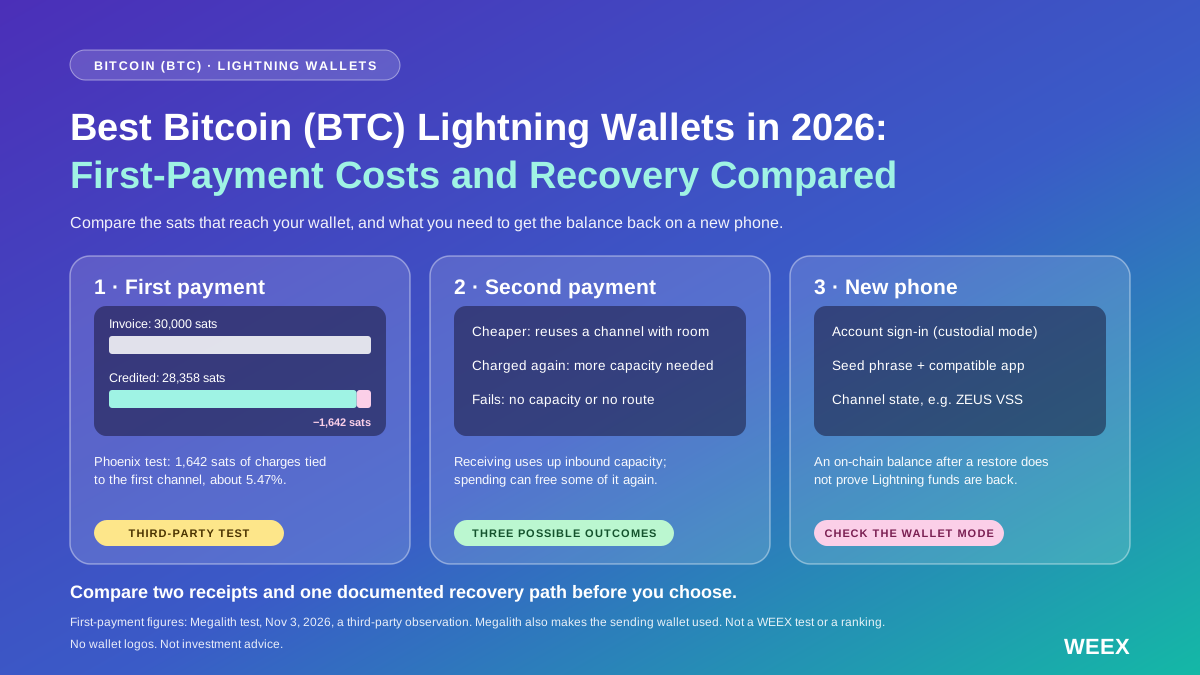
Best Bitcoin (BTC) Lightning Wallets in 2026: First-Payment Costs and Recovery Compared
Key Takeaways Lightning Network wallets enable fast and cost-effective Bitcoin transactions by using off-chain channels. A variety of…

SEC Enforcement Actions Decrease by 23.7% to 348 in Fiscal Year 2026
BlackRock Loses $1.735 Billion in Cryptocurrency Funds

Ethereum’s Joseph Lubin explains why ETH could rival Bitcoin and gold

BitGo Posts $44M Quarterly Profit as Platform Assets Grow, But Adjusted EBITDA Stays Negative
Bitcoin: A Thief Sentenced in China for Memorizing a Seed Phrase

Bitcoin loses status as main risk asset amid stock market lag
Pro investors increase exposure to HYPE, SUI, UNI as first-generation altcoin allocations decline
Israel Discount Bank to Open Bitcoin and Ethereum Trading in App Starting November 26
Israel Discount Bank to Open Bitcoin and Ethereum Trading in App from November 26
Thousands of Bitcoin nodes gave anonymous strangers a pass around security limits
Bitcoin Core Addresses Three Security Vulnerabilities in October
Peter Brent: The Yield on 30-Year U.S. Bonds May Reach 7%
Latest articles





Latest coin listings on WEEX


