
Bitcoin Hashrate Reclaims One Zettahash As Mining Competition Rebounds

 Prefer us on Google


TL;DR: BlocksBridge reported Bitcoin's seven-day hashrate above one zettahash in the week to October 22. Mining competition has recovered despite companies shifting some infrastructure toward AI.
A mining company can switch strategy without making Bitcoin mining any easier for the businesses that remain. New network data puts that distinction in focus.
In its October 22 Miner Weekly report, BlocksBridge Consulting said the network's seven-day average hashrate had recovered above one zettahash per second, its highest level since March 3. One zettahash is equivalent to 1,000 exahashes per second.
The report also recorded a 5.92% increase in mining difficulty on October 16. Together, the figures show that announcements about individual operators leaving mining cannot be treated as a direct measure of network-wide competition.
A Mining Exit Does Not Necessarily Remove The Machines
BlocksBridge's analysis separates a site's future use from the fate of the equipment installed there. A facility can shift toward AI infrastructure while Bitcoin mining machines are sold or relocated, allowing them to contribute computing power elsewhere.
That distinction does not establish where every additional unit of hashrate came from. It does explain why corporate announcements and network data can point in different directions without contradicting each other.
For an operator that keeps mining, the relevant competitive field is the worldwide network. A rival's strategic exit only reduces that field if the associated computing capacity actually disappears and is not offset by activity elsewhere.
The same caution applies to expansion plans. Announced capacity, installed machines and equipment actively submitting work are different stages. Only the last contributes to observed network performance.
Hashrate, Difficulty And Revenue Measure Different Things
A hashrate figure is an estimate of computational work, not a direct meter reading from every miner. Blockchain.com's chart methodology explains that estimates use block production and difficulty; short periods can fluctuate because finding blocks involves randomness. A seven-day average helps smooth that noise.
That is why the time window matters. The reported one-zettahash milestone refers to a seven-day average through the October 22 report, not a guaranteed reading at every moment since then or a separate 30-day measure.
Mining difficulty is the protocol's adjustment to the work required to find a block. The Bitcoin developer documentation describes a recalculation every 2,016 blocks, targeting roughly two weeks for that interval. Faster block production generally leads to a harder target for the next period.
Revenue is another question. More network computing power does not automatically mean more income for each machine. With other conditions unchanged, an operator supplying the same amount of work faces a smaller relative share when competing capacity expands.
Profitability also depends on the value of block rewards and fees, power costs and equipment efficiency. A rise in Bitcoin hashrate therefore cannot, by itself, establish whether a miner's margins improved.
The rebound is evidence of renewed network competition over the reported period. Its commercial significance rests on who can supply that work economically, rather than on whether a prominent company has changed its strategy.
Written by the News Desk and edited by Samuel Rae.
-- Price
This content is provided for general informational purposes only and doesn't constitute financial, investment, legal, or tax advice. Any events, rewards, online promotions, or related information mentioned herein should not be considered a recommendation, solicitation, or invitation to purchase, sell, trade, or otherwise deal in any crypto assets. Crypto assets are highly volatile and may result in loss. The availability of WEEX services, products, and related events may vary by region. You are responsible for ensuring that your participation is in accordance with applicable local laws and regulations.
You may also like

Israel Discount Bank to Open Bitcoin and Ethereum Trading in App Starting November 26

Israel Discount Bank to Open Bitcoin and Ethereum Trading in App from November 26

Thousands of Bitcoin nodes gave anonymous strangers a pass around security limits

Bitcoin Core Addresses Three Security Vulnerabilities in October

Peter Brent: The Yield on 30-Year U.S. Bonds May Reach 7%

Glassnode reports stablecoin supply fell by 14.2 billion

10x Research: Bitcoin's One-Year Return After Midterm Elections is 53.9%

Decrypt Becomes First News Publisher to Offer Perps Trading, Powered by Solana's Phoenix
Bitcoin Scam on Shaadi.com, User Solicited for a $500 Deposit

Ignas: HYPE and AVAX Face Value Capture Challenges

CPI Higher Than Expected in the U.S.: What It Means for Investors

Bloomberg analyst warns BTC, Nasdaq, commodities may face year-end declines

Barclays Increases Stake in BlackRock Bitcoin ETF by 48% in Q3, Citigroup Establishes $119 Million FBTC Position

Something strange is happening with Bitcoin. It is neither digital gold nor a tech company for Wall Street

US card debt hits $1.29 trillion as Bitcoin loans expose a collateral divide

CryptoQuant: Bitcoin Analyst Sentiment Significantly Bearish, Index Drops to -1.8σ

CoinShares Survey Shows Fund Managers' Digital Asset Allocation Rises to 1.3%

From Sidechains to zk-Rollups: Tacit Chain Aims to Redefine Payments with Default Privacy

Treasury Discusses Bitcoin Acquisition Pathways, Government Holdings Undergo Second Round of Review

Trump Still Interested in Increasing Bitcoin Holdings Amid Legal Hurdles
LNbits Security Patch Released After Bitcoin Wallet Theft

Deutsche Bank launches crypto custody for Bitcoin, Ethereum, stablecoins
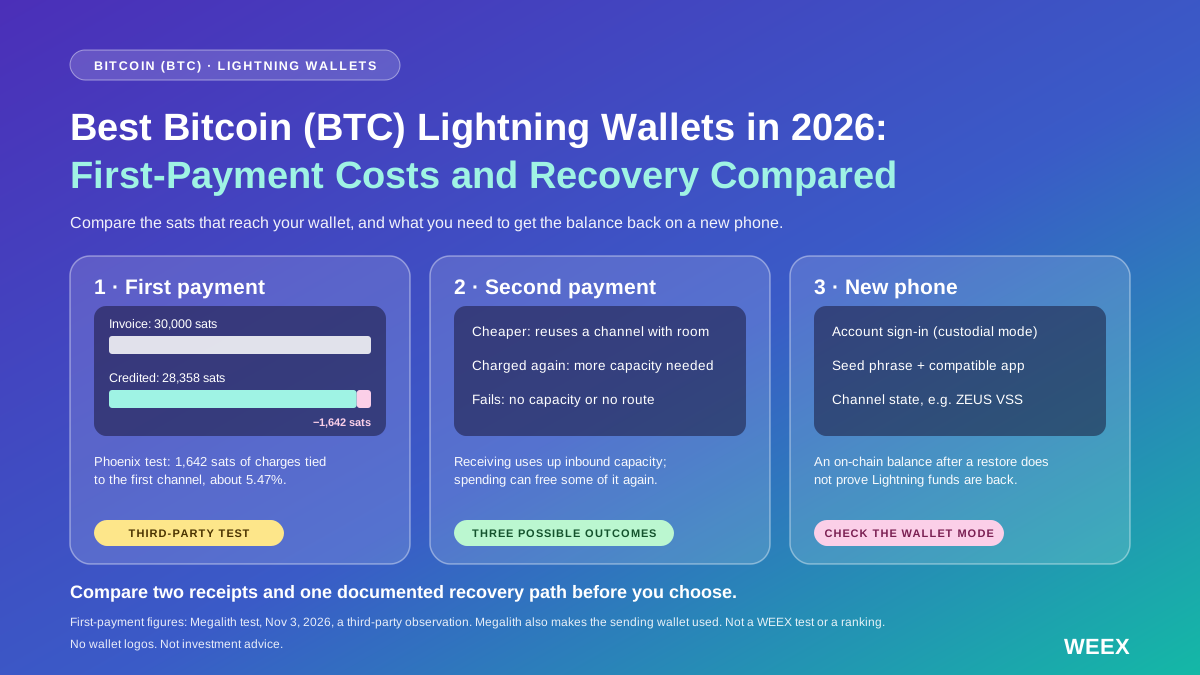
Best Bitcoin (BTC) Lightning Wallets in 2026: First-Payment Costs and Recovery Compared
Key Takeaways Lightning Network wallets enable fast and cost-effective Bitcoin transactions by using off-chain channels. A variety of…

SEC Enforcement Actions Decrease by 23.7% to 348 in Fiscal Year 2026
BlackRock Loses $1.735 Billion in Cryptocurrency Funds

Ethereum’s Joseph Lubin explains why ETH could rival Bitcoin and gold

BitGo Posts $44M Quarterly Profit as Platform Assets Grow, But Adjusted EBITDA Stays Negative
Bitcoin: A Thief Sentenced in China for Memorizing a Seed Phrase

Bitcoin loses status as main risk asset amid stock market lag

Crypto ATM Fees: How Much Bitcoin (BTC) Do You Get for $100?
See how much Bitcoin $100 buys at a crypto ATM. Compare two sample quotes, calculate the all-in cost, and learn which fees not to count twice.
Israel Discount Bank to Open Bitcoin and Ethereum Trading in App Starting November 26
Israel Discount Bank to Open Bitcoin and Ethereum Trading in App from November 26
Thousands of Bitcoin nodes gave anonymous strangers a pass around security limits
Bitcoin Core Addresses Three Security Vulnerabilities in October
Peter Brent: The Yield on 30-Year U.S. Bonds May Reach 7%
Glassnode reports stablecoin supply fell by 14.2 billion
Latest articles





Latest coin listings on WEEX


