
AI Model Claude Discovers 25-Year-Old US Cryptography Secret; Satoshi's Choice Under Scrutiny Again

 Prefer us on Google


Has the National Security Agency (NSA) deliberately introduced a hidden weakness in one of the key cryptographic standards to break encrypted information? This question has remained unanswered for over 25 years, as no one knew exactly how the agency selected the numbers used in that standard. Now, the AI model Claude from Anthropic has managed to find the origin of these numbers in less than 30 minutes!
According to Mihan Blockchain, the story dates back to the year 2000, when the National Institute of Standards and Technology (NIST) accepted a set of cryptographic standards, some of which were provided by the NSA. Since this agency did not provide a clear explanation about the origin of these numbers, there was concern that they might have been chosen in a way that would give the agency a secret way to break the encryption. Claude has now identified the origin of five sets of these numbers.
How Did Claude Uncover the Secret of the Cryptographic Numbers?
To understand the significance of this discovery, it is important to know that many internet security systems use a method called elliptic curve cryptography. This method allows systems to verify digital signatures without exposing the private key of the signer to others. The security of this process depends on specific mathematical parameters; therefore, if these parameters are deliberately chosen in a certain way, it could create a hidden weakness in the system.
The problem began when the NSA proposed some of the numbers needed to create these curves but did not explain on what basis they were chosen. This ambiguity led researchers to suspect that these numbers were not random and that their selection could have created a way for covert access to encrypted information.
Claude was able to link five sets of these numbers to a common program for generating pseudo-random numbers. This program used timestamps from 1997 and 1998, and its output appeared random. Now others can also reconstruct this process and verify the results.
Anthropic stated:
"In fact, this finding has made us more confident that the curves were chosen without a backdoor or intentional weakness."
However, it is still unclear why some numbers were discarded; therefore, this discovery reduces the likelihood of intentional manipulation but does not completely rule it out. This project also received a $36,864 award, which is intended for charitable purposes.
Why Has Satoshi Nakamoto Entered This Discussion?
The discussion about the possibility of a backdoor in US cryptographic standards has long been intertwined with Satoshi Nakamoto's choices in designing Bitcoin. Instead of using the discussed curves, Bitcoin uses another curve called secp256k1, whose parameters are based on simple and well-known numbers. This choice reduces concerns about the secrecy of the parameter selection method, although Satoshi has never explained why this curve was chosen.
After Edward Snowden's revelations in 2013 about the NSA's efforts to undermine another cryptographic standard, Bitcoin's choice received more attention. Nicolas Bacca, co-founder of Ledger, also reacted to this discussion by writing "Checkmate, Satoshi"; a reference suggesting that Satoshi's different choice may have kept Bitcoin safe from potential dangers in those standards.
However, Adam Back, CEO of Blockstream, had a different perspective and emphasized that the ambiguity surrounding these numbers was a result of the NSA's lack of explanation.
In any case, Claude's discovery does not mean identifying a weakness in Bitcoin. This model has not found any new vulnerabilities in Bitcoin's cryptography, and this finding does not change the current security assessment of it. A more significant concern for the future is the advancement of quantum computing; a technology that, if it reaches sufficient processing power, could challenge the security of Bitcoin and other cryptographic systems.
-- Price
This content is provided for general informational purposes only and doesn't constitute financial, investment, legal, or tax advice. Any events, rewards, online promotions, or related information mentioned herein should not be considered a recommendation, solicitation, or invitation to purchase, sell, trade, or otherwise deal in any crypto assets. Crypto assets are highly volatile and may result in loss. The availability of WEEX services, products, and related events may vary by region. You are responsible for ensuring that your participation is in accordance with applicable local laws and regulations.
You may also like

Pro investors increase exposure to HYPE, SUI, UNI as first-generation altcoin allocations decline
Israel Discount Bank to Open Bitcoin and Ethereum Trading in App Starting November 26

Israel Discount Bank to Open Bitcoin and Ethereum Trading in App from November 26

Thousands of Bitcoin nodes gave anonymous strangers a pass around security limits
Bitcoin Core Addresses Three Security Vulnerabilities in October
Peter Brent: The Yield on 30-Year U.S. Bonds May Reach 7%

Glassnode reports stablecoin supply fell by 14.2 billion

10x Research: Bitcoin's One-Year Return After Midterm Elections is 53.9%

Decrypt Becomes First News Publisher to Offer Perps Trading, Powered by Solana's Phoenix
Bitcoin Scam on Shaadi.com, User Solicited for a $500 Deposit

Ignas: HYPE and AVAX Face Value Capture Challenges

CPI Higher Than Expected in the U.S.: What It Means for Investors

Bloomberg analyst warns BTC, Nasdaq, commodities may face year-end declines
Barclays Increases Stake in BlackRock Bitcoin ETF by 48% in Q3, Citigroup Establishes $119 Million FBTC Position

Something strange is happening with Bitcoin. It is neither digital gold nor a tech company for Wall Street

US card debt hits $1.29 trillion as Bitcoin loans expose a collateral divide

CryptoQuant: Bitcoin Analyst Sentiment Significantly Bearish, Index Drops to -1.8σ

CoinShares Survey Shows Fund Managers' Digital Asset Allocation Rises to 1.3%

From Sidechains to zk-Rollups: Tacit Chain Aims to Redefine Payments with Default Privacy

Treasury Discusses Bitcoin Acquisition Pathways, Government Holdings Undergo Second Round of Review

Trump Still Interested in Increasing Bitcoin Holdings Amid Legal Hurdles
LNbits Security Patch Released After Bitcoin Wallet Theft

Deutsche Bank launches crypto custody for Bitcoin, Ethereum, stablecoins
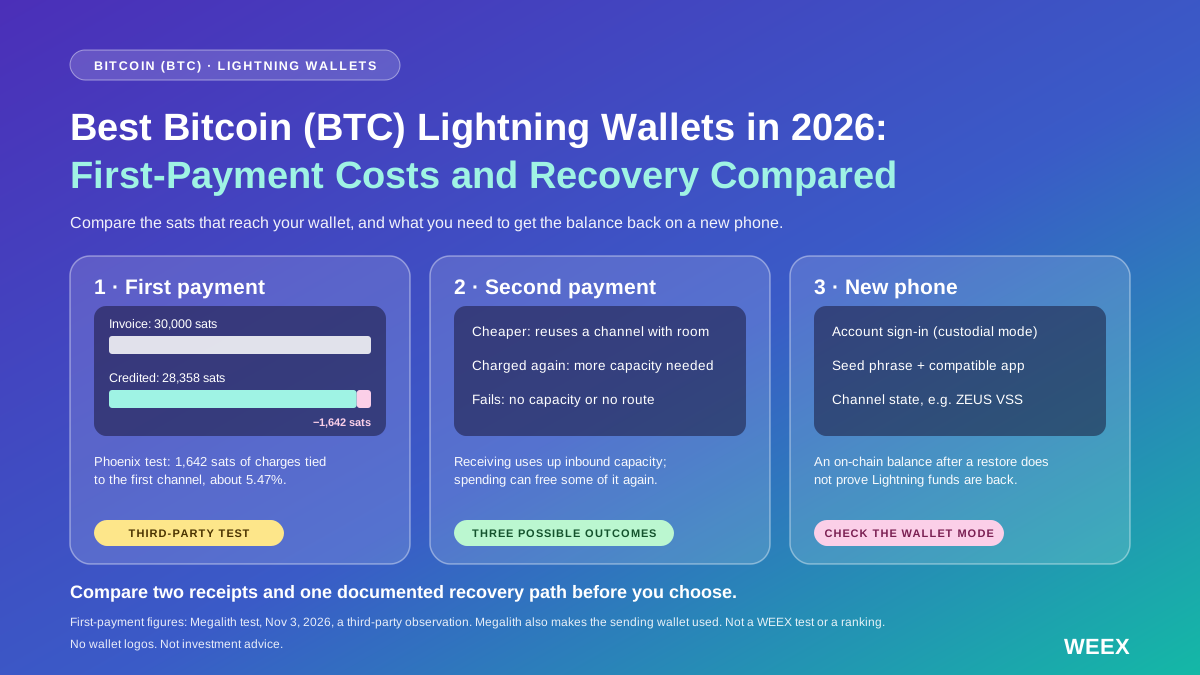
Best Bitcoin (BTC) Lightning Wallets in 2026: First-Payment Costs and Recovery Compared
Key Takeaways Lightning Network wallets enable fast and cost-effective Bitcoin transactions by using off-chain channels. A variety of…

SEC Enforcement Actions Decrease by 23.7% to 348 in Fiscal Year 2026
BlackRock Loses $1.735 Billion in Cryptocurrency Funds

Ethereum’s Joseph Lubin explains why ETH could rival Bitcoin and gold

BitGo Posts $44M Quarterly Profit as Platform Assets Grow, But Adjusted EBITDA Stays Negative
Bitcoin: A Thief Sentenced in China for Memorizing a Seed Phrase

Bitcoin loses status as main risk asset amid stock market lag
Pro investors increase exposure to HYPE, SUI, UNI as first-generation altcoin allocations decline
Israel Discount Bank to Open Bitcoin and Ethereum Trading in App Starting November 26
Israel Discount Bank to Open Bitcoin and Ethereum Trading in App from November 26
Thousands of Bitcoin nodes gave anonymous strangers a pass around security limits
Bitcoin Core Addresses Three Security Vulnerabilities in October
Peter Brent: The Yield on 30-Year U.S. Bonds May Reach 7%
Latest articles





Latest coin listings on WEEX


