
U.S. crypto regulation: What could Democrats change in 2027?

 Prefer us on Google


U.S. crypto regulation has faced fresh questions over its timing after Democrats won both chambers of Congress, with NEAR Foundation's legal chief expecting market structure legislation to move into 2027.
Summary
- NEAR Foundation's legal chief expects CLARITY negotiations in 2027, with tougher ethics provisions.
- DeFi front ends and developer protections could face renewed scrutiny under Democratic proposals.
- SEC rulemaking continues, while the GENIUS stablecoin framework takes effect on Jan. 18.
- Revona's CEO says construction delays can cost developers more than potential savings from lower rates.
NEAR Foundation Chief Legal Officer Abhishek Vaidyanathan and Revona Co-Founder and CEO Arash Jalali shared their assessments with crypto.news, discussing the election's implications for digital asset rules and business financing.
Vaidyanathan expects a longer legislative process, while Jalali argues that businesses with viable projects should weigh the cost of delayed revenue before waiting for cheaper debt.
CLARITY could return in 2027 with tougher ethics rules
"The result changes the timing more than the outcome," Vaidyanathan said.
In his assessment, the CLARITY text that failed to advance in September would lapse if still pending when the new Congress takes office on Jan. 3. Passage during the remaining lame-duck session remains possible, but he considers 2027 the realistic planning assumption.
The Senate's September procedural defeat left CLARITY unfinished before the election. Democratic lawmakers had sought stronger safeguards covering illicit finance, consumer protection, and conflicts involving elected officials.
Vaidyanathan pointed to a framework from twelve Senate Democrats that accepts rules for spot markets in assets that are not securities and a division of responsibilities between the SEC and CFTC.
"The likely outcome is a bill with the same architecture, heavier obligations in those two areas, and a later date," he said, referring to illicit finance and ethics.
DeFi developers face questions over control and profits
Vaidyanathan expects the biggest differences to concern decentralized finance and developers serving U.S. users.
He said CLARITY excluded people who only validate transactions, provide computing power, or write wallet and interface software from intermediary regulation. The final Senate text, in his account, narrowed developer protection to a civil safe harbor.
A proposal from Senate Banking Democrats would reach people who design, deploy, operate, or control a protocol's front end, alongside those who materially benefit from the underlying protocol, he said.
Treasury would determine whether a protocol is sufficiently decentralized to sit outside that regime, according to his assessment.
"There is no statutory safe harbor for developers today, and the Justice Department's charging policy can change without legislation."
He advised teams to examine who builds and controls their user interfaces and who receives profits from their protocols.
SEC proposals continue as stablecoins approach January deadline
Vaidyanathan said the election does not replace the presidentially appointed SEC and CFTC chairs overseeing ongoing regulatory work.
The SEC's March interpretation, joined by the CFTC, addressed token classifications and the treatment of activities including staking, mining and airdrops.
Its proposed Regulation Crypto Assets, announced Aug. 18, would permit certain offerings of up to $5 million over four years or $75 million over twelve months through separate exemptions. The SEC lists the measure as proposed, with an Oct. 20 comment deadline.
Vaidyanathan cautioned that agency guidance lacks the durability of legislation and does not give the CFTC comprehensive spot-market rulemaking authority.
Stablecoins already have an enacted framework. The OCC's Oct. 21 final rule confirms that its implementing regulations and the GENIUS Act take effect on Jan. 18, 2027.
The OCC said separate rulemaking will address Bank Secrecy Act, anti-money-laundering and sanctions requirements in coordination with Treasury.
-- Price
Lower yields leave developers weighing the cost of waiting
Jalali's assessment focused on financing decisions after the election. He cited Wednesday's two-year Treasury yield of 4.546%, a ten-year yield of 4.888% and a thirty-year yield of 5.282%.
Heavy government borrowing could limit further declines in longer-term yields, he said, encouraging developers to reassess projects that already have demand.
In his hypothetical example, a fully drawn $50 million facility priced 50 basis points cheaper would save $375,000 over eighteen months.
He compared that saving with approximately $1.8 million in deferred returns from delaying collections by six months on a $40 million development, assuming 60% remained payable and a 15% annual project return.
"Debt does not make a weak scheme sound. It lets a sound one start before its own cash arrives," Jalali said.
On residential developments with contracted sales, he recommended drawing financing as construction progresses, aligning principal repayments with buyer collections and retaining enough liquidity to absorb delayed handovers.
This content is provided for general informational purposes only and doesn't constitute financial, investment, legal, or tax advice. Any events, rewards, online promotions, or related information mentioned herein should not be considered a recommendation, solicitation, or invitation to purchase, sell, trade, or otherwise deal in any crypto assets. Crypto assets are highly volatile and may result in loss. The availability of WEEX services, products, and related events may vary by region. You are responsible for ensuring that your participation is in accordance with applicable local laws and regulations.
You may also like
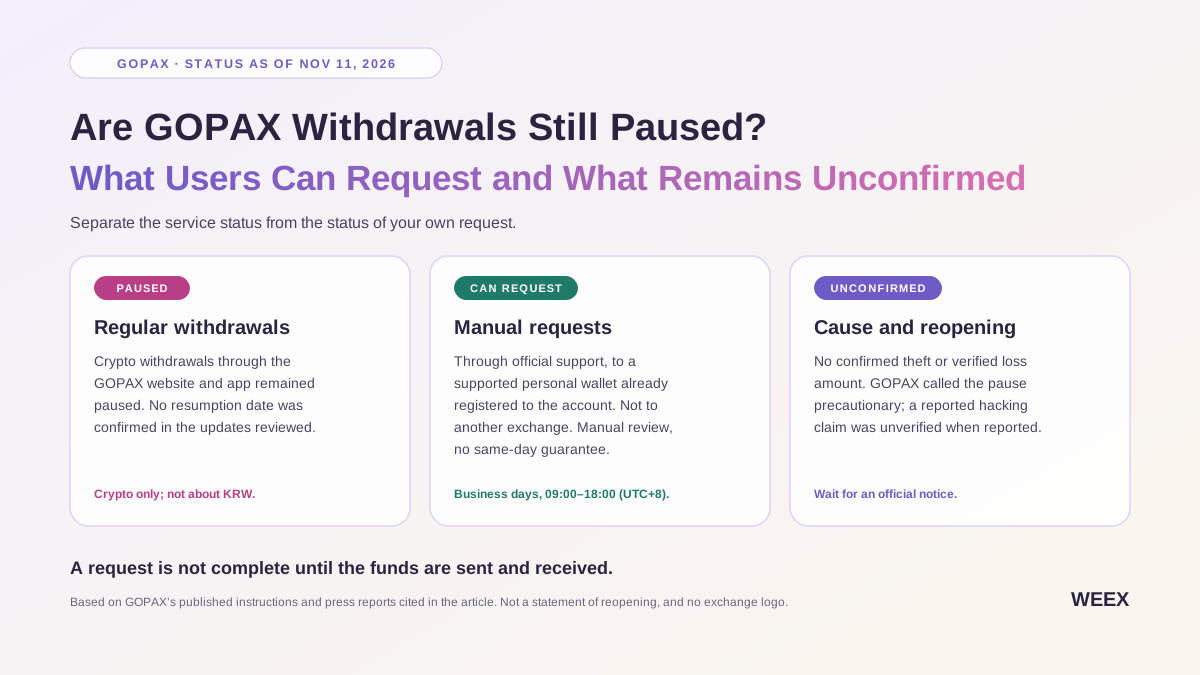
Are GOPAX Withdrawals Still Paused? What Users Can Request and What Remains Unconfirmed
Check the latest GOPAX withdrawal status, which wallets qualify for manual requests, and how to tell whether your crypto withdrawal has been sent.

Peter Brent: The Yield on 30-Year U.S. Bonds May Reach 7%

Google DeepMind Releases Gene Prediction Model AlphaGenome 2

Why Pronostyx Is Building Prediction Markets for Questions the Big Platforms Ignore

10x Research: Bitcoin's One-Year Return After Midterm Elections is 53.9%

Unity and NVIDIA NVentures Join Emulate's $700 Million Funding Round

How Far Can AI Trading Go Amid the Anti-Data Center Wave? It Depends on GPU Leasing Prices

Tech Veteran: Anthropic IPO Will Be the Peak of AI Market in US Stocks, Will 'Aggressively Buy Chinese AI' If Conditions Allow

Moody's Projects Global Credit Deterioration by 2027 and Warns of the Impact of Rates and AI

Artificial Intelligence Drives a Quarter of UK Economic Growth, Faces Global Tech Stock Sell-off Risk

CryptoQuant: Bitcoin Analyst Sentiment Significantly Bearish, Index Drops to -1.8σ
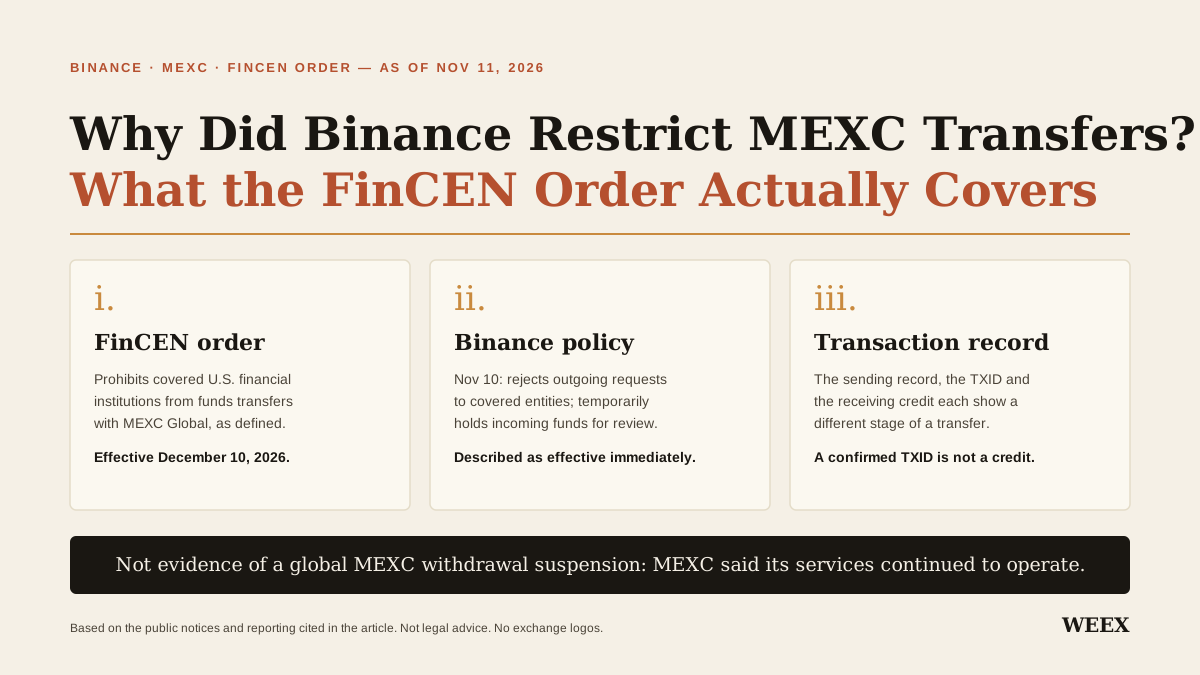
Why Did Binance Restrict MEXC Transfers? What the FinCEN Order Actually Covers
Find out why Binance restricted MEXC transfers, when the FinCEN order takes effect, and what to check if your crypto deposit is held for review.

BitcoinHabebe Shares ARIA Rises 1000% in a Month

Booz Allen Switches to NVIDIA's Nemotron Large Model

LNbits Security Patch Released After Bitcoin Wallet Theft

Former Employee Sues Ethereum Foundation, Claims Retaliatory Dismissal After Protesting 'Seppuku' Clause

European Natural Gas Futures Prices Exceed €85

Abu Dhabi Investment Authority Seeks $7.5 Billion Loan to Diversify Portfolio

India Bans Export of Lithium-Ion Battery Recycling Materials

BitGo Posts $44M Quarterly Profit as Platform Assets Grow, But Adjusted EBITDA Stays Negative

Rhein Group and KKR Invest $16 Billion in UK Offshore Wind Project
U.S. Treasury Secretary Besant Transferred to Military Base Due to 'Life Threats'

NEAR AI Discloses SGLang Security Incident and Revokes Exposed API Keys

Did Claude breach NVIDIA's 20-year CUDA moat in three days? Anthropic lets Mythos port GPU low-level code by itself

Robinhood's Latest Earnings Report Tells You All You Need to Know About the Future of Crypto. These 2 Numbers Really Stood Out.

Malware Discovered in Telegram Trading Program, GRAM Stolen
Wall Street's Panic Gauge Just Broke a 13-Year Record. Goldman Says History Favors a Rebound

21 banks allocate 270 million dollars for Project Faro
OpenAI Acquires Odessia to Expand AI Travel Agent Business

DeepMind says its AI agents ran a four-day cryptography test with about 20 human messages
Are GOPAX Withdrawals Still Paused? What Users Can Request and What Remains Unconfirmed
Check the latest GOPAX withdrawal status, which wallets qualify for manual requests, and how to tell whether your crypto withdrawal has been sent.
Peter Brent: The Yield on 30-Year U.S. Bonds May Reach 7%
Google DeepMind Releases Gene Prediction Model AlphaGenome 2
Why Pronostyx Is Building Prediction Markets for Questions the Big Platforms Ignore
10x Research: Bitcoin's One-Year Return After Midterm Elections is 53.9%
Unity and NVIDIA NVentures Join Emulate's $700 Million Funding Round
Latest articles


Latest coin listings on WEEX


