
Ethereum: The Awakening of Four Old Whales Revives Selling Fears

 Prefer us on Google


Ethereum is back in the spotlight of on-chain data following the awakening of four old whales linked to the early days of the network. On Tuesday, August 11, a Genesis wallet moved 2,680 ETH after eleven years of inactivity. This reserve, acquired for about $830, was then worth $5.03 million. Two other wallets had already transferred 2,000 ETH each in July. These close movements revive selling fears as funds long considered dormant return to the market.
In brief
- Four old Ethereum whales have awakened their wallets after several years of inactivity.
- A Genesis wallet transferred 2,680 ETH, valued at over $5 million.
- Two other addresses had already moved 2,000 ETH each during July.
- These transfers to exchanges rekindle fears of a possible massive sell-off.
On Tuesday, August 11, on-chain analysis tools detected the transfer of 2,680 ETH from a Genesis wallet. The transaction represented $5.03 million at the time of the movement. Eleven years earlier, this reserve was worth only about $830. According to data provided by Whale Alert, this progression represents a gain of 605,924% since the initial acquisition.
The wallet belonged to the early holders of ETH from the Genesis period. This term refers to the units allocated during the participatory sale launched on July 22, 2014. At that time, early buyers obtained their tokens for just $0.31.
Now, these old reserves can represent several million dollars when they return to the market. Ethereum attracts particular attention when these historical reserves suddenly change address. It remains a concern, as each transfer alters the reading of the available supply.
However, the movement on August 11 did not occur in isolation. On August 9, Whale Alert spotted that another pre-mining holder transferred 2,000 ETH, worth nearly $3.8 million. This reserve was only worth $620 in 2015. Data from Arkham Intelligence then indicated that the funds had joined Coinbase, further drawing attention to their possible use.
To understand these movements, one must return to the early stages of the network. The creators pre-mined about 72 million ETH before the blockchain launch. About 60 million units were then allocated to buyers during a public sale intended to fund the launch. This operation lasted 42 days and raised 31,591 BTC for the organizers.
The remaining balance, close to 12 million ETH, was reserved for insiders. The founders and early contributors received about 6 million units. The Ethereum Foundation obtained the remaining 6 million. This distribution explains why some ancestral addresses may still hold significant reserves, several years after their creation. Ethereum is seeing funds created during its early years return.
In July, two other Genesis wallets had already shown similar activity. Each had transferred 2,000 ETH, with the first movement on July 20 and a second on July 26. One of the transactions ended up on CoinJar, while the other distributed the funds among several addresses. These close movements thus enhance visibility around the old holders. Ethereum could still face new transfers if other wallets move.
The succession of these operations primarily raises the question of the final destination of the funds. When ETH that has remained inactive for years joins an exchange platform, the market may anticipate a sale. However, a transfer alone does not constitute proof of liquidation. The funds may also change custody, be distributed among several wallets, or respond to another financial decision.
The case of the four whales remains to be monitored, especially when the funds reach platforms like Coinbase or CoinJar. On-chain data allows tracing these movements, but it does not directly specify the holder's intent. For Ethereum, the issue mainly revolves around the reintroduction of an offer that seemed durably inactive.
These successive awakenings occur after more than a decade of fluctuations, platform bankruptcies, and key losses. Some holders may now seek to take their profits or modify the custody of their assets. Other scenarios remain possible, including estate planning or a simple wallet change. However, the repetition of movements makes this activity more visible.
In the short term, the next transfers will thus constitute a major indicator. If the four addresses continue to move their reserves to exchange platforms, selling fears could strengthen. Conversely, a redistribution to private wallets would limit this interpretation. The market will thus need to distinguish technical movements from genuine selling operations.
The situation will remain primarily linked to the behavior of these old Ether holders. The next transactions will determine whether their awakenings signal a durable reintroduction to circulation or merely changes in custody. For now, the data mainly shows that historical reserves are starting to move again after years of silence.
-- Price
This content is provided for general informational purposes only and doesn't constitute financial, investment, legal, or tax advice. Any events, rewards, online promotions, or related information mentioned herein should not be considered a recommendation, solicitation, or invitation to purchase, sell, trade, or otherwise deal in any crypto assets. Crypto assets are highly volatile and may result in loss. The availability of WEEX services, products, and related events may vary by region. You are responsible for ensuring that your participation is in accordance with applicable local laws and regulations.
You may also like

What is CBDC? Governments Push for Development of Central Bank Digital Currencies

Bitcoin Has Not Fallen Below Realized Price During the Bear Market

The Clearing House Selects Quant for US Tokenized Deposit Network

4500 Bitcoins Moved to New Addresses, Sale Status Unconfirmed
![[New York Gold, Bonds, Dollar] Interest Rates and Dollar Strength Pause... Oil Prices Drop, Won and Gold Prices Rebound](/public-static/29_4631d65680.png?format=avif)
[New York Gold, Bonds, Dollar] Interest Rates and Dollar Strength Pause... Oil Prices Drop, Won and Gold Prices Rebound

Trump Expresses Concern Over Yen Depreciation, Japanese Finance Minister Says Coordination with U.S. Will Continue

Treasuries at 21-Year High: Impact on Stocks and Interest Rates

Solana DEX volume spike hides circular trades, and automated bots are blamed

Oracle Stock vs. KRAFTON Stock: Why Are Investors Questioning Two Growing Companies?
Compare Oracle and KRAFTON stocks through their latest results, share-price questions and the different growth tests investors face in 2026.

John Templeton: "Bull markets are born in pessimism"

The Death of Hsin-Ju: A Prelude to Conspiracy

LTC Airdrop 2026: How to Claim 50,000 USDT Rewards on WEEX

Raiffeisen’s crypto deal could reach 18 million customers. How many can actually trade?

TRON Surpasses $30T in Total Transaction Volume as it Secures its Place as Leading Chain for Stablecoins

HTX DeepThink: Opportunities Concentrate on Profitable and Fund-Supported Assets, BTC Still Has Room for Recovery After Consolidation
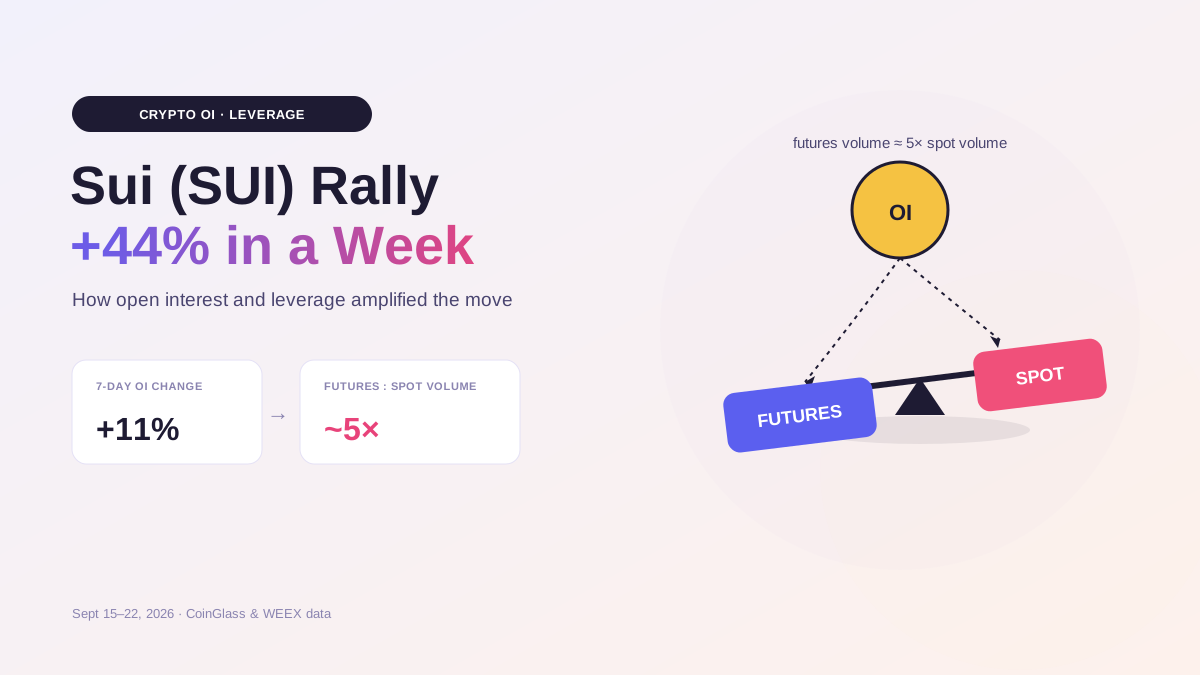
Why Did Sui (SUI) Crypto Price Jump 44%? Crypto OI and Leverage Explain the Rally
See why Sui (SUI) jumped 44%, how crypto OI and leverage amplified the rally, what the pullback means, and how to trade SUI on WEEX.

Circle expands CCTP to EURC and cirBTC on Arc

Bitcoin, Sports, and Politics: Predictive Markets Target $10 Trillion

AI Agent Jev Expects On-Chain Innovation Through Automated Judgment
The End of the Blank Prompt: Why Trading AI Needs a Playbook

Stablecoins hold nearly $200 billion in US debt, but money funds bought the surge
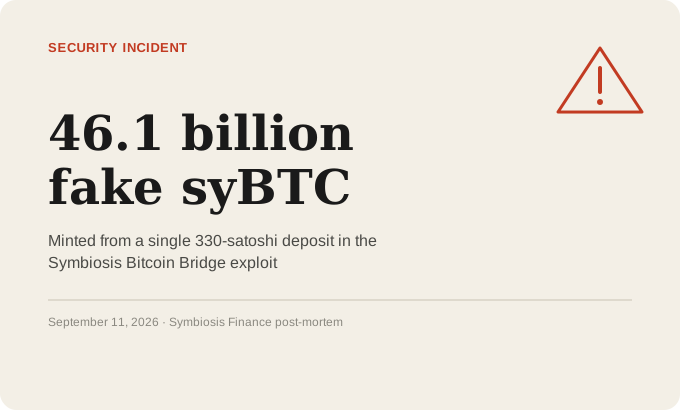
How Did a Hacker Create 46 Billion Fake Bitcoin in the Symbiosis Exploit? Decodes Bitcoin Hacker With WEEX Now
How two Symbiosis bridge bugs let a hacker mint 46.1 billion unbacked syBTC, drain Bitcoin pools and expose critical bridge risks.

CFTC's Selig Emphasizes the Need to Prepare for the Era of Large-Scale Tokenization in the U.S.

The IMF opens an office in Venezuela to supervise an economy that has already migrated to USDT

SOXL Stock Jumped 12% Yesterday: Three Companies Explain the Entire Move

Bitcoin's Hashrate Rises as Miners Reactivate Their Machines

Bitcoin 2x Leveraged ETF Launches on Cboe, But Doesn't Buy Bitcoin: Here's Why

Crypto: The ECB Enters the Tokenized Bond Market
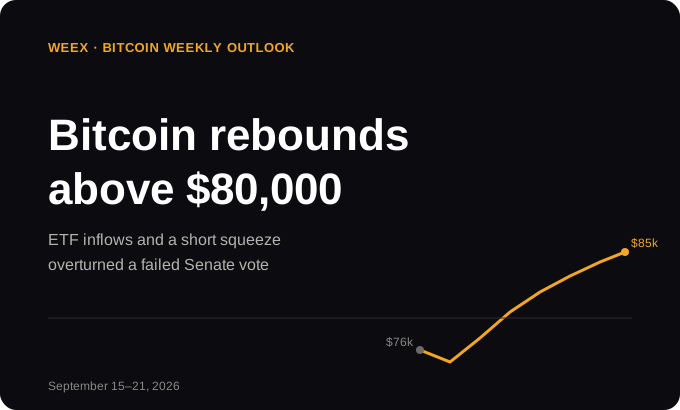
WEEX Bitcoin Weekly Outlook: Why Did Bitcoin Rebound Above $80,000 After the CLARITY Act Vote?
Bitcoin rebounded above $80,000 as SEC and CFTC action, renewed ETF inflows, and a short squeeze outweighed the failed CLARITY Act vote.
Coldcard whitehats move 52.37 BTC to recovery trust
What is CBDC? Governments Push for Development of Central Bank Digital Currencies
Bitcoin Has Not Fallen Below Realized Price During the Bear Market
The Clearing House Selects Quant for US Tokenized Deposit Network
4500 Bitcoins Moved to New Addresses, Sale Status Unconfirmed
[New York Gold, Bonds, Dollar] Interest Rates and Dollar Strength Pause... Oil Prices Drop, Won and Gold Prices Rebound
Trump Expresses Concern Over Yen Depreciation, Japanese Finance Minister Says Coordination with U.S. Will Continue



