
Bitcoin 2x Leveraged ETF Launches on Cboe, But Doesn't Buy Bitcoin: Here's Why

 Prefer us on Google


A new 2x leveraged Bitcoin ETF has arrived in the American market, but it doesn't work as many might imagine. REX Shares and Tuttle Capital Management have launched the T-REX 2X Long Strive Daily Target ETF, listed on Cboe under the ticker ASSX, a product that promises to double the daily performance of Strive Asset Management's stock, the company that has built one of the most consistent Bitcoin treasuries among publicly traded companies. The crucial detail, however, is that this fund does not touch Bitcoin even for a moment: it tracks the stock, not the cryptocurrency.
Key Points
- REX Shares launches the 2x leveraged fund on Strive
- How leverage works and why it is not a spot Bitcoin ETF
- The daily reset and its effect over the long term
- Strive's Bitcoin treasury behind the scenes
- Risks for investors in ASSX
- It is not a leveraged product on Bitcoin
- FAQ
- What does the ASSX ETF exactly replicate?
- Is ASSX a leveraged Bitcoin ETF?
- What risks are associated with investing in ASSX?
- Where is the ASSX ETF traded?
Key Points
- REX Shares has launched the T-REX 2X Long Strive Daily Target ETF with ticker ASSX, listed on Cboe.
- The fund aims for 200% of the daily performance of Strive Asset Management's stock, with leverage resetting every day.
- Strive holds 26,355 BTC in treasury, a factor that directly influences the price of the ASST stock.
- ASSX is a leveraged ETF on a single stock, not a spot Bitcoin ETF: investors do not own Bitcoin, but have amplified exposure to Strive's stock.
REX Shares Launches the 2x Leveraged Fund on Strive
The official name of the product is already a statement of intent. ASSX began trading on Cboe with the goal of offering 200% of the daily performance of Strive's stock, before fees and expenses. This is not a marginal detail: it means that the fund replicates the daily movement of the stock, not a multiple of the Bitcoin price, even though the investment narrative behind Strive is almost entirely linked to the cryptocurrency.
Strive is among the publicly traded companies with the most significant Bitcoin treasury, making it a natural candidate for leveraged products designed for those looking to bet on the daily fluctuations of highly crypto-sensitive stocks. REX Shares and Tuttle already manage similar funds related to other companies exposed to Bitcoin, including Strategy, BitMine, Circle, Cipher Mining, and SharpLink: ASSX extends the same scheme to a new name in the industry.
-- Price
How Leverage Works and Why It Is Not a Spot Bitcoin ETF
The difference between a 2x leveraged Bitcoin ETF and a leveraged ETF on a stock related to Bitcoin is not cosmetic: it is substantial. ASSX does not hold Bitcoin and does not seek to double the daily return of the cryptocurrency. Its only reference is Strive's common stock, which in turn is influenced by the price of Bitcoin, the valuation the market assigns to the company's treasury, and Strive's ability to raise capital to continue buying BTC.
The Daily Reset and Its Effect Over the Long Term
The 200% target applies to a single trading day. Those who hold the position for multiple sessions should not expect the cumulative return to exactly correspond to double Strive's performance over the same period. The compounding mechanism, combined with volatility, can significantly diverge the results from a simple doubling of the underlying stock's movement. It is the same principle that makes these instruments primarily intended for very short-term use, not as long-term substitutes for directly owning the stocks.
Investing in this type of product means obtaining amplified exposure to Strive stocks, not direct ownership of Bitcoin nor a simple replication of a Bitcoin spot ETF. Those seeking clean exposure to cryptocurrency find the distinction between ASSX and a spot fund a central point not to be overlooked.
Strive's Bitcoin Treasury Behind the Scenes
The reason the market is closely watching ASSX has a specific name: Strive's treasury. The company holds 26,355 BTC in its portfolio, an amount that makes its stock sensitive to both the performance of its operating business and the market value of its Bitcoin reserves. This dual track is what transforms ASST, Strive's Nasdaq ticker, into what some industry observers describe as a high-beta expression of sentiment regarding the corporate Bitcoin treasury.
Strive has financed part of its recent purchases through SATA, its variable-rate preferred shares, a tool designed to raise capital while limiting the direct dilution of common shareholders. President and CEO Matt Cole stated in a public note that 100% of the capital raised in a recent operation came precisely from SATA, adding that the preferred shares had surpassed $1 billion in notional value outstanding.
Risks for Investors in ASSX
Those evaluating ASSX take on multiple levels of risk simultaneously, not just that related to Bitcoin. The first is the typical risk of any single-leveraged stock ETF: concentration on a single stock amplifies both gains and losses. The second concerns Strive's corporate structure itself, with its dependence on SATA and its ability to continue raising capital to finance new Bitcoin purchases.
It is Not a Leveraged Bitcoin Product
It must be clearly reiterated: ASSX is not a fund designed to double Bitcoin movements. It is a 2x leveraged ETF built on the shares of a company that owns Bitcoin, with all the complications that this entails. The daily reset of leverage means that the fund is intended for traders who monitor positions frequently, not for those who simply want to double their exposure to Bitcoin over time. The distinction between Strive's Bitcoin treasury and direct ownership of the cryptocurrency remains the point that investors need to clarify before opening a position.
The launch of ASSX nonetheless confirms a broader trend: publicly traded companies with large Bitcoin reserves on their balance sheets are becoming building blocks for new leveraged financial products, multiplying the layers between the investor's portfolio and the original exposure to cryptocurrency.
FAQ
What does the ASSX ETF exactly replicate?
ASSX follows the daily performance of Strive Asset Management shares, not the price of Bitcoin.
Is ASSX a leveraged Bitcoin ETF?
No, ASSX is a 2x leveraged ETF on Strive stock, a company that holds Bitcoin, not on the cryptocurrency itself.
What risks are associated with investing in ASSX?
The main risks involve the daily reset of leverage, which can cause divergences over time, concentration on a single stock, and exposure to corporate factors and Strive's Bitcoin treasury.
Where is the ASSX ETF traded?
ASSX is listed on the Cboe exchange.
Content created with the assistance of artificial intelligence and human editorial review.
This content is provided for general informational purposes only and doesn't constitute financial, investment, legal, or tax advice. Any events, rewards, online promotions, or related information mentioned herein should not be considered a recommendation, solicitation, or invitation to purchase, sell, trade, or otherwise deal in any crypto assets. Crypto assets are highly volatile and may result in loss. The availability of WEEX services, products, and related events may vary by region. You are responsible for ensuring that your participation is in accordance with applicable local laws and regulations.
You may also like

What is CBDC? Governments Push for Development of Central Bank Digital Currencies
Bitcoin Has Not Fallen Below Realized Price During the Bear Market

The Clearing House Selects Quant for US Tokenized Deposit Network

4500 Bitcoins Moved to New Addresses, Sale Status Unconfirmed
![[New York Gold, Bonds, Dollar] Interest Rates and Dollar Strength Pause... Oil Prices Drop, Won and Gold Prices Rebound](/public-static/29_4631d65680.png?format=avif)
[New York Gold, Bonds, Dollar] Interest Rates and Dollar Strength Pause... Oil Prices Drop, Won and Gold Prices Rebound

Trump Expresses Concern Over Yen Depreciation, Japanese Finance Minister Says Coordination with U.S. Will Continue

Treasuries at 21-Year High: Impact on Stocks and Interest Rates

Solana DEX volume spike hides circular trades, and automated bots are blamed

Oracle Stock vs. KRAFTON Stock: Why Are Investors Questioning Two Growing Companies?
Compare Oracle and KRAFTON stocks through their latest results, share-price questions and the different growth tests investors face in 2026.

John Templeton: "Bull markets are born in pessimism"

The Death of Hsin-Ju: A Prelude to Conspiracy

LTC Airdrop 2026: How to Claim 50,000 USDT Rewards on WEEX

Raiffeisen’s crypto deal could reach 18 million customers. How many can actually trade?

TRON Surpasses $30T in Total Transaction Volume as it Secures its Place as Leading Chain for Stablecoins

HTX DeepThink: Opportunities Concentrate on Profitable and Fund-Supported Assets, BTC Still Has Room for Recovery After Consolidation
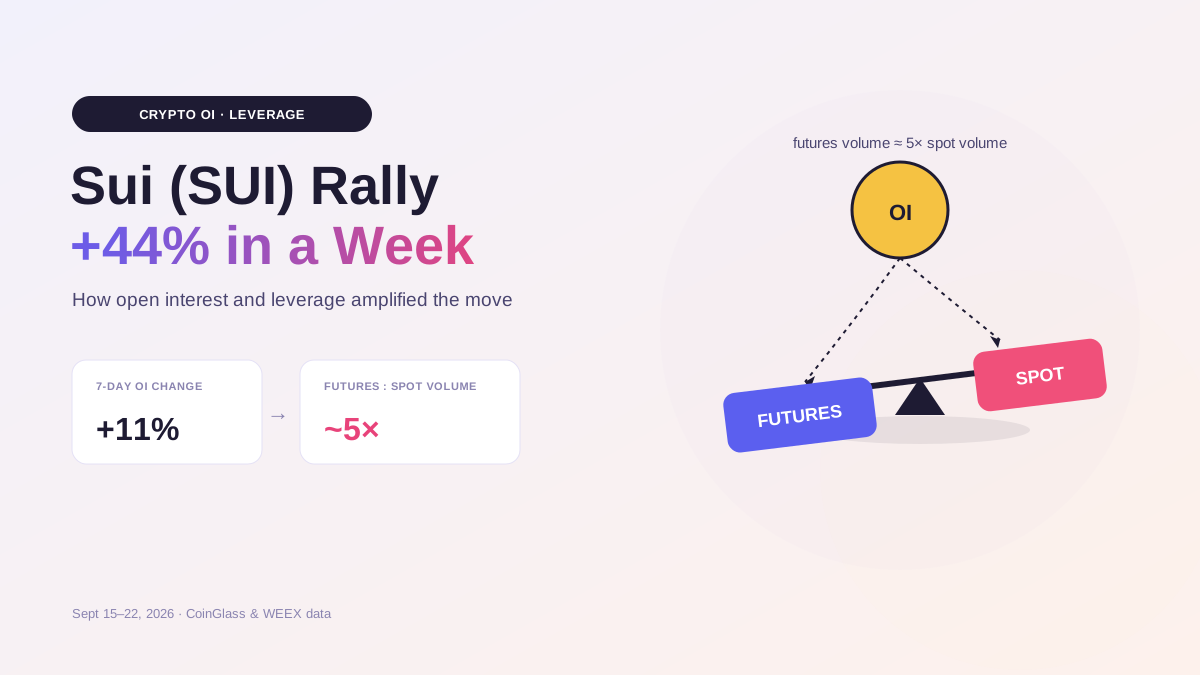
Why Did Sui (SUI) Crypto Price Jump 44%? Crypto OI and Leverage Explain the Rally
See why Sui (SUI) jumped 44%, how crypto OI and leverage amplified the rally, what the pullback means, and how to trade SUI on WEEX.

Circle expands CCTP to EURC and cirBTC on Arc

Bitcoin, Sports, and Politics: Predictive Markets Target $10 Trillion

AI Agent Jev Expects On-Chain Innovation Through Automated Judgment
The End of the Blank Prompt: Why Trading AI Needs a Playbook

Stablecoins hold nearly $200 billion in US debt, but money funds bought the surge
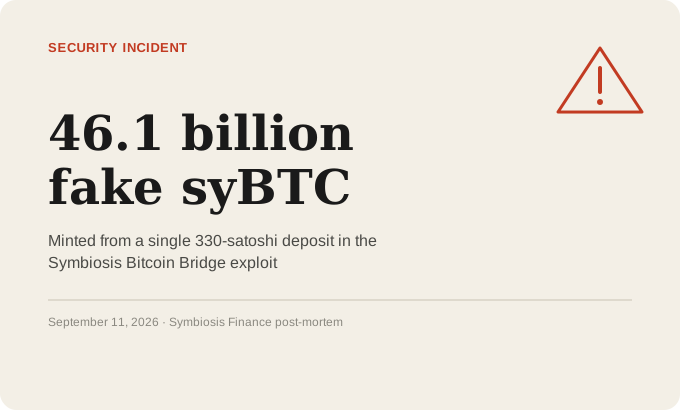
How Did a Hacker Create 46 Billion Fake Bitcoin in the Symbiosis Exploit? Decodes Bitcoin Hacker With WEEX Now
How two Symbiosis bridge bugs let a hacker mint 46.1 billion unbacked syBTC, drain Bitcoin pools and expose critical bridge risks.

CFTC's Selig Emphasizes the Need to Prepare for the Era of Large-Scale Tokenization in the U.S.

The IMF opens an office in Venezuela to supervise an economy that has already migrated to USDT

SOXL Stock Jumped 12% Yesterday: Three Companies Explain the Entire Move

Bitcoin's Hashrate Rises as Miners Reactivate Their Machines

Crypto: The ECB Enters the Tokenized Bond Market
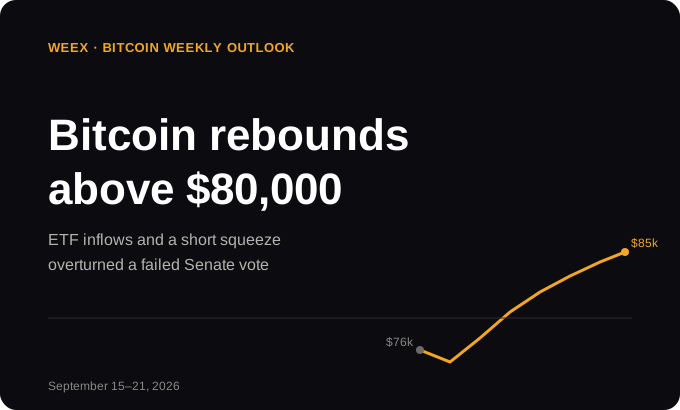
WEEX Bitcoin Weekly Outlook: Why Did Bitcoin Rebound Above $80,000 After the CLARITY Act Vote?
Bitcoin rebounded above $80,000 as SEC and CFTC action, renewed ETF inflows, and a short squeeze outweighed the failed CLARITY Act vote.

Coldcard whitehats move 52.37 BTC to recovery trust

Bitcoin's Rise Does Not Mean the Bull Market Has Returned; Don't Create Stories for Yourself
What is CBDC? Governments Push for Development of Central Bank Digital Currencies
Bitcoin Has Not Fallen Below Realized Price During the Bear Market
The Clearing House Selects Quant for US Tokenized Deposit Network
4500 Bitcoins Moved to New Addresses, Sale Status Unconfirmed
[New York Gold, Bonds, Dollar] Interest Rates and Dollar Strength Pause... Oil Prices Drop, Won and Gold Prices Rebound
Trump Expresses Concern Over Yen Depreciation, Japanese Finance Minister Says Coordination with U.S. Will Continue



