
China Buys Gold at Fastest Pace in 3 Years: What Changes

 Prefer us on Google


China is not just accumulating gold; it is accelerating the pace. In August, the People's Bank of China (PBoC) added 650,000 ounces of gold to its official reserves, the largest monthly increase since October 2023. This marks the 22nd consecutive month of purchases, leaving no doubt about Beijing's strategy.
During the same period, the total foreign exchange reserves rose by $19.55 billion, reaching $3.438 trillion. This figure exceeded the estimates of economists consulted by the Wall Street Journal, who projected $3.425 trillion. The combination of a weaker dollar and a robust trade surplus explains part of the jump, but the gold data tells a deeper story.
Why is China Accumulating Gold So Aggressively?
China's official gold reserves reached 76.73 million ounces by the end of August, equivalent to about $350 billion. The increase of 650,000 ounces from July represents a clear acceleration: in June, the increase was 480,000 ounces; in July, it was 640,000.
This pattern is not accidental. Since 2022, various central banks in emerging economies have intensified the diversification of reserves away from the U.S. dollar. China is leading this movement. As we explained in our coverage of global markets, the geopolitical context is the main driver of this structural change.
The logic is simple: gold cannot be frozen by sanctions. After the West blocked $300 billion in Russian reserves in 2022, the message became clear for any economy with complex relations with Washington. Diversification is a matter of sovereignty, not just financial return.
What Does the Undervalued Yuan Have to Do With It?
The August data was released at a delicate moment. International authorities are pressuring Beijing for measures against low-cost exports, and there are increasing calls for the Chinese government to allow an appreciation of the yuan, which is widely considered undervalued by trading partners.
China's trade surplus remains at elevated levels, which naturally puts upward pressure on the yuan. By buying dollars and gold with the surpluses, the PBoC achieves two simultaneous objectives: it keeps the currency competitive for exporters and builds a strategic cushion of reserves.
However, economists assess that it is unlikely Beijing will accept a rapid appreciation. The side effects would be immediate: loss of competitiveness in exports, a slowdown in growth, and pressure on domestic demand, which is already facing difficulties in sectors like real estate.
The Impact on Gold Prices and Global Markets
China's ongoing purchases are one of the factors supporting gold at historically high levels. The precious metal has seen significant appreciation over the past 24 months, driven by demand from central banks, geopolitical uncertainty, and expectations regarding U.S. interest rates.
It's not just China. The Netherlands recently withdrew 59 tons of gold from the United States, in a move that reinforces the global trend of repatriating physical reserves. As we analyzed in our materials on global monetary policy, confidence in the dollar-based system is being tested on multiple fronts.
For Brazilian investors, the scenario creates an interesting dynamic. Gold in reais has delivered robust returns both from the appreciation of the metal and from currency fluctuations. Investment funds linked to gold have recorded positive inflows for consecutive months in the domestic market.
-- Price
What the 22-Month Streak Reveals About Long-Term Strategy
Twenty-two consecutive months of purchases are not a tactical decision. They represent a sovereign-level portfolio reconfiguration. China, which historically kept most of its reserves in U.S. Treasury securities, has been gradually and consistently reducing this exposure.
In parallel, as we discussed in our analysis of the macroeconomic scenario, other countries in the so-called Global South are also diversifying reserves. India, Turkey, and Poland are among the largest gold buyers in 2025 and 2026.
Thus, China's August data is not an isolated event. It is another chapter in the reorganization of the international monetary system that is advancing slowly but with a clear direction. The dollar remains dominant, accounting for about 58% of global reserves, but that share has been declining quarter by quarter.
So What: Why This Matters for Investors
Three practical points. First: the structural demand from central banks creates a price floor for gold that is independent of short-term speculation. Second: the gradual depreciation of the dollar as a reserve asset tends to benefit real assets, including commodities and, by extension, exporting economies like Brazil.
Third, and perhaps most relevant: the tension between pressures for yuan appreciation and Beijing's resistance to concede creates a risk of trade friction that could spill over into emerging markets. If tariffs on Chinese exports increase in response, the cascading effect on global supply chains is inevitable.
China's accumulation of gold is not just news about reserves. It is a signal of how the world's second-largest economy is preparing for a scenario where the dollar is no longer the only safe haven.
This content is provided for general informational purposes only and doesn't constitute financial, investment, legal, or tax advice. Any events, rewards, online promotions, or related information mentioned herein should not be considered a recommendation, solicitation, or invitation to purchase, sell, trade, or otherwise deal in any crypto assets. Crypto assets are highly volatile and may result in loss. The availability of WEEX services, products, and related events may vary by region. You are responsible for ensuring that your participation is in accordance with applicable local laws and regulations.
You may also like

What is CBDC? Governments Push for Development of Central Bank Digital Currencies

Bitcoin Has Not Fallen Below Realized Price During the Bear Market

The Clearing House Selects Quant for US Tokenized Deposit Network

4500 Bitcoins Moved to New Addresses, Sale Status Unconfirmed
![[New York Gold, Bonds, Dollar] Interest Rates and Dollar Strength Pause... Oil Prices Drop, Won and Gold Prices Rebound](/public-static/29_4631d65680.png?format=avif)
[New York Gold, Bonds, Dollar] Interest Rates and Dollar Strength Pause... Oil Prices Drop, Won and Gold Prices Rebound

Trump Expresses Concern Over Yen Depreciation, Japanese Finance Minister Says Coordination with U.S. Will Continue

Treasuries at 21-Year High: Impact on Stocks and Interest Rates

Solana DEX volume spike hides circular trades, and automated bots are blamed

Oracle Stock vs. KRAFTON Stock: Why Are Investors Questioning Two Growing Companies?
Compare Oracle and KRAFTON stocks through their latest results, share-price questions and the different growth tests investors face in 2026.

John Templeton: "Bull markets are born in pessimism"

The Death of Hsin-Ju: A Prelude to Conspiracy

LTC Airdrop 2026: How to Claim 50,000 USDT Rewards on WEEX

Raiffeisen’s crypto deal could reach 18 million customers. How many can actually trade?

TRON Surpasses $30T in Total Transaction Volume as it Secures its Place as Leading Chain for Stablecoins

HTX DeepThink: Opportunities Concentrate on Profitable and Fund-Supported Assets, BTC Still Has Room for Recovery After Consolidation
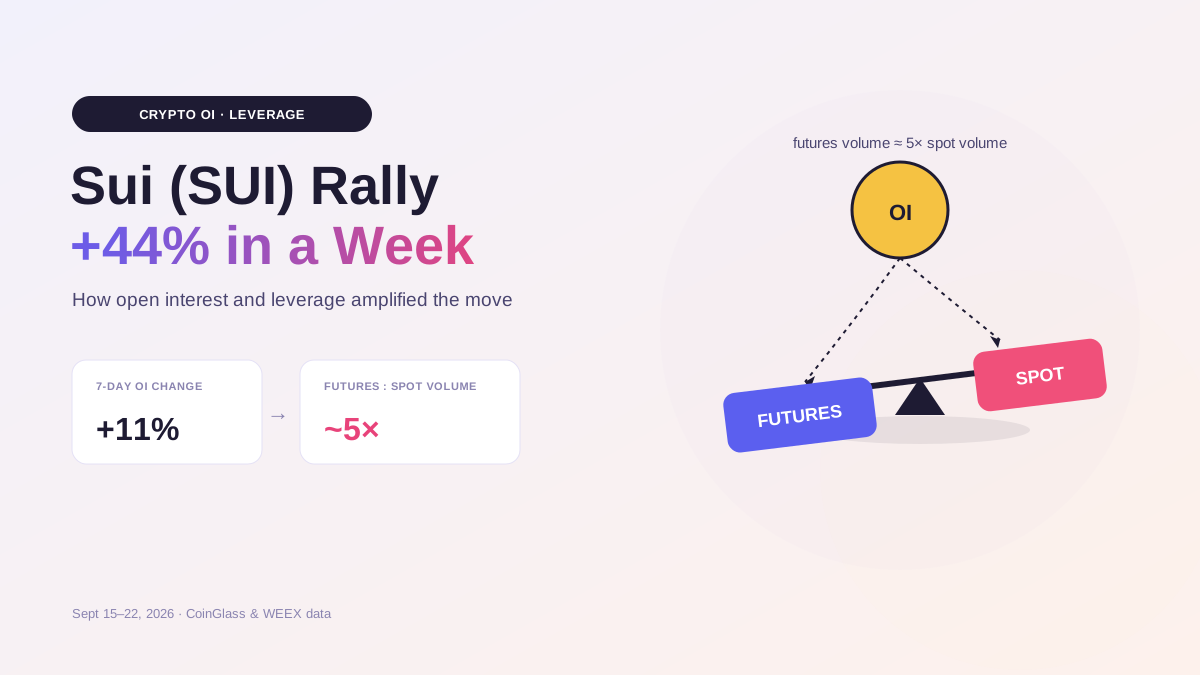
Why Did Sui (SUI) Crypto Price Jump 44%? Crypto OI and Leverage Explain the Rally
See why Sui (SUI) jumped 44%, how crypto OI and leverage amplified the rally, what the pullback means, and how to trade SUI on WEEX.

Circle expands CCTP to EURC and cirBTC on Arc

Bitcoin, Sports, and Politics: Predictive Markets Target $10 Trillion

AI Agent Jev Expects On-Chain Innovation Through Automated Judgment
The End of the Blank Prompt: Why Trading AI Needs a Playbook

Stablecoins hold nearly $200 billion in US debt, but money funds bought the surge
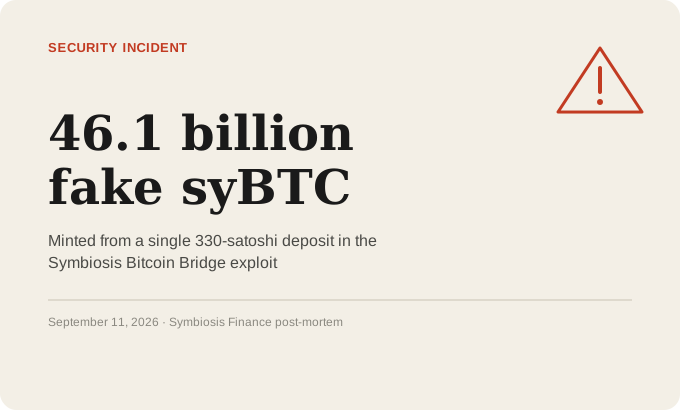
How Did a Hacker Create 46 Billion Fake Bitcoin in the Symbiosis Exploit? Decodes Bitcoin Hacker With WEEX Now
How two Symbiosis bridge bugs let a hacker mint 46.1 billion unbacked syBTC, drain Bitcoin pools and expose critical bridge risks.

CFTC's Selig Emphasizes the Need to Prepare for the Era of Large-Scale Tokenization in the U.S.

The IMF opens an office in Venezuela to supervise an economy that has already migrated to USDT

SOXL Stock Jumped 12% Yesterday: Three Companies Explain the Entire Move

Bitcoin's Hashrate Rises as Miners Reactivate Their Machines

Bitcoin 2x Leveraged ETF Launches on Cboe, But Doesn't Buy Bitcoin: Here's Why

Crypto: The ECB Enters the Tokenized Bond Market
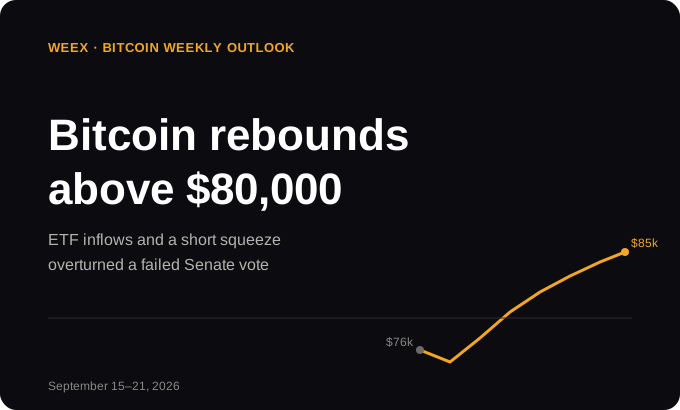
WEEX Bitcoin Weekly Outlook: Why Did Bitcoin Rebound Above $80,000 After the CLARITY Act Vote?
Bitcoin rebounded above $80,000 as SEC and CFTC action, renewed ETF inflows, and a short squeeze outweighed the failed CLARITY Act vote.
Coldcard whitehats move 52.37 BTC to recovery trust
What is CBDC? Governments Push for Development of Central Bank Digital Currencies
Bitcoin Has Not Fallen Below Realized Price During the Bear Market
The Clearing House Selects Quant for US Tokenized Deposit Network
4500 Bitcoins Moved to New Addresses, Sale Status Unconfirmed
[New York Gold, Bonds, Dollar] Interest Rates and Dollar Strength Pause... Oil Prices Drop, Won and Gold Prices Rebound
Trump Expresses Concern Over Yen Depreciation, Japanese Finance Minister Says Coordination with U.S. Will Continue



