
The Link Between Bitcoin and Stocks Strengthened by ETF Effects

 Prefer us on Google


Although Bitcoin and stocks are different asset classes, the short-term correlation between the two markets has become more apparent in recent years. Bitcoin stands out as the native asset of a decentralized digital network, while stocks represent ownership stakes in companies. Nevertheless, on certain trading days, Bitcoin can experience significant increases alongside the S&P 500 index and technology stocks.
Market Sentiment Can Affect Both Assets Simultaneously
Often, changes in investor appetite are behind this trend. During periods when the market shows a greater willingness to take risks, investors tend to gravitate towards more volatile assets for the potential of higher returns. Bitcoin is increasingly being evaluated within this group. Therefore, an increase in overall risk appetite can drive up both BTC prices and particularly growth-focused stocks.
Interest rates also emerge as a significant connection point between the two markets. When U.S. Treasury yields decline, the returns offered by safer instruments decrease. In the same environment, the present value of expected future corporate profits can be calculated higher. This situation particularly supports technology and growth stocks. Although Bitcoin does not generate interest income, a decrease in yields can reduce the opportunity cost of holding a non-yielding asset.
Bitcoin does not track stocks directly, but during periods of relaxed financial conditions and increased risk appetite, both markets can move in the same direction.
In a contrary scenario, a sharp rise in interest rates can make cash and bonds more attractive, putting pressure on speculative technology stocks and crypto assets. The amount of capital investors can allocate to the market also affects pricing. When financial conditions loosen, access to credit becomes easier, volatility can decrease, and investors may shift towards areas with higher return potential than cash.
Institutional Investors Have Built a New Bridge
The role of institutional investors has become more pronounced in strengthening the link between Bitcoin and traditional markets. Spot Bitcoin ETFs provide investors with access to BTC through classic brokerage and portfolio management infrastructure. Thus, changes in institutional risk appetite can directly reflect on Bitcoin through ETF inflows and outflows. During the recent surge, approximately $1 billion flowed into spot Bitcoin ETFs in the U.S. in a single session.
Mini Dictionary: A Spot Bitcoin ETF is a fund that directly tracks Bitcoin and trades like a stock on the exchange. This structure allows investors to gain indirect access to Bitcoin prices without setting up a wallet or using a crypto exchange.
Stocks of companies related to crypto also create an additional bridge between the two worlds. Firms like Coinbase, Strategy, and mining companies can also rise in the stock market when Bitcoin strengthens. Thus, optimism in the crypto market is more directly transferred to stock indices.
Correlation Is Not Constant
However, not every market that moves together rises for the same reasons. Bitcoin's ETF flows, regulations, halving processes, large investor transactions, leverage usage, and market liquidations have their unique dynamics. Stocks, on the other hand, are shaped by corporate profits, dividend policies, buybacks, and corporate news flow.
A positive development specific to Bitcoin can lift BTC while the S&P 500 declines. Similarly, strong AI balance sheets may support technology stocks without generating the same level of demand on the Bitcoin side.
For this reason, the relationship between Bitcoin and stocks is not viewed as a permanent and immutable bond. While there may be sharp movements in the same direction at times, the factors determining pricing can differ across both markets. Especially in Bitcoin, where liquid supply is relatively limited, buyers being willing to pay higher prices can lead to rapid jumps in market value.
-- Price
This content is provided for general informational purposes only and doesn't constitute financial, investment, legal, or tax advice. Any events, rewards, online promotions, or related information mentioned herein should not be considered a recommendation, solicitation, or invitation to purchase, sell, trade, or otherwise deal in any crypto assets. Crypto assets are highly volatile and may result in loss. The availability of WEEX services, products, and related events may vary by region. You are responsible for ensuring that your participation is in accordance with applicable local laws and regulations.
You may also like

OKX Star Points Out THORChain TSS + Validator Model Lacks Decentralization

Payward, the parent company of Kraken, invests billions in financial infrastructure

Bloomberg analyst warns 5% U.S. 10-year yield may reduce Bitcoin appeal

Shielded Bitcoin: the proposal that aims to bring privacy without changing BTC's code

What is CBDC? Governments Push for Development of Central Bank Digital Currencies

Backpack CEO Plans to Bring the Entire Stock Market to Solana

Use of Stablecoins Grew 75% in Bear Market
![[New York Gold, Bonds, Dollar] Interest Rates and Dollar Strength Pause... Oil Prices Drop, Won and Gold Prices Rebound](/public-static/29_4631d65680.png?format=avif)
[New York Gold, Bonds, Dollar] Interest Rates and Dollar Strength Pause... Oil Prices Drop, Won and Gold Prices Rebound

Polymarket partners with OpenWorlds on AI trading agents

Former New York Governor Cuomo: Tokenization Surpasses U.S. Regulation, Regulatory Clarity Affects Capital Flow

US-Iran Negotiations Signal Easing Energy Tensions, but Diesel Crisis Complicates Inflation Risks
Thailand Stock Market News: SET and NYSE Explore Dual Listings and New Investment Products

Compute Finance: The Financial Layer Being Built by the AI Economy, 0G is Constructing a New Paradigm for Computing Assets
Wall Street Legend Bill Miller: Why Did I Bet Half My Fortune on Bitcoin?

The Stronger the AI, the Lower the Wages: Your Education is Becoming the Most Expensive Devalued Asset

Oracle Stock vs. KRAFTON Stock: Why Are Investors Questioning Two Growing Companies?
Compare Oracle and KRAFTON stocks through their latest results, share-price questions and the different growth tests investors face in 2026.
What Happens When the AI Bubble Bursts? MIT University Responds

The Value of Ethereum and the Jevons Paradox

The Real Bottleneck of Midnight's Slow Growth: It's Not the Product, It's Market Formation

IonQ Stock Surges 5%: Nvidia Just Agreed to Host Its New Quantum System

HIFI Completes $37 Million Series A Funding Led by Left Lane Capital

HIFI Completes $37 Million Series A Funding Led by Left Lane Capital

Ethereum's 'Two-Track Update': Glamsterdam Public Testnet and Hegotá Initial Validation

Exclusive Interview with Frontier Technology Investor Zheng Di: SEC's 'Innovation Exemption' Opens the Door to a Compliant Bull Market, Which Assets Are Potential Stocks?

HTX DeepThink: Opportunities Concentrate on Profitable and Fund-Supported Assets, BTC Still Has Room for Recovery After Consolidation
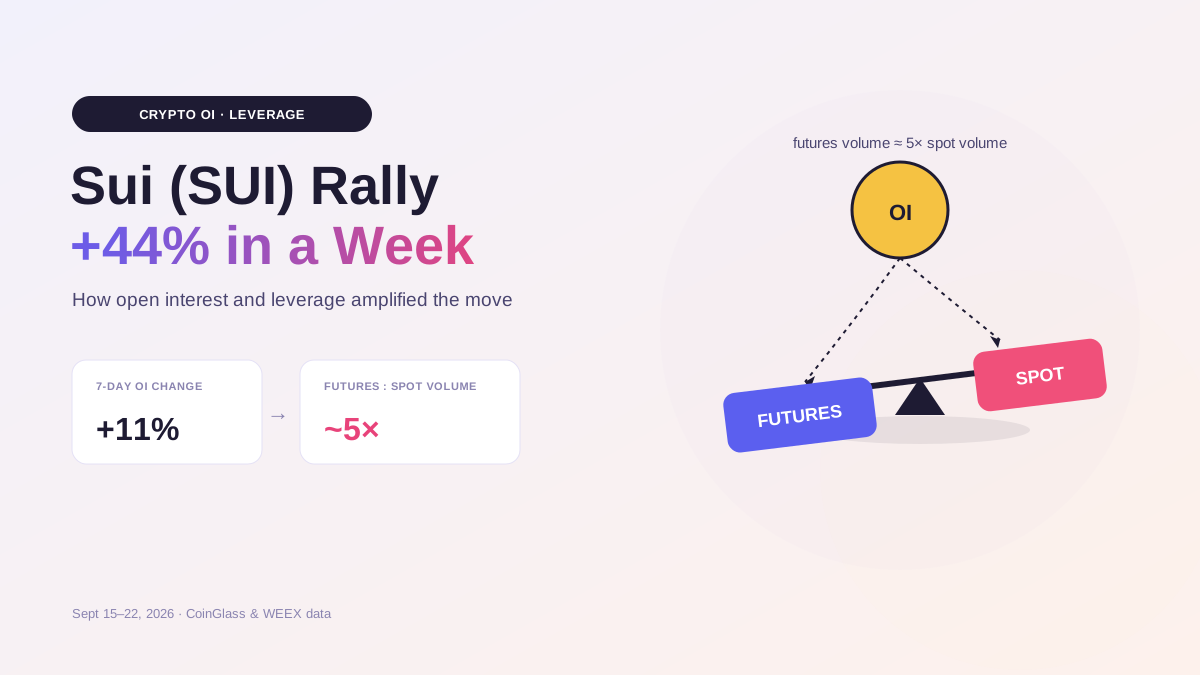
Why Did Sui (SUI) Crypto Price Jump 44%? Crypto OI and Leverage Explain the Rally
See why Sui (SUI) jumped 44%, how crypto OI and leverage amplified the rally, what the pullback means, and how to trade SUI on WEEX.

CFTC Chair Calls for "Mass Tokenization"! Wall Street Faces Three Barriers to Full On-Chain Adoption

Is the 1 Billion POL Burn Just a Joke?

WEEX Exclusive:Bitcoin Pulls Back From $87,000| WEEX TradFi Daily Brief (September 24, 2026)

Bitcoin Pulls Back From $87,000| WEEX TradFi Daily Brief (September 24, 2026)
Bitcoin pulled back from about $87,000 to about $84,000, with Ethereum near $2,680. S&P Global PMI on September 23 ET far exceeded forecasts. The 10-year yield broke above 5.00%, while the 5-year and 30-year touched highs last seen in 2007 and 2004. The S&P 500 and Nasdaq slipped. Energy moved with oil and crypto-treasury stocks followed bitcoin lower. Investors await earnings from COST, BB, and others.
OKX Star Points Out THORChain TSS + Validator Model Lacks Decentralization
Payward, the parent company of Kraken, invests billions in financial infrastructure
Bloomberg analyst warns 5% U.S. 10-year yield may reduce Bitcoin appeal
Shielded Bitcoin: the proposal that aims to bring privacy without changing BTC's code
What is CBDC? Governments Push for Development of Central Bank Digital Currencies
Backpack CEO Plans to Bring the Entire Stock Market to Solana


