
Mercado Bitcoin Plans Sui Asset Access in Brazil With Lending and Tokenization Links

 Prefer us on Google


TL;DR: Mercado Bitcoin and Sui have outlined access to SUI and stablecoins, with USDsui collateral and tokenized assets in scope. A potential Hashi integration remains exploratory.
Sui's planned expansion through Mercado Bitcoin brings together several different distribution opportunities: access to tokens, conversion between local money and stablecoins, and the possibility of connecting those assets to lending and investment products.
The October 29 announcement is therefore more than a listing headline. It is also a roadmap with elements at different stages, which need to be kept separate when assessing what customers can actually use.
The initial asset connection is clearly defined
The Sui Foundation announcement says Mercado Bitcoin will integrate SUI, USDC and USDsui, supporting purchases, sales and transfers on Sui. It also says USDsui will be eligible collateral in the exchange's lending product.
The companies plan to bring Mercado Bitcoin's tokenized real-world assets to Sui and are exploring a connection with Hashi, Sui's Bitcoin orchestration layer. Exploration of that integration should not be described as a completed Bitcoin lending launch.
The announcement provides the intended scope. It does not supply a single verified usage figure showing how many customers have already adopted every component of the partnership.
Distribution and settlement solve different problems
Making an asset available through a familiar platform can reduce the number of steps a customer must navigate. It may connect a local payment method, an exchange account and an onchain transfer inside one service relationship.
Settlement infrastructure then determines how the asset moves after it reaches the blockchain. A fast transfer does not by itself remove account checks, conversion costs or the conditions attached to receiving funds at the other end.
This distinction is useful when comparing payment propositions. The total customer experience includes the first conversion, the blockchain movement and the final use of the money. Improving one stage can be meaningful without making every stage immediate or free.
Collateral eligibility is a separate product decision
A token becoming acceptable as collateral does not mean a lender values it without limits. The amount that can be borrowed depends on the lender's rules, the asset's valuation and the conditions under which a position can be liquidated.
A customer also needs to distinguish the stablecoin's own backing and redemption terms from the credit terms of the loan. A token designed to track a currency can still be used inside a lending arrangement with variable costs and liquidation risk.
Those are general features of collateralized finance, not evidence that this particular integration has encountered a problem. They explain why a product launch is most informative when it includes the actual borrowing and custody terms alongside the list of supported assets.
-- Price
Tokenized assets need legal rights as well as a network
Bringing an investment instrument onto a blockchain changes how records and transfers can be handled. It does not automatically determine the holder's claim against the underlying issuer, who may buy it or how cash flows reach the investor.
That makes distribution permissions, asset documentation and servicing arrangements central to the next stage of the partnership. The technically available token and the legally accessible investment may have different boundaries.
Sui's official publication archive places the announcement alongside its broader financial infrastructure work, but the commercial test remains specific: functioning products, clear eligibility and observable use.
The partnership gives Sui a route into an established customer relationship in Brazil. Its eventual significance will depend on how much of the roadmap becomes available and whether customers use the resulting services repeatedly. The announcement establishes that direction; it does not yet demonstrate the scale of adoption.
Written by the News Desk and edited by Samuel Rae.
This content is provided for general informational purposes only and doesn't constitute financial, investment, legal, or tax advice. Any events, rewards, online promotions, or related information mentioned herein should not be considered a recommendation, solicitation, or invitation to purchase, sell, trade, or otherwise deal in any crypto assets. Crypto assets are highly volatile and may result in loss. The availability of WEEX services, products, and related events may vary by region. You are responsible for ensuring that your participation is in accordance with applicable local laws and regulations.
You may also like
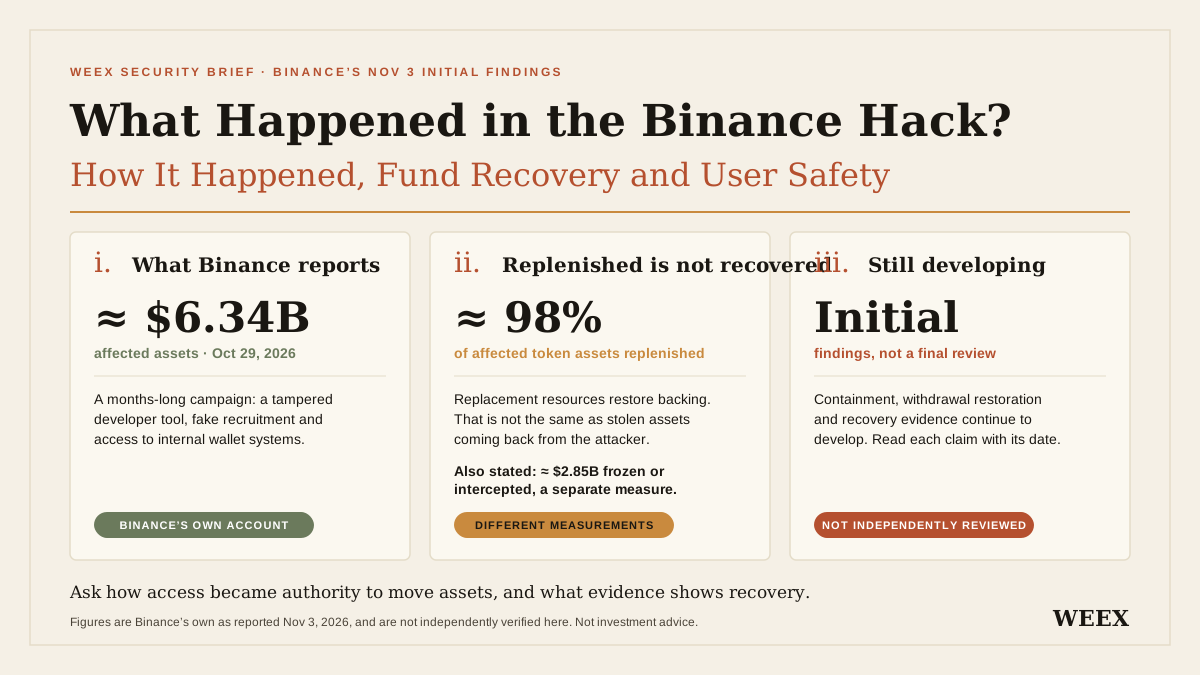
What Happened in the Binance Hack? How It Happened, Fund Recovery and User Safety
What happened in the Binance hack? Review the attack timeline, latest fund replenishment, recovery limits and practical steps to protect your account.

CPI Higher Than Expected in the U.S.: What It Means for Investors
Crypto ATM Fees: How Much Bitcoin (BTC) Do You Get for $100?
See how much Bitcoin $100 buys at a crypto ATM. Compare two sample quotes, calculate the all-in cost, and learn which fees not to count twice.

Stablecoins: French People Stock Up on Self-Custody According to Chainalysis

Datachain Supports Mitsui Sumitomo Bank's On-Chain Financial Infrastructure Technology Review
Poland's Parliament Votes 240-202 To Let Officials Freeze Crypto Before Court Review

Visa adds Monad as stablecoin settlement run rate tops $25B

Algorithmic Trading and Cryptocurrencies: How Do Robots React to Volatility?
Cryptocurrency Anarchism Lacks Commitment, Coordination, and Reputation, Not New Tokens
Enza Closes $6 Million Funding Round to Develop Payment Infrastructure

Financial Commission to Manage Stock Market Volatility with Sidecars and High-Frequency Trading Checks

Solana's Former DEX Leader Prepares to Go All In on US Stocks
U.S. DOJ files for forfeiture of 456602 USDT linked to romance scams

Dunamu Vice Chairman Kim Hyung-nyeon Completes Tokenized Stock Technology Preparation and Expects Regulatory Approval

Bitso Business Says Stablecoin Payment Volume Now Runs Above $150B Annualized

ICE Investment, L2 Launch, and 1000x Leverage Mechanism: The Iterative Path of Hyperliquid's On-Chain Finance

Broadridge Says Blockchain Repo Platform Processed $7.6T in October
Coldcard’s $116M exploit sparks fresh clash over NVK’s defense

FATF Plans Closer Scrutiny of Countries With Weak Virtual Asset Controls

Red Code: Why Your Bitcoin Depends on Other People's Debts for AI

Formation Files with SEC to Operate Tokenized Securities Trading Venue on Solana
Why Wall Street can use Ethereum without betting on ETH
Polygon wants to move 70 million POL without the wallet holders’ signatures

Real Buyers or Internal Transfers? A Review of This Week's Nine Major Token Movements to Help You Identify False Whale Narratives

Did Strategy buy Bitcoin? Saylor reignites speculation

DTCC Launches Tokenization Service: What Can Investors Actually Do?

A New Chapter in the History of Rug Pulls in Crypto

Gopax Halts Operations Amid Hacking Threats, Binance Breached: A Test for Exchange Security

Hut 8 Expands AI Campus Commitments While Funding Buybacks With Bitcoin Sales

Vitalik Buterin Believes Slowing Down Computing Power Expansion is More Beneficial than Harmful
What Happened in the Binance Hack? How It Happened, Fund Recovery and User Safety
What happened in the Binance hack? Review the attack timeline, latest fund replenishment, recovery limits and practical steps to protect your account.
CPI Higher Than Expected in the U.S.: What It Means for Investors
Crypto ATM Fees: How Much Bitcoin (BTC) Do You Get for $100?
See how much Bitcoin $100 buys at a crypto ATM. Compare two sample quotes, calculate the all-in cost, and learn which fees not to count twice.
Stablecoins: French People Stock Up on Self-Custody According to Chainalysis
Datachain Supports Mitsui Sumitomo Bank's On-Chain Financial Infrastructure Technology Review
Poland's Parliament Votes 240-202 To Let Officials Freeze Crypto Before Court Review
Latest articles




Latest coin listings on WEEX


