
IPCA Above the Target Ceiling: What Changes for Interest Rates and Investments

 Prefer us on Google



The IPCA for September came as a cold shower for those expecting a smooth trajectory of interest rate cuts in Brazil. The official inflation rose by 0.82% in the month, strongly reversing the deflation of 0.32% recorded in August. Over the past 12 months, the index reached 4.58%, surpassing the ceiling of the target pursued by the Central Bank, which is 4.5% (centered at 3% with a tolerance of 1.5 percentage points upwards).
The data came in above market consensus, which projected a monthly increase of 0.76% and a 12-month accumulated rate of 4.51%. The negative surprise was not marginal. It was enough to reignite the debate about the direction of monetary policy and put the more optimistic bets on the pace of Selic easing into question.
What Drove the IPCA Up in September
Three groups explain most of the inflationary pressure for the month: housing, transportation, and food. Each for distinct reasons, making the picture more complex than a single shock.
The Housing group led the increases with a variation of 2.31%. The main villain was residential electricity, which surged by 7.98% in the month, accounting alone for 0.32 percentage points of the IPCA. This jump has a technical explanation: in August, electricity bills came with the Itaipu Bonus, an extraordinary credit that artificially reduced the values. With the end of this benefit, the rebound effect in September was inevitable. It is not a structural increase, but the impact on the indices is real.
In Transportation, the 0.89% increase in the month had two well-known protagonists: airfares rose by 9.66% and fuels advanced by 1.41%. The behavior of airfares has been erratic throughout the year, as we analyzed in the finance section, but the persistence of fuel price adjustments raises concerns due to its cascading effect on freight and logistics.
Food and beverages, which had seen three consecutive months of decline, rose sharply again: a variation of 0.83%. Food at home increased by 0.96%, driven by fresh items like tomatoes (37.76%), potatoes (24.07%), and onions (10.14%). Rice (4.56%) and meats (0.63%) also contributed to the increase. On the opposite end, whole chicken fell by 1.96% and fruits dropped by 1.12%, but not enough to compensate.
Why Exceeding the Target Ceiling Matters Now
The inflation targeting system in Brazil operates with a tolerance band. The center is 3% per year, and the Central Bank has room to accommodate variations up to 4.5% without needing to formally explain itself. When the 12-month accumulated rate exceeds this limit, the situation changes.
In practice, an accumulated IPCA of 4.58% means that the Central Bank is operating in uncomfortable territory. This does not imply an immediate open letter to Congress, as the continuous target regime evaluates longer horizons, but the political and technical signal is unequivocal: disinflation has stalled.
For the Copom, the September data complicates the narrative that it would be possible to continue reducing the Selic linearly. The market had already been adjusting expectations, as we showed in this analysis of the impact of the Selic on investments, and now the curve of future interest rates tends to incorporate an additional premium. The possibility of a pause in cuts, or even a reversal of the trajectory, has shifted from a tail scenario to a central radar.
Direct Impact for Investors
For investors, the practical reading is straightforward. Post-fixed and inflation-linked securities gain relative attractiveness when the interest rate scenario becomes more uncertain. The Tesouro IPCA+, for example, embeds protection against exactly this type of inflationary surprise.
In the variable income sector, the effect is ambiguous. Sectors linked to domestic consumption suffer from higher inflation, which erodes purchasing power and may delay credit recovery. On the other hand, export sectors and companies with dollarized revenue tend to benefit when the exchange rate pressures and interest rates rise, attracting foreign flow for carry trade.
The credit market also feels the impact. With a potentially higher Selic for a longer time, the cost of financing for companies and consumers remains elevated. This affects everything from the real estate market to banks' willingness to grant credit, as we have followed in our finance coverage.
-- Price
What to Watch in the Coming Months
The IPCA for September carries specific distortions. The effect of electricity, in particular, tends to dissipate in the following months. But the acceleration in food prices and the persistence of pressures in services are signs that deserve continuous attention.
The next Copom meeting will be decisive. The committee will have to balance an uncertain fiscal scenario, unanchored inflation expectations, and a heated labor market. The minutes of the meeting and the projections from the Inflation Report will be the most relevant documents to calibrate expectations.
For investors, the message is clear: the era of easy interest rate cuts is behind us. Building defensive positions, diversifying among indexers, and maintaining liquidity to seize opportunities during re-pricing moments are strategies that make sense when inflation surprises to the upside again.
The IPCA above the ceiling is not, by itself, a crisis. But it is the kind of data that changes the conversation. And when the conversation changes, asset prices change along with it.
This content is provided for general informational purposes only and doesn't constitute financial, investment, legal, or tax advice. Any events, rewards, online promotions, or related information mentioned herein should not be considered a recommendation, solicitation, or invitation to purchase, sell, trade, or otherwise deal in any crypto assets. Crypto assets are highly volatile and may result in loss. The availability of WEEX services, products, and related events may vary by region. You are responsible for ensuring that your participation is in accordance with applicable local laws and regulations.
You may also like
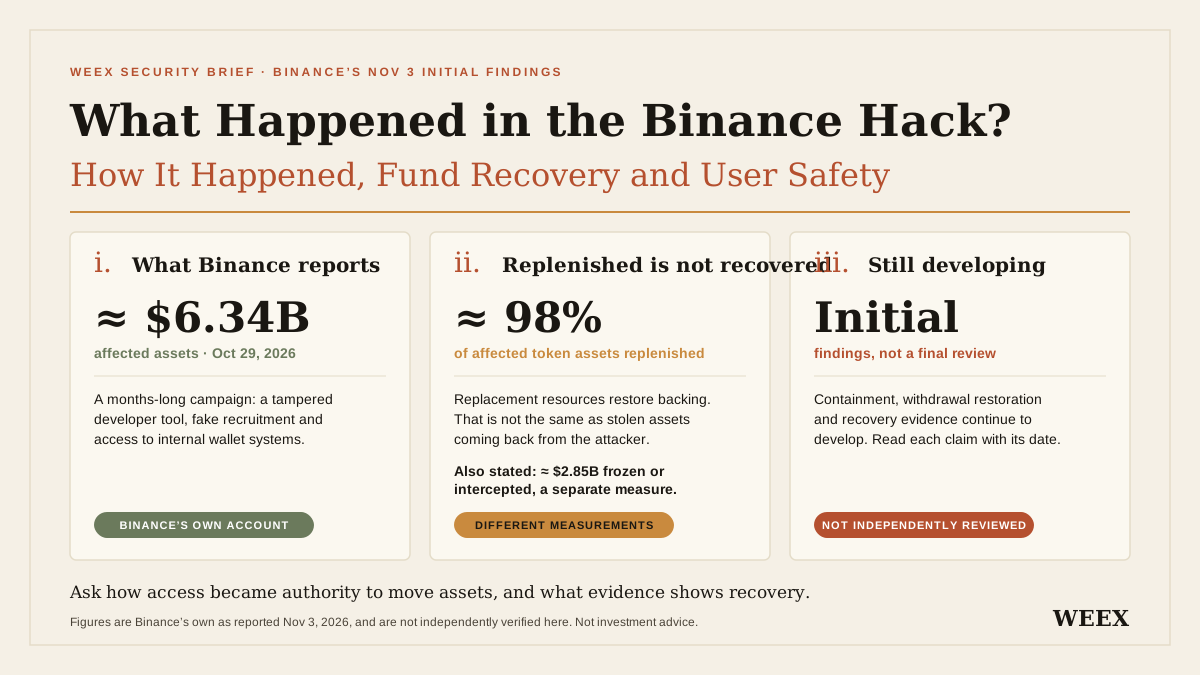
What Happened in the Binance Hack? How It Happened, Fund Recovery and User Safety
What happened in the Binance hack? Review the attack timeline, latest fund replenishment, recovery limits and practical steps to protect your account.

CPI Higher Than Expected in the U.S.: What It Means for Investors

AI Agents Do More Than Just Place Orders: The Next Entrepreneurial Opportunity Lies in Matching and Trust
Chainalysis: The Shadow Market Behind China's AI Model "Distillation Tide" Bypassing U.S. Export Controls

How Much Revenue Can Anthropic Generate for Every $1 Spent on Computing Power?

SharpLink, an Ethereum Reserve Company, Reports Q3 Earnings: Net Profit Reaches $751.4 Million, Up 6.2 Times Year-on-Year

ETH Burn Rate Fails to Keep Up with Issuance, Is Vitalik Starting to Discuss Value Storage?

Brian Hong Joins fomo to Lead APAC Region

a16z Frontier Partner: Agents Should Rebuild Uber-like Transaction Networks

Multicoin Executive Claims AI Lowers Software Development Barriers, DeFi's Moat Lies in Distribution and Capital

Strategic MSCI Index Exit Announcement, $2.8 Billion Sell-off Concerns

Strategy spent more than twice as much on preferred buybacks as Bitcoin last week

MARA Bitcoin Mining Costs Reach $62,862 Per Coin, With Electricity Costs at $39,674

What Happened Today in the Crypto Market? A Review of the Most Important Cryptocurrency News (November 9, 2023)

Financial Commission to Manage Stock Market Volatility with Sidecars and High-Frequency Trading Checks

How to Resolve Data Center Controversies? This U.S. State Wants to Tokenize Computing Power to Share Benefits with Residents

Chainalysis Report: Why Did Western Europe Withstand the Global Crypto Market Chill?
The "Monopolist" Behind $4.6 Billion Tokenized U.S. Stocks: 91% of Assets Are Custodied by the Same Company?

BitPay Brings Apple Pay and Google Pay Checkout to Crypto Purchases

Wall Street Morning Briefing: Market Soars on Oil Prices and AI Recovery, Nvidia Falls Alone, Data Centers Become Political Regulation Focus, CPI Lacks Year-on-Year Comparison Adds Variables

Bakkt Aims for $6 Billion in Transaction Volume in Six Months, Doubling Annual Target; $10.4 Million Investment in Bitcoin Japan Recorded as of End of September

Securitize Acquires River One, Enters $6 Trillion Loan Market with Stablecoin Funding

Broadridge Says Blockchain Repo Platform Processed $7.6T in October
XRP’s new euro cash-out route had less than €100 in its direct market
The missing step in the warning that Japan could trigger Bitcoin’s next selloff
Two Bitcoin miners reported nearly $2 billion in profit. The biggest boost wasn’t cash
BlackRock: Bitcoin Whales Are Swapping Self-Custody For IBIT At Record Pace
Tom Lee Says Vitalik's Positioning of ETH as a Store of Value is a Major Shift
Have US Stocks Corrected Enough? CICC Deep Dive: The 'Transition' Moment for AI Investment

Real Buyers or Internal Transfers? A Review of This Week's Nine Major Token Movements to Help You Identify False Whale Narratives
What Happened in the Binance Hack? How It Happened, Fund Recovery and User Safety
What happened in the Binance hack? Review the attack timeline, latest fund replenishment, recovery limits and practical steps to protect your account.
CPI Higher Than Expected in the U.S.: What It Means for Investors
AI Agents Do More Than Just Place Orders: The Next Entrepreneurial Opportunity Lies in Matching and Trust
Chainalysis: The Shadow Market Behind China's AI Model "Distillation Tide" Bypassing U.S. Export Controls
How Much Revenue Can Anthropic Generate for Every $1 Spent on Computing Power?
SharpLink, an Ethereum Reserve Company, Reports Q3 Earnings: Net Profit Reaches $751.4 Million, Up 6.2 Times Year-on-Year
Latest articles


Latest coin listings on WEEX


