
Global Sell-off Spreads to Asia: Stock Markets Plummet, Dollar Strengthens

 Prefer us on Google


Following the strong victory of the Democrats in the U.S. midterm elections, concerns about tighter regulations in the artificial intelligence sector have led to a sell-off in global markets that has now reached Asia. As losses deepened in the stock markets of Japan and South Korea, the Taiwan stock market entered a bear market. Steps taken by authorities to support the markets and a recovery in U.S. futures indices limited some of the losses in subsequent trading.
Technology Stocks Plummet in Asian Markets
The MSCI Asia Pacific Index fell by 3.8%, while Japan's Nikkei 225 index dropped by 5.8%, marking its largest daily loss since April 2025. In South Korea, the Kospi index's loss reached 8.8% during the day, triggering a circuit breaker. Shares of Samsung and SK Hynix lost more than 5% in value. Taiwan's benchmark index fell by 4.5%, entering a bear market.
At the center of the sell-off is the concern that the Democrats' victory in Congress could lead to tighter regulations on data centers in the U.S. and slow the growth of artificial intelligence infrastructure. The Philadelphia Semiconductor Index has declined by about 16% this week, heading for its worst weekly performance since April 2025.
U.S. President Donald Trump blamed the Democrats for the losses in Americans' 401(k) retirement accounts following the deepening sell-off in technology and AI-related stocks. Trump's Republican Party experienced significant losses in Tuesday's midterm elections.
South Korea Takes Steps to Limit Forced Sales
South Korea temporarily lifted the rule requiring collateral to be at least 140% of the loans used in margin trading. This step aimed to limit forced sales that could occur through brokerage firms. Taiwan's financial regulator was also expected to announce measures to stabilize the market.
With supportive news and a recovery in U.S. stock futures, regional stock markets regained some of their losses. The Nasdaq 100 futures index rose by 0.8%.
Safe Haven Demand Supports Bonds
Risk aversion brought buying into the bond markets. China's 10-year government bond yield fell to its lowest level in history during the day due to ample liquidity and safe haven demand. The recent change in the policy interest rate was also considered an effective monetary easing, contributing to this movement.
While U.S. Treasury bonds maintained their gains from Thursday, Japanese government bonds also rose on Friday. The dollar strengthened against all other G10 currencies.
Brent Rises but Weekly Losses Reach Historic Levels
Brent crude oil rose by 1.4% to $99.70 per barrel after a 3.9% increase in the previous session. Nevertheless, Brent is heading for its largest weekly loss since April 2020.
Throughout the week, the pricing was influenced by the possibility of an end to the months-long war in the Middle East. Initially, investors assessed that the Democrats' victory in Congress could accelerate the end of the conflict with Iran, but later concerns about data center regulations triggered widespread selling in technology stocks.
Canada Plans to Increase Investments Through Borrowing
Canadian Prime Minister Mark Carney reiterated his commitment to a plan to accelerate investments using the public balance sheet. The plan envisions increased borrowing and the use of billions of dollars in rising tax revenues to expand the economy's production capacity.
The impact of the election result on the markets shifted from expectations of an end to the war to concerns that investments in artificial intelligence could slow down. The approximately 16% weekly loss in semiconductor stocks was the most evident result of this change. While support measures in Asia partially limited daily losses, Brent's recent rise over the last two sessions, despite heading for a historically large weekly decline, highlighted the sharp directional changes in the oil market.
-- Price
This content is provided for general informational purposes only and doesn't constitute financial, investment, legal, or tax advice. Any events, rewards, online promotions, or related information mentioned herein should not be considered a recommendation, solicitation, or invitation to purchase, sell, trade, or otherwise deal in any crypto assets. Crypto assets are highly volatile and may result in loss. The availability of WEEX services, products, and related events may vary by region. You are responsible for ensuring that your participation is in accordance with applicable local laws and regulations.
You may also like
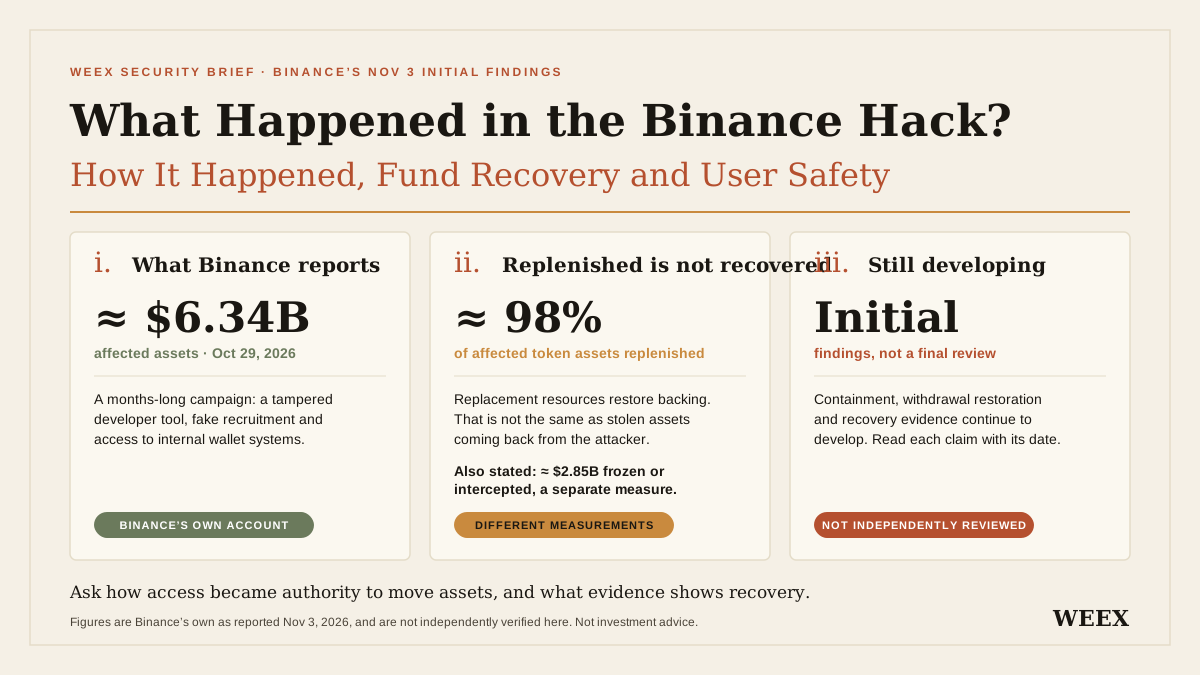
What Happened in the Binance Hack? How It Happened, Fund Recovery and User Safety
What happened in the Binance hack? Review the attack timeline, latest fund replenishment, recovery limits and practical steps to protect your account.

CPI Higher Than Expected in the U.S.: What It Means for Investors
Crypto ATM Fees: How Much Bitcoin (BTC) Do You Get for $100?
See how much Bitcoin $100 buys at a crypto ATM. Compare two sample quotes, calculate the all-in cost, and learn which fees not to count twice.

Stablecoins: French People Stock Up on Self-Custody According to Chainalysis

Datachain Supports Mitsui Sumitomo Bank's On-Chain Financial Infrastructure Technology Review
Poland's Parliament Votes 240-202 To Let Officials Freeze Crypto Before Court Review

Visa adds Monad as stablecoin settlement run rate tops $25B

Algorithmic Trading and Cryptocurrencies: How Do Robots React to Volatility?
Cryptocurrency Anarchism Lacks Commitment, Coordination, and Reputation, Not New Tokens
Enza Closes $6 Million Funding Round to Develop Payment Infrastructure

Financial Commission to Manage Stock Market Volatility with Sidecars and High-Frequency Trading Checks

Solana's Former DEX Leader Prepares to Go All In on US Stocks
U.S. DOJ files for forfeiture of 456602 USDT linked to romance scams

Dunamu Vice Chairman Kim Hyung-nyeon Completes Tokenized Stock Technology Preparation and Expects Regulatory Approval

Bitso Business Says Stablecoin Payment Volume Now Runs Above $150B Annualized

ICE Investment, L2 Launch, and 1000x Leverage Mechanism: The Iterative Path of Hyperliquid's On-Chain Finance

Broadridge Says Blockchain Repo Platform Processed $7.6T in October
Coldcard’s $116M exploit sparks fresh clash over NVK’s defense

FATF Plans Closer Scrutiny of Countries With Weak Virtual Asset Controls

Red Code: Why Your Bitcoin Depends on Other People's Debts for AI

Formation Files with SEC to Operate Tokenized Securities Trading Venue on Solana

Why Wall Street can use Ethereum without betting on ETH
Polygon wants to move 70 million POL without the wallet holders’ signatures
Real Buyers or Internal Transfers? A Review of This Week's Nine Major Token Movements to Help You Identify False Whale Narratives

Did Strategy buy Bitcoin? Saylor reignites speculation

DTCC Launches Tokenization Service: What Can Investors Actually Do?

A New Chapter in the History of Rug Pulls in Crypto

Gopax Halts Operations Amid Hacking Threats, Binance Breached: A Test for Exchange Security

Hut 8 Expands AI Campus Commitments While Funding Buybacks With Bitcoin Sales

Vitalik Buterin Believes Slowing Down Computing Power Expansion is More Beneficial than Harmful
What Happened in the Binance Hack? How It Happened, Fund Recovery and User Safety
What happened in the Binance hack? Review the attack timeline, latest fund replenishment, recovery limits and practical steps to protect your account.
CPI Higher Than Expected in the U.S.: What It Means for Investors
Crypto ATM Fees: How Much Bitcoin (BTC) Do You Get for $100?
See how much Bitcoin $100 buys at a crypto ATM. Compare two sample quotes, calculate the all-in cost, and learn which fees not to count twice.
Stablecoins: French People Stock Up on Self-Custody According to Chainalysis
Datachain Supports Mitsui Sumitomo Bank's On-Chain Financial Infrastructure Technology Review
Poland's Parliament Votes 240-202 To Let Officials Freeze Crypto Before Court Review
Latest articles




Latest coin listings on WEEX


